How Long Can a Heat Pump Run Continuously?
Learn how long heat pumps can run continuously, the factors that influence run time, and practical tips to optimize efficiency and comfort in 2026.


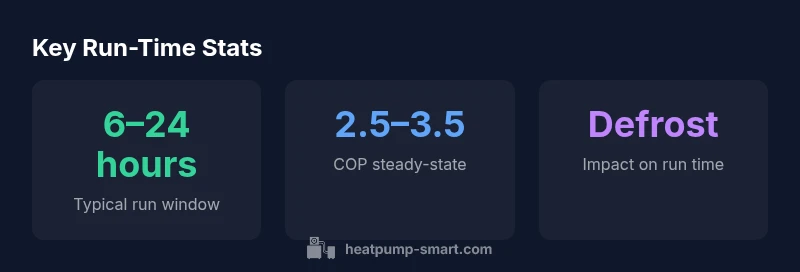
How long can a heat pump run continuously depends on climate, system size, and load. In practical terms, most heat pumps can operate for several hours to many hours at a time, especially during extreme weather, without overheating. Common continuous run windows range from roughly 6 to 24 hours, provided the system is properly sized, maintained, and paired with the right thermostat settings. Extended runs may trigger auxiliary heat in cold weather.
Understanding Continuous Run Time
When you ask how long can a heat pump run continuously, the answer depends on climate, system size, and load. According to Heatpump Smart, continuous operation is not inherently risky for a properly designed system. In practice, heat pumps will run for extended periods during very cold or very hot days to meet demand, cycling between active heating and passive cooling as needed. The key is to distinguish between normal cycling and long, intentional continuous runs that rely on the equipment's capacity and efficiency. If the system is correctly sized and kept in good condition, long, uninterrupted runs are not uncommon during peak demand. In addition, well-tuned controls and a balanced thermostat strategy help maintain comfort without compromising efficiency.
Density of run time matters for energy bills and comfort. Homeowners should track how often the system runs continuously during different seasons to understand whether the load matches the envelope, and whether improvements in insulation or sealing could reduce unnecessary cycling.
Key Factors That Influence Run Time
Run time is not a fixed value; it shifts with several interacting factors. The most influential include outdoor temperature and heating load, equipment sizing, and the efficiency of the system. Other important elements are the defrost cycle length, the use of auxiliary heat, and thermostat settings. Specifically:
- Outdoor temperature and load: Colder outdoor temperatures increase heating demand, often extending run time when the heat pump operates at its capacity. Conversely, mild days may reduce run time as demand drops.
- Sizing and COP: A properly sized heat pump delivers the needed heat more efficiently, which supports longer, steady runs. An undersized unit may short-cycle, while an oversized unit may reach setpoints quickly and cycle more.
- Defrost cycles: In cold, humid conditions, defrost cycles interrupt heating to melt frost on the outdoor coil. These pauses affect continuous run time and can temporarily raise energy use.
- Auxiliary heat and controls: Supplemental electric resistance heat or gas backup can shorten or extend run time depending on how controls prioritize heat sources.
- Thermostat strategy and setpoints: A well-programmed thermostat that maintains consistent temperatures reduces rapid cycling and can enable longer continuous runs.
- Envelope and air leakage: A tight home reduces load and supports longer run times, while drafts or poor insulation increase demand and shorten sustained operation.
How to Evaluate and Manage Run Time Safely
Managing run time safely means aligning system performance with comfort goals and energy use. Start with a baseline assessment of your current setup and then apply targeted improvements:
- Verify sizing and load match: If feasible, have a professional perform a Manual J load calculation and ensure the outdoor unit and indoor components are sized for your climate and home. A properly sized system reduces excessive cycling and supports steady operation.
- Optimize thermostat strategies: Use a consistent setpoint and avoid large jumps. Consider a staged or variable-speed heat pump to smooth out demand and extend continuous operation windows.
- Address the envelope: Seal air leaks, add insulation where needed, and ensure ducts are clean and sealed. A tighter envelope lowers the required heating load, enabling longer, efficient runs.
- Balance defrost management: If your climate experiences frequent frost, work with a pro to optimize defrost timing and minimize its impact on run time without compromising coil safety.
- Monitor and maintain: Regular filter changes, refrigerant checks, and coil cleaning preserve efficiency and reduce unnecessary cycling. A well-maintained system runs more consistently over time.
Practical Scenarios and Sizing Considerations
In a very cold climate, a correctly sized heat pump may run continuously for extended periods to meet demand during peak cold snaps. In moderate climates, runs may occur more intermittently, with the system cycling to maintain setpoints and comfort. In hot climates, the unit may operate day and night during heat waves, again showing longer continuous periods when the load is high. Sizing decisions should consider the typical seasonal load, insulation quality, and occupant comfort preferences. For new installations, a heat pump with a variable-speed compressor and a properly designed duct system can provide longer, comfortable run times with higher efficiency than traditional single-stage units.
Whenever you’re evaluating run time, focus on the balance between comfort and energy usage. A system that runs longer but at a high COP will use less energy overall than a smaller, short-cycling setup that relies heavily on auxiliary heat.
Maintenance and Controls to Support Longer Runs
Maintenance and smart controls are essential for preserving long, efficient run times. Key practices include:
- Keep filters clean and ducts sealed to minimize resistance and reduce load.
- Ensure refrigerant charge is correct; under- or over-charge reduces efficiency and can affect run duration.
- Schedule regular professional checkups to verify coil cleanliness, capacitor health, and overall system performance.
- Utilize a smart thermostat or zoning to optimize where and when heat is needed, reducing unnecessary cycling and enabling more stable continuous operation.
- Consider weatherization upgrades such as improved insulation and air sealing to lower the heating load and extend run times without sacrificing comfort.
Comparison of run-time under different climates
| Scenario | Typical Continuous Run Time | Notes |
|---|---|---|
| Extreme Cold (below freezing) | 6–14 hours | Defrost cycle and auxiliary heat engaged |
| Moderate Cold/Cool Weather | 8–22 hours | Balanced load and COP |
| Mild Climate / Summer | 12–24 hours | Steady operation with high efficiency |
Your Questions Answered
Can a heat pump run continuously in very cold weather without risking damage?
Yes, when the system is properly sized for the climate and well maintained. Defrost cycles and backup heat are managed by the control system to protect the equipment and maintain comfort. If the unit is undersized or neglected, excessive run time can increase wear.
Yes, with proper sizing and maintenance. If in doubt, have a pro check your setup.
What factors determine how long a heat pump will run continuously?
Key factors include outdoor temperature, heating load, system sizing, defrost strategy, auxiliary heat usage, thermostat settings, and building envelope quality. All these elements interact to set the actual continuous run window.
Climate, load, and system sizing mostly determine continuous run time.
Will running a heat pump continuously increase my energy bill?
Running continuously can be energy-efficient if the unit operates at a high COP. Insulation and sealing reduce load, offsetting longer run times. Overall bills depend on climate, efficiency, and how well the home is conditioned.
Longer runs can save energy if COP stays high and the home is well-insulated.
When should I avoid long continuous runs?
If you notice frequent cycling, unusual noises, icing on exterior coils, or rapidly rising energy bills, consult a professional. These can signal sizing, refrigerant, or control issues that could limit safe continuous operation.
Avoid it if you see icing, noise, or cost spikes; get a pro check.
How can I extend run time safely without sacrificing comfort?
Improve the building envelope, ensure correct sizing, use efficient controls, and maintain the system. A properly sealed home and a smart thermostat can enable longer, efficient runs with less energy waste.
Seal leaks, size correctly, and use smart controls to extend safe run time.
What role does insulation play in continuous run time?
Better insulation lowers heat loss, reducing the load on the heat pump. This can translate to longer, efficient run times and lower energy use during extreme conditions.
Good insulation makes long runs more practical and cheaper.
“Continuous operation is feasible when a heat pump is properly sized, maintained, and controlled. With the right setup, long, uninterrupted runs can occur without sacrificing efficiency or comfort.”
Top Takeaways
- Run time depends on climate, load, and system sizing
- Proper sizing and insulation extend safe, efficient continuous runs
- Defrost management can impact continuous operation
- Thermostat strategy and zoning reduce unwanted cycling
- Regular maintenance supports longer, reliable runs