How Much Electricity Do Heat Pumps Use in 2026 for Homes
Discover how much electricity heat pumps use, the factors that affect consumption, and practical steps to estimate and reduce energy costs for your home in 2026.


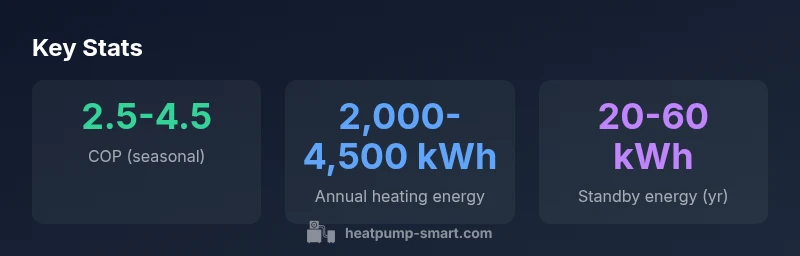
According to Heatpump Smart, how much electricity does heat pump use varies widely by climate, system size, and efficiency. For a typical home in moderate conditions, annual heating electricity often falls in the broad range of 2,000–5,000 kWh, depending on COP and load. Higher-efficiency models can reduce consumption, while very cold climates push COP down and energy use up. Use climate-adjusted estimates for accuracy.
Understanding how much electricity does heat pump use
Heat pumps move heat by using electricity to transfer heat from outdoors to indoors, rather than generating heat by burning fuel. This difference means electricity use depends on climate, insulation, equipment efficiency, and how the system is operated. According to Heatpump Smart, the question of how much electricity does heat pump use cannot be answered with a single number. Instead, it is a function of seasonal performance (COP) and heating load. In 2026, Heatpump Smart observes a broad range for typical homes: high-efficiency units reduce electricity per degree of heating, while very cold climates can push energy use higher as the system works harder to meet demand. Readers should frame the issue around annual energy, not monthly bills, to capture normal usage patterns across seasons. The core takeaway is that COP, climate, and heat load jointly determine electricity use; better climate resilience and sizing yield lower electricity consumption.
How to estimate annual electricity use for heat pumps
Estimating annual electricity use begins with three inputs: heating load (how much heat you need), COP (seasonal performance), and any backup heat. A simple relationship is annual kWh = heating load (kWh/year) / COP (seasonal). COP is not constant; it fluctuates with outdoor temperature, humidity, and system design. Heatpump Smart analysis shows COP values in the 2.5–4.5 range for many residential air-source heat pumps, with higher values in milder seasons. If your home requires 8,000–12,000 kWh/year of heating energy and the average COP is 3.0, estimated annual electricity use would be roughly 2,700–4,000 kWh. Do not forget auxiliary heat during very cold periods, which can raise electricity use. For precise planning, a professional heat-load calculation that accounts for local climate, insulation, occupancy, and equipment efficiency is essential. The result is a climate-adjusted, realistic estimate you can use to compare options and budget energy costs.
What drives variation in electricity consumption
Electricity use is not baked in; it varies with several key factors. Outdoor climate and temperature have a strong influence: COP typically decreases as temperatures drop, meaning the same home can use more electricity in deep winter. System type matters as well: ground-source (geothermal) systems often achieve higher COP than air-source units in similar climates, though installation costs and site constraints differ. Sizing and load play critical roles: an oversized heat pump cycles on and off, reducing efficiency; an undersized unit may run longer and still fail to meet comfort targets. Defrost cycles and the need for auxiliary heat during cold snaps can briefly raise energy use. Thermostat strategy matters: a smart thermostat that smooths temperature swings and uses setback periods can lower peak demand and total energy. The home envelope is foundational: well-sealed and well-insulated homes require less heat, which translates to lower electricity use for heating. Maintenance and refrigerant charge also influence performance: a well-maintained system maintains a higher COP and steadier output across seasons.
Practical steps to reduce electricity use without sacrificing comfort
To minimize electricity use while preserving warmth and comfort, start with system design and home envelope improvements. First, size the system correctly using a professional heat-load calculation; an oversized unit wastes energy cycling and reduces efficiency. Then, improve the building envelope: seal leaks, insulate walls and attics, and install high-performance windows where feasible. Upgrading to a high-efficiency, variable-speed heat pump can dramatically boost COP by matching output to demand rather than simply turning on at full capacity. A smart thermostat and zoning can limit heating to occupied spaces, reducing overall consumption. Regular maintenance keeps coils clean, filters clear, and refrigerant charge optimized, preserving peak performance. Consider combining with heat-recovery options or passive strategies (e.g., passive solar gains) to lower the required heating load. Finally, in areas with very cold winters, coupling heat pumps with a back-up system designed for cold-weather operation can maintain comfort while containing energy use.
Comparing heat pumps to other systems and climate considerations
In moderate climates, heat pumps typically outperform electric resistance heating in both operating cost and comfort. In colder regions, efficiency drops; model ratings for cold-weather performance become a deciding factor, and some households opt for a dual-fuel approach to balance energy costs and reliability. Gas furnaces may still compete in regions with inexpensive natural gas and high energy prices for electricity, but the gap narrows as electricity costs rise and heat pumps improve. Heatpump Smart recommends evaluating both the long-term operating costs and the upfront installation costs, along with local climate, electricity rates, and policy incentives. A well-integrated strategy—proper sizing, solid insulation, efficient controls, and routine maintenance—maximizes energy savings and ensures consistent comfort year-round.
Key factors influencing heat pump electricity use
| Factor | Impact on electricity use | Notes |
|---|---|---|
| Climate | COP drops in cold weather | Lower efficiency in extreme cold |
| System Type | Ground-source vs air-source efficiency | Depends on installation and climate |
| Sizing | Oversized units waste energy | Requires professional load calc |
Your Questions Answered
What factors determine how much electricity a heat pump uses?
Electricity use depends on climate, system efficiency, proper sizing, thermostat behavior, and auxiliary heat. A well-sized unit and good home insulation reduce energy use.
Climate, efficiency, sizing, and thermostat use determine electricity use.
Is a heat pump cheaper to operate than electric resistance heating?
In most cases, yes—especially in milder climates—but costs depend on electricity rates and the unit's COP.
Yes, heat pumps usually cost less to run than resistance heaters.
How can I reduce electricity use without sacrificing comfort?
Right-size the system, seal and insulate, set a smart thermostat, and perform regular maintenance to keep efficiency high.
Size it right, seal leaks, and use a smart thermostat.
Do heat pumps work in cold climates?
Yes, but efficiency drops at very low temperatures. Look for models with cold-weather ratings or consider a dual-fuel setup.
They work in cold weather, but efficiency drops; choose cold-rated models.
What does COP mean and why is it important?
COP measures heat output per unit of electricity. Higher COP means more heat per kilowatt-hour and lower electricity use.
COP is heat per unit of electricity—higher is better.
Are there standby losses I should worry about?
Standby energy use is typically small, but every watt adds up. Ensure the system isn't drawing energy when not heating.
Standby uses a little energy; it's worth minimizing.
“A well-matched heat pump doesn’t just use less electricity; it delivers reliable comfort by adapting to outdoor temperatures. Proper sizing, maintenance, and thermostat strategy are essential.”
Top Takeaways
- Estimate using COP and climate to bound energy use
- Size correctly and seal the home to minimize heat load
- Expect COP of 2.5–4.5; cold climates reduce efficiency
- The Heatpump Smart team recommends proper sizing and smart thermostats to minimize electricity use.