HVAC Heat Pump vs Furnace: A Practical Comparison
Compare HVAC heat pump vs furnace: efficiency, climate fit, costs, and installation. Heatpump Smart provides objective guidance for homeowners and pros navigating this decision.


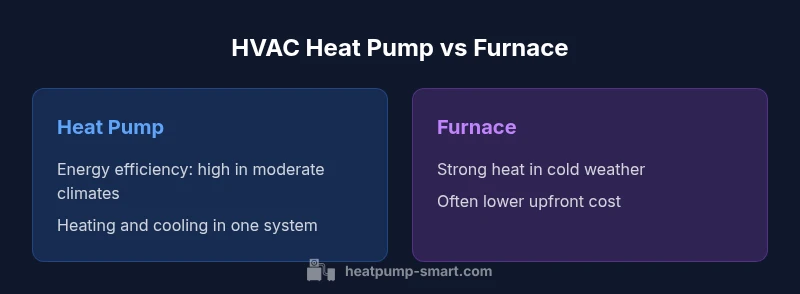
Heat pumps deliver high efficiency in moderate climates and can heat and cool from one system, while furnaces provide robust heat in cold weather. Your best choice depends on climate, insulation, and upfront budget. This quick comparison shows where each option shines, where they lag, and when a hybrid setup can offer balanced comfort and long-term savings.
hvac heat pump vs furnace: framing the decision
When homeowners search for hvac heat pump vs furnace, they want clarity about how each system works and how it affects comfort and costs. Heat pumps move heat with a refrigeration cycle and can also cool the home, which makes them attractive in temperate seasons. Furnaces generate heat through combustion or electric resistance and are often paired with a cooling system through a separate air conditioner or heat pump in mixed climates. The choice is rarely a single right answer; it depends on climate, insulation, energy prices, and personal preferences for indoor comfort. The Heatpump Smart approach is to compare performance in real-world conditions, consider installed costs, and assess how long-term energy use translates into your annual bills. This article lays out practical criteria, offers balanced perspectives, and helps you design a plan that aligns with your home and budget.
How heating technology works: heat pump basics
Heat pumps operate on a refrigeration cycle to move heat from one place to another. In heating mode, they extract heat from outdoor air (even when it’s chilly) and transfer it indoors, using electricity to drive the cycle. Some models also provide cooling by reversing the flow. The efficiency of a heat pump is often expressed as COP (coefficient of performance) and integrated with the home’s existing electrical load. Furnaces, by contrast, generate heat through combustion (gas, oil) or electric resistance. They rely on a burner or element to produce warm air that is circulated through ducts. In both cases, a distribution system and a thermostat manage comfort, but the energy sources, control strategies, and seasonal performance profiles differ markedly.
Efficiency and performance metrics: what to compare
Key metrics help quantify efficiency and running costs without getting lost in acronyms. For heat pumps, COP (and in cooling mode SEER) describe how much heat you get per unit of electricity. For furnaces, AFUE (annual fuel utilization efficiency) indicates how effectively fuel is converted to heat. Real-world performance also depends on duct airtightness, heat losses, and whether a supplemental heat source is available. Balance is essential: a higher efficiency rating doesn’t automatically translate to lower annual costs if climate demands push the system to run excessively. When evaluating options, look for labeled efficiency ratings, manufacturer warranties, and field performance data from credible sources.
Climate alignment: where heat pumps shine
Heat pumps tend to excel in moderate climates with milder winters and pleasant shoulder seasons. They provide year-round comfort by delivering both heating and cooling. In very cold regions, performance can degrade as outdoor temperatures fall, unless paired with backup heat or a dual-fuel strategy. Furnaces are often favored in extreme winter conditions because they can deliver rapid, high heat output regardless of outside temperature. The local climate should guide the decision, as should insulation quality, building envelope, and the home’s heating load. Heatpump Smart’s guidance emphasizes tailoring the system to the climate rather than chasing generic efficiency numbers.
Upfront costs and long-term savings: budgeting for today and tomorrow
Upfront cost is a major consideration. Heat pumps and their accompanying components (air handlers, refrigerant lines, potentially upgraded electrical service) can require a larger initial investment than a standalone furnace. However, long-term operating costs may be lower in moderate climates due to higher efficiency and the added value of cooling in the same system. The price gap often narrows when incentives, rebates, and electricity prices are taken into account. In colder climates, auxiliary heat sources add to operating costs, so the long-term savings should be weighed against the reliability and comfort benefits of a furnace-based approach. Heatpump Smart recommends a full lifecycle cost analysis that includes maintenance, energy prices, and system longevity.
Installation considerations and space requirements
A successful installation depends on ductwork condition, zoning, electrical capacity, and indoor air quality goals. Heat pumps may require upgraded electrical circuits and space for an outdoor unit in the right location, plus adequate clearance for airflow and service access. Furnaces also require duct connections and proper venting, along with combustion air provisions in fuel-burning systems. In homes with existing ductwork, a retrofit may be simpler, but some renovations are often needed to optimize airflow and minimize thermal losses. Heatpump Smart stresses the value of a qualified installer who can assess duct leakage, insulation, and air distribution before committing to a specific solution.
Noise, comfort, and reliability: day-to-day living impact
All mechanical systems generate some noise and vibration, but modern units are designed to minimize disruption. Heat pumps produce characteristic fan and compressor sounds that vary with load and outdoor temperature; higher-efficiency models tend to run more quietly at similar outputs. Furnaces can also generate noise, especially during startup and high-fire cycles. Comfort quality depends on consistent room temperatures and the balance between heating and cooling. Reliability is heavily influenced by maintenance practices and system sizing; undersized systems typically cycle more frequently and wear out faster.
Hybrid or dual-fuel strategies: when to consider a combined approach
A dual-fuel or hybrid system uses a heat pump for moderate conditions and a furnace as backup heat during extreme cold. This approach aims to optimize energy use while preserving comfort and reliability. The transition between heat sources should be seamless, with controls that adjust automatically based on outdoor temperature and energy costs. Hybrid configurations are particularly appealing in regions with wide seasonal variability or where electricity prices fluctuate seasonally. Heatpump Smart notes that the best results come from careful load calculations and energy modeling before installation.
Maintenance and longevity: keeping the system healthy
Regular maintenance extends the life of either system. Heat pumps benefit from refrigerant checks, filter changes, coil cleanings, and a yearly system inspection to ensure proper airflow and refrigerant charge. Furnaces require burner adjustments, safety checks, venting inspections, and filter changes. Both systems rely on clean ducts and good insulation to minimize heat losses. A proactive maintenance plan helps prevent breakdowns, maintains efficiency, and preserves indoor air quality. Heatpump Smart recommends scheduling professional service at least once a year and addressing any unusual noises or temperature swings promptly.
Planning your replacement or upgrade path
When planning a replacement, consider the expected remaining life of your current equipment, the building’s insulation level, and projected energy prices. If you’re near the end of a furnace’s life in a cold climate, upgrading to a dual-fuel or a heat pump-assisted system may offer resilience with improved efficiency. Conversely, a heat pump upgrade in a well-insulated home can deliver noticeable comfort gains and lower operating costs. A staged approach—starting with improved insulation and duct sealing, followed by equipment replacement—often yields the best long-term results. Heatpump Smart emphasizes a data-driven plan with clear milestones.
Common myths and caveats: separating fact from fiction
Myths persist about both technologies, such as heat pumps being ineffective in cold weather or furnaces being universally expensive to operate. Reality depends on climate, equipment quality, and installation. A well-sized heat pump in a well-insulated home can outperform a poorly sized furnace, while a furnace with a modern high-efficiency burner may still be a solid choice in subzero climates. The key is to avoid one-size-fits-all assumptions and rely on site-specific calculations and credible performance data.
Comparison
| Feature | HVAC Heat Pump | Furnace |
|---|---|---|
| Seasonal performance | High efficiency in moderate climates; provides cooling in summer | Strong heat output in cold weather; no cooling without auxiliary system |
| Upfront cost | Typically higher due to equipment and potential electrical upgrades | Typically lower upfront, depending on fuel type and existing ductwork |
| Operating costs | Lower in moderate climates; electricity price sensitivity | Fuel costs vary; gas prices affect long-term operating costs |
| Maintenance | Fewer moving parts; refrigerant circuit requires periodic checks | Burner maintenance and venting inspections are common |
| Fuel flexibility | Electricity-driven; compatible with solar or grid mix | Gas/oil or electric; no refrigerant-based cooling capability |
| Best for | Mild-to-moderate climates seeking year-round comfort | Very cold climates where rapid heat is essential |
Advantages
- One system for heating and cooling can simplify design
- Potentially lower long-term operating costs in mild climates
- Space-saving by reducing the number of separate appliances
- Eligible for energy-efficiency rebates and incentives
Disadvantages
- Higher upfront cost and possible electrical upgrades
- Performance can drop in extreme cold without backup heat
- Complex installation and potential duct modifications
- Electricity price volatility can affect operating costs
Hybrid or climate-aligned choice often wins
In mixed climates, a hybrid approach frequently offers the best balance of comfort and long-term savings. For extreme cold, a furnace or dual-fuel setup may be more reliable. The Heatpump Smart team recommends an integrated assessment of climate, home envelope, and energy prices to finalize the plan.
Your Questions Answered
What is the main difference between an HVAC heat pump and a furnace?
A heat pump moves heat between indoors and outdoors and can heat or cool in one system, while a furnace generates heat through combustion or electric resistance. The choice hinges on climate, efficiency, and system integration with cooling. Heatpump Smart emphasizes matching system performance to real-world conditions rather than relying on a single metric.
A heat pump moves heat and can cool, while a furnace generates heat and usually only heats. Climate and costs determine which is best.
Can a heat pump replace a furnace in cold climates?
It can, with a properly sized heat pump and backup heat strategy, but in very cold climates a dual-fuel setup or auxiliary heat is often recommended to ensure reliability during peak cold spells. An expert should assess your home’s load and insulation before switching.
A heat pump can replace a furnace if paired with backup heat in cold zones; a professional assessment is essential.
Are heat pumps more expensive to install than furnaces?
Yes, heat pump installations can be pricier due to equipment, refrigerant lines, and possible electrical upgrades. However, operating costs may be lower in moderate climates, and incentives can offset upfront expenses. A full lifecycle analysis helps compare total costs.
Heat pumps often cost more to install, but running costs and incentives may balance the difference.
Do heat pumps provide cooling?
Yes. Most air-source heat pumps provide both heating in winter and cooling in summer, making them a two-in-one solution in compatible climates. For homes requiring only cooling, a separate system may suffice.
Heat pumps usually heat and cool, acting as a single, versatile system.
What is a dual-fuel system?
A dual-fuel system combines a heat pump with a furnace or boiler to optimize performance across temperature ranges. The system switches between heat sources to maximize efficiency and comfort while managing costs.
A dual-fuel setup uses both heat pump and furnace to balance efficiency and reliability.
What maintenance do these systems require?
Heat pumps require refrigerant checks, filter changes, and annual inspections. Furnaces need burner and vent safety checks, plus regular filter changes. Both benefit from duct sealing and indoor air quality improvements.
Regular checks, filters, and duct care keep both systems reliable.
Top Takeaways
- Assess climate and insulation before choosing
- Consider a dual-fuel option in variable climates
- Factor both upfront costs and long-term energy use
- Plan professional duct sealing and load calculations
- Review local incentives and warranties