Hybrid Heat Pump vs Heat Pump: An Objective Comparison
Compare hybrid heat pump systems with standard heat pumps. Learn how climate, costs, and installation influence performance, efficiency, and long-term savings in this expert guide from Heatpump Smart.


Hybrid heat pump vs heat pump: which system delivers the best mix of efficiency, resilience, and long-term savings? A hybrid pairs a heat pump with a supplemental furnace to optimize energy use, while a straight heat pump relies on ambient heat year-round. Climate, electricity costs, and installation considerations determine which approach suits your home best.
How Hybrid Heat Pumps Work: Core Principles
Hybrid heat pumps, also called dual-fuel systems in many markets, blend a heat pump with an auxiliary furnace or boiler. The system's primary heating source is the outdoor-air-to-refrigerant cycle, which delivers heat at a lower operating cost in mild conditions. When outdoor temperatures fall or when heating demand surges, the auxiliary furnace engages to maintain comfort without overworking the heat pump. The control strategy typically relies on outdoor temperature thresholds and demand sensors to switch between sources. This arrangement is installed alongside standard ductwork or with a dedicated air handler, and it is managed by a single thermostat or a smart control system. According to Heatpump Smart, a properly sized hybrid delivers a balanced blend of efficiency and reliability across fluctuating winter conditions.
- Key benefits: faster response to cold snaps, better humidity control, and a clear path to partial fossil-fuel backup when needed.
- Considerations: higher upfront cost, space requirements, and more complex maintenance.
How Standard Air-Source Heat Pumps Operate
Air-source heat pumps extract heat from outdoor air using a refrigerant cycle powered by a variable-speed compressor. The indoor unit provides space heating via ducts or an air handler, while cooling works in reverse during warm months. In mild to moderate climates, these units run efficiently and deliver consistent comfort. As outdoor temperatures fall, efficiency (COP) can decline and auxiliary heat—often electric resistance—may engage to maintain setpoint. Modern heat pumps with inverter-driven compressors and cold-climate designs improve performance at lower temps, but reliability in extreme cold still depends on system sizing and insulation. Heatpump Smart notes that selecting equipment optimized for your climate yields the best long-term results.
Climate and Sizing: Which System Shines Where
The hybrid approach shines in climates with harsh winters and significant heating demand, or in regions with volatile electricity rates. It leverages the heat pump for most of the year while using the furnace only when necessary, reducing peak load and keeping comfort stable. A standalone air-source heat pump is well-suited to milder or moderate climates where electricity costs are favorable and a single high-efficiency unit can meet annual heating needs. Size and duct design matter for both systems, and proper zoning can maximize savings. Heatpump Smart analysis shows that the best choice depends on local climate profiles, utility pricing, and how often backup heat would be triggered.
Cost and Installation Considerations
Upfront costs for a hybrid system are typically higher due to the integration of two heating components and the need for compatible control wiring and air distribution. Installation is more complex, often requiring alignment between the heat pump and the furnace or boiler, plus potential retrofits of ductwork and controls. A conventional heat pump generally involves a simpler install with one main unit, though sizing and refrigerant piping still require professional design. Long-term costs hinge on operating efficiency, maintenance, and electricity or gas prices. Both options may be eligible for rebates or incentives depending on your region; Heatpump Smart recommends checking local programs and using a professional load calculation to estimate true lifetime costs.
Performance, Efficiency, and Reliability in Practice
In real-world operation, performance is shaped by climate, house tightness, insulation, and behavior. Hybrid systems can keep indoor temperatures steady during cold snaps by switching to furnace heat, potentially reducing indoor temperature swings. Standalone heat pumps perform exceptionally in shoulder seasons and cooler nights, especially in energy-conscious homes. The latest Heatpump Smart analysis indicates that the efficiency advantage of a hybrid depends on how often backup heat would be used and on the relative cost of electricity versus gas in your area. A well-designed system paired with smart controls can deliver meaningful savings in 2026.
Maintenance and Long-Term Care
Maintenance for hybrid systems requires care for both components: regular furnace or boiler servicing, refrigerant checks, and airflow/duct cleaning as needed. It’s important to inspect the heat-exchanger connections and ensure refrigerant lines remain sealed. Filter changes and thermostat updates help maintain responsiveness. A standalone heat pump needs routine checks for refrigerant integrity, coil cleanliness, and blower operation. In both cases, annual professional service during off-peak seasons helps preserve efficiency and prevent costly breakdowns. A proactive maintenance plan can extend equipment life and support peak performance during demanding winters.
Real-World Scenarios and Case Framing
Consider a two-story home in a cold climate with high heating demand and variable utility costs. A hybrid system can minimize peak energy use by relying on the heat pump most days and engaging the furnace during cold snaps, maintaining comfort. In a compact, single-story home in a milder climate, a high-efficiency heat pump may deliver most of the heating load with simpler installation and maintenance. Your decision should weigh climate patterns, home insulation, and smart-control capabilities, along with available incentives. Heatpump Smart provides practical case studies showing homeowners achieving steady comfort and meaningful energy savings with careful system matching.
Decision Framework: When to Choose Each
- Choose a hybrid heat pump if you live in a very cold climate or face high winter heating demand and want backup reliability without sacrificing most of the heat-pump efficiency.
- Choose a traditional heat pump if you are in a milder climate, want lower upfront costs, and are comfortable relying on a single, high-efficiency heating solution with optional auxiliary heat when needed.
- Use a professional load calculation and climate analysis to identify your optimal option, and explore local rebates or incentives that can influence the overall cost-benefit equation.
Comparison
| Feature | Hybrid heat pump | Heat pump |
|---|---|---|
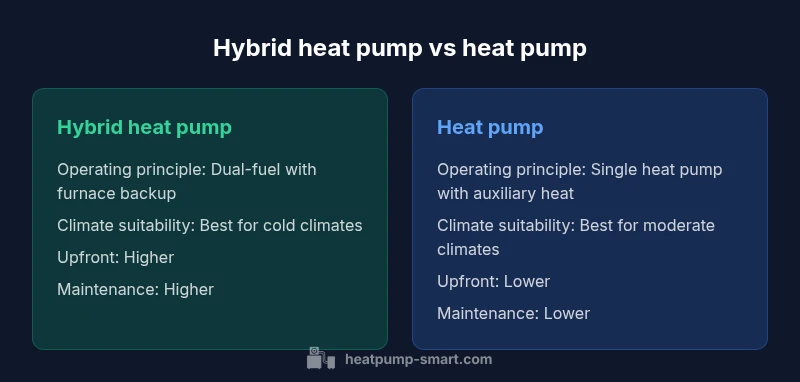
| Operating principle | Dual-fuel with furnace backup | Single air-source heat pump (with optional auxiliary heat) |
| Climate suitability | Best for cold or variable climates | Best for moderate to cool climates |
| Efficiency profile | High efficiency with furnace assist | High efficiency during moderate loads |
| Upfront cost | Higher upfront due to two-system integration | Lower upfront (single unit installation) |
| Maintenance complexity | Higher—two systems to service | Lower—single system to service |
| Reliability in cold weather | Excellent with backup heat | Depends on ambient temp; may rely on auxiliary heat |
| Space/noise footprint | Requires space for two units; potential higher combined noise | Compact footprint; quieter when properly sized |
Advantages
- Enhanced year-round comfort with backup heat
- Potential energy savings by switching sources based on demand
- Greater resilience in very cold conditions
- Flexible design to match climate and energy costs
Disadvantages
- Higher upfront and installation complexity
- Two-system maintenance can raise ongoing costs
- Backup heat use may affect long-term efficiency if not managed
Hybrid heat pump is typically the better choice for very cold climates; for milder climates, a standard heat pump often suffices.
In cold regions, the backup heat stabilizes comfort and avoids oversized equipment. In milder regions, the simpler setup and lower upfront cost of a heat pump can deliver comparable comfort with fewer maintenance considerations.
Your Questions Answered
What is a hybrid heat pump, and how does it differ from a standard heat pump?
A hybrid heat pump combines a heat pump with a backup heating source, typically a furnace or boiler. The system switches between sources to maximize efficiency and comfort. A standard heat pump relies on the outdoor-air refrigerant cycle, using electric resistance heat only as a backup when necessary.
Hybrid systems blend a heat pump with a backup furnace, switching sources to balance efficiency and comfort. Standard heat pumps rely on outdoor heat and use electric backup sparingly.
Which system performs better in winter?
Hybrid systems maintain warmth with a furnace backup, offering reliable performance in very cold weather. A standard heat pump can struggle on extremely cold days unless paired with auxiliary heat.
Hybrid systems keep you warm using backup heat in very cold weather; standard heat pumps may need extra heat during extreme cold.
Are there incentives for choosing a hybrid system?
Many regions offer rebates or incentives for energy-efficient heat systems, including hybrids. Availability varies by location, so consult local programs and your installer for current offers.
Check local rebates and incentives for energy-efficient hybrids with your installer.
Is installation more complex for a hybrid system?
Yes. Hybrid systems require coordinating two heating components and ensuring controls communicate effectively. This can extend installation time and require compatible ductwork and safety checks.
Hybrid installs are more complex because two systems must work together, so expect longer setup and checks.
What maintenance does each system require?
Both systems need annual professional service. Hybrids require furnace/boiler maintenance plus heat-pump checks; standalone heat pumps need refrigerant, compressor, and coil maintenance.
All systems benefit from yearly professional service; hybrids add furnace maintenance into the mix.
Top Takeaways
- Assess climate and energy costs before choosing
- Consider total life-cycle costs, not just upfront price
- Factor in installation complexity and space needs
- Leverage smart controls to optimize heating cycles
- Check rebates and incentives in your area