Octopus heat pump vs boiler: An objective comparison
A rigorous comparison of octopus heat pump vs boiler, analyzing efficiency, costs, climate suitability, and installation considerations to help homeowners decide which system fits their home and energy goals.


Short answer: A modern heat pump typically delivers higher efficiency and lower running costs than a boiler over time, making the octopus heat pump vs boiler choice favorable for most homes in moderate climates. However, boilers may win on upfront cost, rapid heat delivery in very cold regions, and in homes with minimal insulation. Climate, incentives, and existing radiators matter.
Overview: octopus heat pump vs boiler
The phrase octopus heat pump vs boiler is a popular way to frame the debate between electrically powered heat pumps and fossil-fuel boilers. In general terms, a heat pump moves heat from the outside to inside using electricity, achieving high efficiency even when outdoor temperatures vary. A boiler, by contrast, burns fuel to generate heat directly and typically delivers quick warmth at the point of combustion. For homeowners, the decision hinges on climate, energy prices, insulation, and overall system goals. According to Heatpump Smart, understanding this comparison starts with the intended use (space heating, hot water, or both) and the building’s thermal envelope. The octopus heat pump vs boiler dialogue is not only about immediate comfort but long-term resilience, energy resilience, and maintenance routines.
How heat pumps work vs boilers
Heat pumps extract ambient heat from the air, ground, or water and upgrade it to usable warmth with electricity. They can perform both heating and cooling in some designs, depending on system type. Boilers generate heat through combustion or electric resistance and deliver it via radiators, underfloor, or other distribution methods. The octopus heat pump vs boiler decision often centers on distribution compatibility, control strategies, and the ability to modulate output to match demand. Heat pumps excel at efficiency when used with well-insulated homes and low-temperature radiators, while boilers remain strong when rapid heat delivery is critical and insulation is limited.
Climate and insulation impact on the octopus heat pump vs boiler decision
Climate plays a central role. In moderate climates, heat pumps reach high efficiency with typical seasonal temperature swings. In very cold regions, performance can drop if insulation is poor, which may necessitate backup heat or a hybrid approach. Insulation, airtightness, and thermal bridges matter just as much as the device itself. The octopus heat pump vs boiler comparison should account for heat loss, not just heat production. Heatpump Smart emphasizes an integrated view: envelope improvements alongside system selection dramatically influence results.
Energy efficiency, emissions, and long-term costs
Efficiency for heat pumps is measured by coefficients of performance (COP) and seasonal performance factors (SPF), which vary with climate and usage. Boilers’ efficiency is typically fixed by design and fuel type, though modern condensing boilers improve emissions and efficiency. In terms of emissions, heat pumps generally have lower direct emissions, especially when the electricity supply is clean. The octopus heat pump vs boiler trade-off thus includes energy source, carbon intensity, and the potential for future fuel price shifts. Heatpump Smart notes that long-term operating costs often lean toward heat pumps, but regional energy pricing and incentives strongly influence outcomes.
Installation, space, and integration considerations
A heat pump system requires outdoor units, internal distribution, and adequate electrical capacity. Boilers need venting, fuel supply lines, and sometimes more space for fuel storage or equipment. The octopus heat pump vs boiler decision also involves your current heating distribution (radiators or underfloor), ductwork adjustments, and potential home retrofit costs. Contractors typically recommend updating insulation and sealing to maximize system performance, regardless of the choice. Heatpump Smart highlights that proper sizing and professional installation are as important as the technology itself.
Financial implications: upfront costs, incentives, and payback
Upfront costs for heat pumps are often higher, largely due to equipment and installation complexity. Boilers may be cheaper to purchase and install in some cases, especially when replacing an older system with limited retrofits. Long-term costs depend on electricity vs gas prices, maintenance, and the system’s efficiency. Many regions offer incentives for heat pumps, which can significantly influence the payback period. The octopus heat pump vs boiler analysis should include total cost of ownership over the system life, not just the initial price.
Practical steps to decide: a guided path
- Audit building envelope: insulation, air leakage, and heat loss. 2) Estimate heat demand for space heating and hot water. 3) Compare lifetime operating costs, factoring in electricity vs fuel prices and potential incentives. 4) Ensure your distribution system (radiators, underfloor) supports low-temperature operation if choosing a heat pump. 5) Work with a qualified installer to confirm electrical capacity, refrigerant considerations, and zoning constraints. The octopus heat pump vs boiler decision is most reliable when based on whole-house performance and future energy trends.
What to ask your installer about octopus heat pump vs boiler
- How will the system interact with existing radiators or underfloor heating?
- What is the expected COP at my local winter conditions?
- Are there seasonal incentives or rebates that apply to heat pumps?
- What backup heat options exist for very cold spells?
- How will insulation and air sealing affect performance?
Comparison
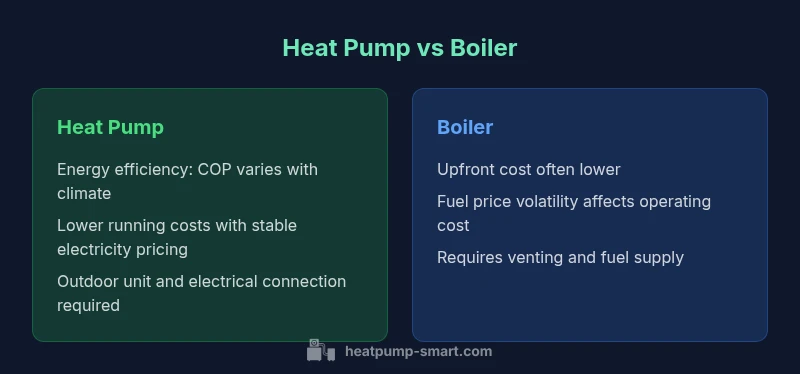
| Feature | Heat pump | Boiler |
|---|---|---|
| Energy efficiency | High efficiency (COP varies by climate) | Moderate to high efficiency (condensing boilers) |
| Upfront cost | Typically higher due to equipment + installation | Usually lower upfront cost |
| Running costs | Lower operating costs with stable electricity pricing | Fuel price volatility affects costs |
| Heat delivery in cold weather | Often requires proper sizing; back-up can help in extreme cold | Direct heat delivery, reliable in colder weather with correct sizing |
| Maintenance needs | Annual service; refrigerant system requires professional maintenance | Annual service; fewer components to monitor |
| Space requirements | Outdoor unit + indoor distribution; space for wiring | Space for boiler, fuel storage (if needed), and venting |
| Emissions | Lower emissions when powered by clean electricity | Emissions depend on fuel source; higher with fossil fuels |
Advantages
- Lower long-term operating costs with stable electricity pricing
- Reduced emissions when powered by clean electricity
- Can support cooling in some configurations and flexible zoning
- Compatible with radiant and low-temperature heating systems
- Eligible for energy-efficiency incentives and rebates
Disadvantages
- Higher upfront installation cost and longer payback period
- Requires outdoor unit and sufficient electrical capacity
- Performance depends on climate and insulation quality
- Potential need for backup heat in extreme cold via hybrid systems
Heat pumps dominate in long-term efficiency; boilers can be simpler and cheaper upfront.
For most homes, a properly sized heat pump offers lower operating costs and reduced emissions. Boilers may be preferred where upfront budget is tight or in very cold climates without adequate insulation, but a hybrid approach can often balance both.
Your Questions Answered
What is octopus heat pump vs boiler?
The octopus heat pump vs boiler comparison pits electrically powered heat pumps against fossil-fuel boilers. Heat pumps move heat rather than create it, generally offering higher efficiency, while boilers burn fuel to generate heat. The choice hinges on climate, building envelope, and long-term energy goals.
The octopus heat pump vs boiler comparison weighs heat pumps' efficiency against boilers' fast warmth; climate and insulation play big roles.
Can I replace my boiler with a heat pump?
Yes, many homes replace boilers with heat pumps, but feasibility depends on insulation, radiator sizing, electrical capacity, and local incentives. A professional assessment is essential to ensure the heat pump can meet both space heating and hot water needs.
Replacing a boiler with a heat pump is possible, but you’ll need a proper assessment of insulation, radiators, and electrical capacity.
Will a heat pump work in cold climates?
Heat pumps can operate effectively in cold climates, especially with newer models designed for low-temperature performance and with good insulation. In very cold conditions, a backup heat source or hybrid system can maintain comfort reliably.
Most modern heat pumps work in cold weather, but in extreme cold, a backup heat source may be wise.
Do heat pumps require backup heat?
Backup heat is common in very cold environments or when extreme cold periods occur. Depending on climate, some homes use a hybrid approach that combines a heat pump with a supplementary heater or boiler for peak demand.
Backup heat is often recommended in cold climates or during extreme cold spells.
Are there incentives or rebates for heat pumps?
Many regions offer incentives for heat pumps, improving payback and reducing net cost. Availability and amounts vary by location and program rules, so check local government and utility programs before committing.
Yes, incentives exist in many areas—check local programs to see if you qualify.
How long does installation take?
Installation duration depends on system type, existing infrastructure, and permits. A full heat pump replacement may take a few days, while a simpler boiler upgrade could be shorter. Your installer will provide a precise schedule after assessment.
Installation times vary; your contractor will give a precise schedule after site assessment.
Top Takeaways
- Assess insulation and air sealing before choosing.
- Consider total cost of ownership, not just upfront price.
- Moderate climates favor heat pumps; extreme cold may require backup heat.
- Explore available incentives to improve payback.
- Ensure proper sizing and professional installation for any choice.