Should Heat Pump Be Set at Constant Temperature? A Practical Guide
Learn if you should keep a heat pump at a constant temperature or use adaptive setpoints. This expert guide from Heatpump Smart covers comfort, humidity, and energy savings with practical steps.


Dynamic temperature control—using adaptive setpoints rather than a fixed temperature—will generally improve comfort and efficiency. Start by enabling adaptive modes on a smart thermostat, then adjust for season and occupancy.
Why constant temperature is a common instinct, but not always optimal
Many homeowners instinctively set a single comfort temperature year-round. The idea is simple: if a temperature feels right in one season, why change it in another? In practice, fixed temperatures can create comfort gaps, humidity imbalances, and wasted energy as outdoor conditions, sun exposure, and indoor activities change. According to Heatpump Smart, the most effective approach for many homes is adaptive control that responds to outdoor temperatures, occupancy, and time of day. When a heat pump operates with dynamic setpoints, it can pre-heat or pre-cool spaces before peak demand, maintain more stable humidity levels, and reduce needless cycling. This approach helps keep rooms closer to a target comfort range without the abrupt swings that happen when you lock in a single number. The Heatpump Smart team emphasizes that the objective is balanced comfort and efficiency, not a rigid number that ignores the realities of daily life. If your current setup uses a fixed temperature, you may notice more temperature drift between rooms and more cycling on days with unusual weather.
How dynamic setpoints work in modern heat pumps
Modern thermostats and heat pumps, when paired, can learn occupancy patterns, outdoor weather, and user preferences to adjust setpoints gradually. Adaptive recovery schedules the system to reach a target temperature just in time for occupancy, rather than overshooting and cooling or heating aggressively. Weather-based adjustments takeInto account outdoor conditions so the system starts earlier on cool mornings or cools ahead of heat waves. The result is smaller temperature swings, more stable comfort, and reduced energy waste. Heatpump Smart analysis, 2026, notes that adaptive control is especially beneficial in homes with mixed occupancy patterns and rooms that experience sun exposure at different times of day.
Humidity, air quality, and comfort: why fixed temps can miss the mark
A fixed temperature may feel comfortable for the coldest or hottest hour, but it often ignores humidity and air quality. Heat pumps commonly dehumidify during cooling cycles and can add moisture during heating if settings are too aggressive. Dynamic setpoints help maintain comfortable humidity levels and better indoor air quality by coordinating with humidity control features on modern thermostats. The goal isn’t just air temperature; it’s a balance of moisture, air speed, and thermal comfort, which dynamic control is better equipped to deliver. In many homes, the difference is felt in fewer cold drafts or overheated rooms and a more even feel across zones.
Climate and lifestyle considerations that shape the right strategy
The optimal approach depends on climate, occupancy, and home layout. In milder climates with variable sun exposure, adaptive setpoints can prevent unnecessary cycling during shoulder seasons. In homes with shift workers or irregular schedules, occupancy-based scheduling helps the system anticipate when spaces are in use or vacant. Large homes with multiple zones may benefit from zoning strategies alongside adaptive setpoints to prevent hot or cold spots. Heatpump Smart recommends starting with a baseline adaptive mode and then tailoring rules for your specific routine and weather patterns. As with any complex control system, your goal is to minimize overshoot, keep rooms comfortable, and avoid excessive runtime that wears equipment.
Practical steps to implement adaptive temperature control
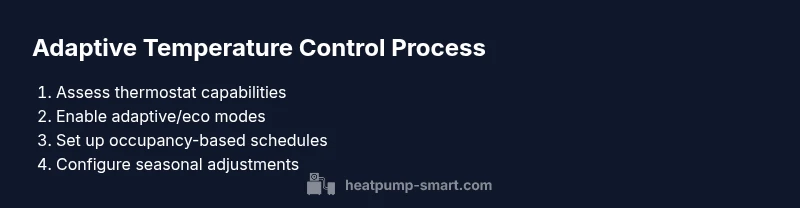
To make this approach work, you’ll need a thermostat and heat pump capable of adaptive or weather-based controls, plus some initial planning. Start by enabling the adaptive or eco mode on your thermostat and ensuring occupancy sensing is active. Next, set up a simple schedule that reduces cooling or heating during typical overnight hours or when spaces are known to be empty. Then, implement season-based adjustments so your system preheats or pre-cools before seasonal changes. Finally, monitor comfort and energy usage over a two-week period and adjust gradually. Heatpump Smart’s guidance is to iterate slowly and avoid large, abrupt changes that can confuse the system and occupants. A well-configured adaptive setup can maintain comfort with less energy use and more consistent temperatures across rooms.
Common pitfalls and how to avoid them
Common mistakes include turning adaptive features off, setting overly aggressive setback values, or not accounting for humidity and ventilation. Ensure the thermostat learns your schedule rather than forcing constant changes. If you have different zones, confirm that zone controls are properly configured and that sensors reflect actual occupancy. Regularly review energy use and comfort complaints, and refine settings rather than abandoning adaptive controls at the first sign of trouble. With careful setup, adaptive temperature control becomes a seamless part of daily life.
Real-world scenarios: do's and don'ts
In homes with afternoon sun warming a south-facing room, rely on adaptive control to compensate for heat gain instead of a fixed setback. If a space is frequently unused, schedule a small, gradual setback instead of a full one-size-fits-all change. Don’t rely on a single thermostat to manage an entire multi-story house; add zoning and additional sensors to prevent hot or cold spots. If you notice humidity swings during heating, adjust dehumidification settings or humidity targets in your thermostat interface.
Measuring success: energy savings and comfort improvements
Evaluate comfort by tracking room-by-room temperature stability and occupant feedback. For energy use, compare months before and after implementing adaptive controls, taking note of fewer short cycles and more consistent temperatures. Look for a reduction in drastic temperature deviations from room to room and a smoother overall climate experience. Heatpump Smart analysis suggests that homeowners who adopt adaptive control experience meaningful improvements in both comfort and efficiency when combined with proper humidity management and occupancy-aware scheduling.
The future of thermostat control and Heatpump Smart recommendations
As thermostat technology evolves, learning capabilities and machine-driven optimization will continue to improve. Heatpump Smart expects even tighter integration with home energy management, better forecasting based on weather data, and more intuitive interfaces for non-technical homeowners. The Heatpump Smart team recommends adopting adaptive temperature controls as a default approach for most homes, while leaving room for manual tweaks in special cases or for certain rooms with unique requirements.
Tools & Materials
- Smart thermostat with adaptive/learning features(Ensure supports learning, adaptive recovery, and weather-based adjustments.)
- Smartphone or computer with internet access(For programming and monitoring your system.)
- Stable Wi-Fi connection(Needed for remote updates and cloud-based features.)
- Energy monitor (optional)(Helpful for validating savings after changes.)
Steps
Estimated time: 1-2 hours
- 1
Check thermostat capabilities
Inspect your thermostat to confirm it supports adaptive/occupancy-based controls and weather-based adjustments. If not, consider upgrading to a model that does. This ensures you can implement dynamic setpoints effectively.
Tip: Consult the user manual or manufacturer support to verify feature availability. - 2
Enable adaptive/eco mode
Turn on adaptive or eco modes in the thermostat settings. This enables the system to adjust heating and cooling in response to real-time conditions and occupancy.
Tip: If unsure, start with a modest adaptive setting and observe comfort before increasing complexity. - 3
Set up occupancy-based scheduling
Configure schedules that reflect typical occupancy, so the system reduces conditioning in vacant spaces without sacrificing comfort when rooms are used.
Tip: Use zone sensors or door sensors if available to improve accuracy. - 4
Configure seasonal adjustments
Create season-based rules so the system begins warming or cooling ahead of expected weather changes, reducing lag and overshoot.
Tip: Avoid large, abrupt changes; gradual adjustments feel more natural. - 5
Tune humidity and ventilation controls
If your system supports humidity targets, set reasonable ranges and enable dehumidification during cooling periods to prevent damp or overly dry spaces.
Tip: Monitor humidity with a sensor in key living areas for better results. - 6
Test and monitor performance
Run through a full day or two with the new settings and note comfort levels, runtime, and any hot/cold spots.
Tip: Keep a simple log of room temperatures and occupant comfort notes. - 7
Refine with zoning if possible
If you have multiple zones, ensure each has appropriate sensors and controls so adjustments don’t create cross-zone comfort issues.
Tip: Zoning often yields the largest gains in comfort and efficiency for larger homes.
Your Questions Answered
Should heat pumps be set to a constant temperature year-round?
Generally no. Dynamic setpoints adjust for outdoor conditions and occupancy, improving comfort and efficiency. Fixed temps can cause humidity swings and more cycling.
In most homes, dynamic temperature works better and saves energy, while fixed temps can feel uncomfortable and waste energy.
What features should I look for in a thermostat to support adaptive temperature control?
Look for occupancy sensing, adaptive recovery, weather-based adjustments, and compatibility with your heat pump. Ensure it can be controlled via a smartphone app and supports remote updates.
Choose a thermostat with occupancy sensing and weather-based scheduling to get the most out of adaptive control.
Can fixed temperatures help humidity control?
Fixed temperatures do not actively manage humidity. Dynamic controls can operate humidity-related functions as needed, improving comfort.
Fixed temps don’t reliably manage humidity; adaptive controls help balance moisture in the air.
How do I set up seasonal adjustments?
Use your thermostat’s seasonal or weather-based settings, and adjust at the start of each season. Avoid constant changes and let the system learn patterns.
Set up season-based rules in your thermostat and update them as the seasons change.
Are there risks to using adaptive controls?
Potential issues include misreading occupancy or lag with older equipment. Proper wiring, correct sensor placement, and gradual tuning minimize risk.
Risks are mainly misconfigurations; with proper setup, adaptive controls are safe and beneficial.
Will adaptive control save money?
Savings depend on climate, usage, and system efficiency. Most homes see noticeable improvements in comfort and energy use, but results vary by household.
Yes, often, but it varies with climate and how you use your system.
Watch Video
Top Takeaways
- Adopt adaptive temperature control to balance comfort and efficiency.
- Enable occupancy-aware modes on a smart thermostat.
- Monitor humidity and ventilation to avoid dry or damp spaces.
- The Heatpump Smart team recommends adaptive control for most homes.