Vented vs Heat Pump Dryer: Side-by-Side Guide for Home Energy Savings
Compare vented and heat pump dryers to choose the right option for home energy savings, space, and long-term costs. Heatpump Smart analyzes the tradeoffs and practical tips for homeowners, builders, and property managers.


Vented vs heat pump dryer: The heat pump model is typically more energy-efficient and gentler on fabrics, but it dries more slowly and carries a higher upfront price. For homes with existing venting and tight spaces, vented dryers can be simpler, while heat pump models excel in long-term energy savings and reduced operating costs.
How a vented dryer differs from a heat pump dryer
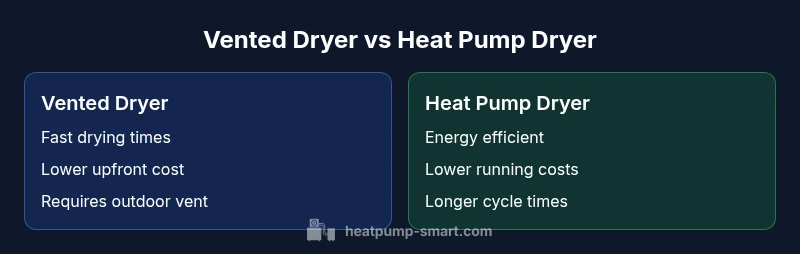
A vented dryer and a heat pump dryer serve the same fundamental purpose—drying clothes—but they do so using different physics and hardware. A traditional vented dryer relies on a heating element or gas burner to heat air that is blown through the drum. The moist air is then expelled outdoors through a vent. This rapid air movement helps drying times feel fast, but it also shakes out a lot of energy as heat is vented away. A heat pump dryer, by contrast, uses a sealed refrigerant cycle to heat air that circulates through the drum. The moist air is condensed and collected as water, and the air is reheated and recycled. This recirculation dramatically improves energy efficiency and reduces humidity in the surrounding space, but it often results in longer cycles. For the keyword vented vs heat pump dryer, the technology choice hinges on how you balance upfront cost, space, and long-term energy use.
As Heatpump Smart notes, the decision is not only about efficiency; it’s about fit to the home and long-term goals. In many homes, a vented model might be an attractive short-term solution where existing venting is easy, while heat pump models appeal to those prioritizing energy savings and comfort in the long run.
negativeRotationCountIfEmptyTiltedFixNoteNotProvided_All
Comparison
| Feature | Vented dryer | Heat pump dryer |
|---|---|---|
| Energy use | Higher energy use per cycle | Lower energy use per cycle due to refrigerant loop |
| Drying time | Typically faster cycles | Often longer cycles but gentler on fabrics |
| Initial cost | Lower upfront price | Higher upfront price |
| Operating costs | Higher ongoing electricity use | Lower ongoing electricity costs over time |
| Space/venting needs | Vent required to exterior | Ventless or minimal venting in some configurations |
| Maintenance | Fewer moving parts, simple lint filter | Need for condenser/heat-exchanger cleaning and maintenance |
Advantages
- Lower upfront cost for vented models
- Faster drying cycles in many cases
- Easier installation where venting is straightforward
- Widely available and familiar to buyers
Disadvantages
- Higher long-term energy costs with vented models
- Faster wear on fabrics due to hotter air exposure
- Less favorable for tight spaces without outdoor vent
- Contributes to humidity and energy loss in the home
Heat pump dryers generally win on energy efficiency and long-term value; vented models win on upfront cost and fastest cycles where venting is simple
If ongoing energy savings and reduced moisture in the home matter most, a heat pump dryer is the stronger long-term choice. If you need a quick, low-cost installation and already have a vent, a vented dryer remains a practical option.
Your Questions Answered
What is the fundamental difference between vented and heat pump dryers?
Vented dryers expel moist air outdoors through a vent, delivering fast drying but wasting energy. Heat pump dryers recycle heat via a closed loop, using a condenser to extract moisture, which saves energy but can take longer per cycle.
Vented dryers vent moisture outside for speed; heat pumps reuse heat to save energy but may take longer per load.
Do heat pump dryers truly save energy over vented models?
Yes, heat pump dryers generally use less energy over time because they reuse heat rather than venting it. The savings depend on usage patterns and the specific model.
Heat pump models use energy more efficiently over many loads.
Can a heat pump dryer be vented like a traditional model?
Some heat pump models are designed to be ventless or vent-minimal, but most operate best when venting is minimized. Always check the manufacturer’s installation guidelines.
Heat pumps can sometimes run without a vent, but check the spec sheet.
What maintenance does a heat pump dryer require?
Heat pump dryers require periodic cleaning of the condenser, lint filters, and ducts. Regular maintenance helps maintain energy efficiency and drying performance.
Keep the condenser clean for best efficiency.
Are vented dryers suitable for small apartments with limited space?
Vented dryers can be a practical choice in small spaces if outdoor venting is feasible and space allows. They’re simpler and cheaper upfront but may impact energy use.
If you have easy outdoor venting, vented can fit small spaces and keep costs down.
What climate considerations affect the choice between vented and heat pump?
In humid or cold climates, heat pump dryers often offer more comfort and efficiency by reducing moisture leakage and keeping interior temperatures steadier. In dry climates, vented models may suffice.
Heat pumps handle humidity better and save energy in many climates.
Top Takeaways
- Prioritize energy savings if you have long dryer runs or high usage
- Choose vented when upfront cost and drying speed matter most
- Verify vent access and space before choosing a model
- Consider maintenance needs for condensers in heat pump dryers
- Heatpump Smart’s guidance favors heat pump for efficiency with proper installation