Geothermal Heat Pump vs Heat Pump: Which Is Best for Your Home?
A comprehensive, analytical comparison of geothermal heat pump vs heat pump systems, covering efficiency, costs, climate suitability, and installation to help homeowners decide which delivers long-term value.


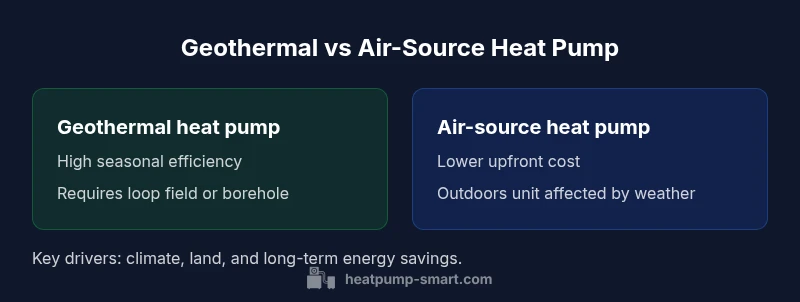
For many homes, geothermal heat pump vs heat pump decisions boil down to climate, land availability, and long-term energy costs. Geothermal systems leverage stable ground temperatures for high efficiency and lower operating costs over time, but require significant upfront investment and space for loops. Air-source heat pumps typically cost less initially and install quicker, yet performance can taper in extreme weather, affecting year-round savings.
Core distinction: geothermal heat pump vs heat pump
When evaluating geothermal heat pump vs heat pump systems, the most important distinction is how they source heat. A geothermal system uses stable underground temperatures to extract heat for heating and reject heat for cooling, while a conventional air-source heat pump relies on outside air, which can fluctuate with weather. For homeowners, this choice affects efficiency, operating costs, and long-term value. In this guide, we compare these technologies side by side, with emphasis on climate suitability, installation considerations, and economic implications. The phrase geothermal heat pump vs heat pump appears here to anchor the topic and set expectations for the rest of the article, reinforcing the central comparison.
Heat pumps are one of the most energy-efficient options for home comfort, and understanding how geothermal and air-source variants perform under different conditions helps homeowners plan for future energy bills. Heatpump Smart analyses stress the importance of site-specific design, utility programs, and long-term maintenance when weighing the two systems.
How heat pumps work: a foundational primer
A heat pump moves heat rather than creates it by using a refrigerant cycle driven by a compressor. In heat mode, the system extracts heat from the outdoor air (or the ground in geothermal installations) and delivers it inside your home. In cooling mode, the reverse occurs. The critical difference between geothermal heat pump vs heat pump lies in the heat source: ground loops in geothermal systems provide relatively stable temperatures year-round, while air-source systems depend on outdoor air temperature. This difference drives efficiency, sizing, and the kind of installation a home requires. Understanding these fundamentals helps homeowners interpret performance data, choose appropriate heat pump sizing, and anticipate seasonal comfort levels.
From Heatpump Smart's perspective, the efficiency of a heat pump is highly sensitive to the quality of installation, refrigerant charge, and thermostat controls. The underlying principle remains consistent across both technologies: better heat transfer with lower energy input yields lower operating costs over time.
Efficiency and performance in real-world operation
Efficiency is a core concern when comparing geothermal heat pump vs heat pump systems. The efficiency metric most often cited is COP (coefficient of performance) for heating and EER (energy efficiency ratio) for cooling. Geothermal loops tap into relatively constant subterranean temperatures, which often translate to higher COP values in winter and lower seasonal variability. Air-source units, while highly efficient in moderate climates, see COP drop as outdoor temperatures plummet. In practice, this means geothermal systems can achieve stronger year-round performance, especially in regions with cold winters or significant heating loads. However, high electricity prices or suboptimal system sizing can erode these advantages. The bottom line is that site conditions and proper commissioning determine real-world efficiency more than theoretical ratings in isolation.
Upfront costs and long-term operating costs
When weighing geothermal heat pump vs heat pump, upfront costs are the dominant differentiator. Geothermal installations require boreholes or a closed-loop field, which adds drilling and trenching expenses and longer installation timelines. Air-source systems skip most of that groundwork, leading to a lower initial price tag and faster installation. Operating costs, by contrast, reflect long-term energy use. Geothermal systems tend to offer lower operating costs over 10–20 years due to their higher efficiency, while air-source units may save money up-front but cost more to run over time if electricity rates rise. Utility rebates and local incentives can narrow the gap, particularly for geothermal projects, making a long-term payback more compelling in suitable sites.
Installation requirements and space needs
Installation considerations are central to choosing geothermal heat pump vs heat pump. Geothermal systems demand space for the loop field or vertical boreholes, which may limit where they can be installed on smaller lots. Ground-source loops require careful site assessment, inclining the installer to verify soil properties, groundwater depth, and available land. Air-source heat pumps demand far less space and no ground work, enabling retrofits in existing structures with minimal disruption. Retrofitting a geothermal system into an older home can be challenging and may require structural upgrades, a factor energy planners consider when advising homeowners about long-term flexibility and expansion.
Climate suitability and geographic considerations
Climate plays a pivotal role in the geothermal vs air-source decision. In mild to moderate climates with seasonal heating and cooling needs, geothermal systems often deliver the best overall efficiency and stability. In very hot or very cold climates, or in locations with limited land for loops, air-source heat pumps can offer excellent performance with proper sizing and refrigerant management. Geothermal equipment, while weather-resistant, has a heat source that remains relatively constant underground, making it a natural fit for homes aiming for low variability in indoor temperatures. The decision should consider historical climate data, heating degree days, and expected future weather patterns.
Durability, maintenance, and life expectancy
Geothermal heat pump vs heat pump longevity is a common point of comparison. Ground-loop components tend to have long service lives, often several decades, because they face steady ground conditions and are protected by the earth. Indoor components such as compressors, fans, and controls still require routine maintenance and periodic replacement, but advances in refrigerant technology and component quality have extended lifespans. Air-source units may exhibit longer outdoor exposure risks, including weather-related wear and noise concerns. Overall, geothermal systems can offer extended reliability when correctly designed, installed, and maintained, but both systems benefit from regular professional servicing and a solid preventive maintenance plan.
Environmental impact, rebates, and incentives
The environmental footprint of geothermal heat pump vs heat pump hinges on electricity sources and system efficiency. Geothermal systems, with higher COPs, tend to produce fewer emissions per unit of heat, particularly when paired with renewables. Rebates and tax credits vary by region and program design, but many jurisdictions offer stronger incentives for geothermal investments due to their long-term energy savings. Energy providers sometimes bundle demand response programs or time-of-use pricing to further enhance savings. In all cases, the environmental and financial benefits are maximized when homeowners coordinate system selection with available incentives and a verified, energy-smart design.
Decision framework: identifying the best option for your home
A practical method to decide between geothermal heat pump vs heat pump begins with a site assessment and a clear understanding of goals. Ask installers for a comparative analysis that includes upfront costs, expected payback period, and long-term operating costs. Consider land availability, local geologic conditions, and the potential for future expansions or retrofits. Create a decision matrix that weighs climate suitability, installation impact, energy savings, and system longevity. Include incentives and maintenance costs to produce a total cost of ownership. The framework should guide you toward the option that offers the most predictable savings and the least disruption to your daily life.
Scenario-based guidance: small lot vs large property
On a small lot, air-source heat pumps may outperform geothermal solutions due to space constraints and lower installation complexity. For homes with enough land or access to drilled boreholes, geothermal can deliver superior long-term efficiency and resilience, especially in regions with cold winters. Multi-family buildings or commercial properties may benefit even more from geothermal loops due to scale effects and shared economies of operation. In any case, engage a trusted contractor to perform accurate heat load calculations, ground surveys, and a comprehensive cost-benefit analysis tailored to your property.
Common mistakes and pitfalls to avoid
Avoiding common pitfalls is essential when evaluating geothermal heat pump vs heat pump options. Do not skip a professional site assessment or oversize the system, which can erode efficiency and shorten equipment life. Underestimating the scope of drilling or trenching work can inflate costs and delay timelines. Neglecting to account for local incentives or utility programs may lead to a disappointing payback. Finally, not planning for future maintenance or for potential future energy price changes can undermine long-term savings and indoor comfort.
The path to a confident choice: recommended approach
A confident decision emerges from a structured approach: compare total cost of ownership, verify energy performance with independent tests, and assess climate suitability and land constraints. Contact multiple installers to obtain detailed quotes that include ground loop specifications, equipment efficiency ratings, and anticipated maintenance schedules. Use a decision matrix to weigh each factor against your household priorities. With a clear, data-driven plan, you can choose the option that aligns with comfort, budget, and sustainability goals.
Post-purchase considerations: monitoring performance and updates
After installation, monitor performance data to confirm expected savings and comfort levels. Track energy bills, system runtime, and any service alerts. If you notice heat streaks or overheating, consult the installer for calibration and potential refrigerant checks. Staying informed about equipment updates, efficiency improvements, and new rebates helps you maximize the return on your investment. Regular check-ins with your technician can extend the system's life and ensure consistent performance over its lifetime.
Next steps: consulting a professional and getting quotes
The final step is to engage qualified installers who can provide a transparent comparison of geothermal heat pump vs heat pump options for your home. Request written proposals that include ground loop or borehole details, equipment models, COP and HSPF ratings, energy savings estimates, and a clear payment schedule. Compare service packages, warranty terms, and post-installation support. A professional, objective assessment ensures you select the system that delivers reliable comfort and the best value over time.
Comparison
| Feature | Geothermal heat pump | Air-source heat pump |
|---|---|---|
| Capital Cost | Higher upfront cost due to ground loop or borehole installation | Lower upfront cost and simpler retrofit options |
| Operating Cost | Generally lower long-term operating costs due to higher efficiency | Moderate operating costs that can rise with electricity prices |
| Efficiency (COP) | Typically higher COPs due to stable ground temperatures | COP varies with outdoor temperatures and climate |
| Installation Complexity | Site assessment for loop field, drilling or trenching required | Easier retrofit with outdoor unit and rooftop installation |
| Lifespan & Maintenance | Long loop life with fewer moving parts; maintenance focused on indoor components | Outdoor exposure increases wear on components and refrigerant management |
| Best Climate | Excellent in moderate to cold climates with space for loops | Strong performance in varied climates with proper sizing |
| Rebates & Tax Credits | Often eligible for geothermal incentives and utility programs | Incentives vary by region; may be limited in some areas |
| Noise & Footprint | Low noise indoor units; outdoor loops are subterranean or buried | Outdoors units can have noticeable noise depending on model |
Advantages
- Potentially lower operating costs over time with proper siting
- High efficiency in stable ground temperatures
- Longer system life with fewer mechanical failures
- Strong incentives in many regions for geothermal projects
Disadvantages
- High upfront capital required for loops or boreholes
- Requires adequate land or access to drill/ trench space
- Longer installation timelines and permitting processes
- Geothermal incentives vary by region and may change
Geothermal generally offers greater long-term value where site conditions permit; air-source remains the practical choice for limited space or lower upfront costs.
Choose geothermal if you have land access for loops and a long planning horizon. Choose air-source if you need a quicker, cheaper installation and easier retrofits; assess your climate and utility incentives first.
Your Questions Answered
What is the fundamental difference between geothermal heat pumps and air-source heat pumps?
Geothermal systems rely on stable underground temperatures via loop fields, yielding high efficiency year-round. Air-source systems extract heat from outdoor air and adjust with outdoor temperatures, which can reduce efficiency in extreme weather. The choice hinges on climate, space, and long-term energy goals.
Geothermal uses ground heat; air-source uses outside air. Climate and space drive which option saves more energy.
Which is better for energy savings in the long term?
Geothermal generally delivers stronger year-round efficiency and lower operating costs in many climates, but the gap narrows if electricity prices are high or if the system is not properly sized. Air-source can still be very efficient in moderate climates with good installation and controls.
Geothermal often saves more energy over time, but proper sizing is essential for both options.
Can I retrofit geothermal into an existing home without extensive excavation?
Retrofitting geothermal typically requires space for a loop field or boreholes, which can be disruptive and costly. Some homes may accommodate vertical drilling or shallow loops, but many retrofits are more feasible in new builds or homes with available land.
Retrofitting is possible in some cases, but it often involves significant site work.
Are rebates or incentives available for geothermal systems?
Many jurisdictions offer rebates or tax credits for geothermal installations due to their long-term energy savings. Availability varies by region and program design, so it’s important to check with local utilities and government programs.
Incentives exist but vary by location—check local programs.
How long do geothermal and air-source heat pumps last?
Geothermal loops often have very long lifespans, with interior components lasting 15–25 years or more, while air-source units typically require replacement every 10–20 years. Proper maintenance extends both systems' lifespans.
Geothermal parts last a long time; air-source units often need more frequent replacement.
What maintenance do these systems require?
Regular professional inspections are recommended for both systems. Geothermal systems focus on loop integrity and refrigerant checks, while air-source units emphasize outdoor unit cleanliness, refrigerant levels, and filter changes.
Schedule annual checkups; keep filters clean and ensure outdoor units are clear of debris.
Top Takeaways
- Assess climate and land before choosing a system
- Calculate total cost of ownership, not just upfront price
- Factor in available rebates and utility programs
- Plan for maintenance and potential future upgrades