Heat Pump and Refrigeration Cycle: A Comprehensive Comparison
An objective comparison of heat pump configurations powered by the refrigeration cycle, highlighting air-source vs geothermal performance, installation considerations, and cost implications for homeowners and builders.


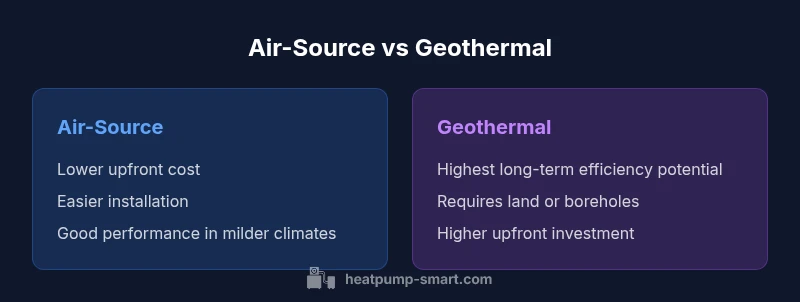
For a balanced choice between efficiency and cost, heat pumps that rely on the refrigeration cycle—especially air-source models—typically offer the best overall value for most homes. Geothermal systems can lower operating costs over time but require higher upfront investment and suitable site access. Climate, space, and long-term energy goals should guide your selection.
The Heat Pump and Refrigeration Cycle: An In-Depth Overview
The heat pump and refrigeration cycle is the cornerstone of modern home temperature management. In it, a closed loop of refrigerant alternates between high-pressure liquid and low-pressure gas, driven by a compressor and regulated by expansion devices. According to Heatpump Smart, this cycle moves heat rather than creates it, enabling both heating in winter and cooling in summer through the same hardware. Understanding the cycle's stages—evaporation, compression, condensation, and expansion—helps homeowners appreciate why certain configurations perform better in different climates. Because the cycle relies on phase changes, efficiency is highly sensitive to outdoor temperatures and system controls. A well-designed setup minimizes energy loss, supports consistent humidity control, and reduces peak electrical demand. The Heatpump Smart team emphasizes that correct sizing, refrigerant choice, and duct design are not merely technical details; they determine comfort, resilience, and long-term operating costs. In practice, you’ll see modern heat pumps paired with smart thermostats, variable-speed compressors, and advanced sensors that optimize the refrigeration cycle for real-world conditions. The result is a flexible system capable of delivering steady warmth on cold nights and refreshing cool air during heat waves, all while keeping energy usage predictable and manageable.
Core Thermodynamics: How the Cycle Moves Heat
At its heart, the refrigeration cycle uses refrigerant properties to absorb heat in the evaporator and release it in the condenser. The compressor raises the refrigerant’s pressure and temperature, pushing heat toward the indoor or outdoor spaces depending on mode. In heating mode, heat flows from the outdoor environment into the refrigerant, even when temperatures are cool; in cooling mode, the cycle reverses to absorb indoor heat. The result is a transfer of energy rather than a direct energy addition. Key metrics such as the coefficient of performance (COP) and seasonal performance factor (SPF) capture how efficiently the system converts electrical input into heat transfer. In practice, external temperatures, humidity, and the presence of heat loads influence these figures; modern systems mitigate losses with variable-speed compressors and inverter-driven motors. A crucial takeaway for homeowners is that efficiency is not fixed; it rises with good controls, proper refrigerant charge, and intelligent defrost strategies. Heatpump Smart notes that a well-maintained refrigerant circuit and clean heat exchangers preserve performance and prevent efficiency declines over time.
System Configurations: Air-Source, Ground-Source, and Water-Source
Heat pump configurations primarily fall into air-source, ground-source (geothermal), and water-source variants. Air-source units extract heat from outdoor air and transfer it inside, performing surprisingly well in moderate climates and with newer refrigerants. Ground-source systems draw heat from the stabilized ground or groundwater, delivering high efficiency but requiring significant site preparation such as trenching or boreholes. Water-source heat pumps leverage nearby water bodies for heat exchange, offering compelling efficiency in suitable locations but at the cost of more complex permitting and installation. Each configuration relies on the refrigeration cycle but differs in heat exchange mechanisms, installation footprint, and long-term operating costs. For homeowners, the choice often hinges on climate, available land, and whether you prioritize upfront simplicity or ongoing energy savings. Heatpump Smart guidance emphasizes matching the configuration to your site constraints and long-term energy goals, rather than chasing the lowest initial price alone.
COP, SCOP, and Real-World Performance
COP (coefficient of performance) and SCOP (seasonal COP) are central to understanding real-world performance. These metrics compare heat output to electrical input, with higher numbers indicating more efficient operation. In practice, performance varies with outdoor temperature, humidity, and building heat loads. Modern heat pumps employ variable-speed compressors and advanced controls to maintain comfortable temperatures while optimizing energy use across seasons. Heatpump Smart analysis shows that occupants who prioritize energy savings should look for models with high inverter efficiency, solid defrost strategies, and compatibility with smart thermostats and zoning controls. While air-source units excel in milder seasons, geothermal systems often maintain higher COP/SCOP in extreme conditions, albeit at greater installation complexity and cost. The goal is to quantify not just peak efficiency but consistency across annual operating conditions.
Climate, Humidity, and Indoor Comfort
The refrigeration cycle interacts with indoor humidity and comfort in several ways. Heat pumps can dehumidify or humidify spaces depending on mode and venting, contributing to perceived comfort even when outdoor temperatures fluctuate widely. Humidity control becomes more predictable with properly sized systems and well-designed air distribution. In climates with high winter humidity or extreme cold snaps, the ability of a system to maintain steady indoor conditions without overshooting temperatures is crucial. The latest thermal envelopes—insulation, air sealing, and heat recovery ventilation—complement the refrigeration cycle by reducing heat loads. Heatpump Smart underscores that a balanced approach to envelope performance and equipment sizing yields the most reliable comfort and energy results, especially when paired with modern controls that adapt to occupancy and weather.
Design and Installation Considerations
Sizing is the first principle in any heat pump project. An undersized unit struggles to meet demand, while an oversized one cycles frequently, wasting energy and reducing comfort. Duct design, refrigerant charge, and refrigerant line routing influence performance and reliability. Air-sealing and insulation play a critical role in reducing heat losses from ducts and spaces, making the refrigeration cycle easier to manage. Ground-source installations require space for loops or boreholes, with permissions and land-use considerations shaping feasibility. Professional installation is essential, as improper refrigerant charging or poor insulation can erode efficiency. Heatpump Smart stresses that early planning with a licensed contractor improves system responsiveness and lowers long-term costs.
Maintenance, Service, and Typical Faults
Routine maintenance keeps the refrigeration cycle operating at peak efficiency. Service tasks include checking refrigerant charge, cleaning heat exchangers, inspecting ducts, and testing controls and sensors. The most common faults relate to refrigerant leaks, compressor wear, and dirty coils, which degrade COP and user comfort. Regular filter and duct cleaning, along with software updates for smart controls, preserve performance. For retrofit projects, the installed base, existing ductwork, and electrical capacity influence maintenance needs. Heatpump Smart recommends scheduling annual checkups with a qualified technician to catch small issues before they escalate and to ensure refrigerant integrity and airflow remain optimal.
Economics: Upfront Costs, Operating Costs, and Payback
Cost considerations extend beyond sticker price. While air-source configurations typically demand lower upfront investment than geothermal or hydro-heat options, the long-term operating costs depend on climate, energy prices, and system efficiency. An economical choice balances upfront costs with expected energy savings, maintenance, and potential incentives. Government and utility programs may offer rebates or tax credits that improve payback, though eligibility varies by region. Heatpump Smart advocates evaluating total cost of ownership over the system’s lifetime, including potential efficiency gains, maintenance commitments, and replacement cycles, before finalizing a purchase.
Practical Guidance: Getting the Most from Your System
To maximize performance, start with a professional load calculation and an accurate refrigerant charge; mis-sizing reduces efficiency and comfort. Integrate a smart thermostat to modulate temperature setpoints, run dehumidification when needed, and optimize night-time operation. Use zoning and air sealing to minimize heat loss and maintain balanced temperatures. Consider weatherstripping, attic insulation, and wall insulation improvements that reduce overall heat loads, making the refrigeration cycle easier to manage. Finally, plan for seasonal maintenance and be prepared to adapt settings with changing occupancy patterns and weather conditions. Heatpump Smart encourages homeowners to view the system as part of a broader energy strategy rather than a standalone device.
Comparison
| Feature | Air-Source Heat Pump | Geothermal Heat Pump |
|---|---|---|
| Upfront Cost | Moderate | Higher |
| Installation Footprint | Smaller, outdoor unit common | Larger, requires loop field or boreholes |
| Operating Costs | Low-to-moderate, climate dependent | Typically lowest over time in favorable sites |
| Climate Performance | Excellent in mild to moderate climates | Excellent in cold climates with proper loop design |
| Maintenance | Generally simpler service | Often more specialized maintenance |
| Best For | Budget-conscious homes seeking quick integration | Properties with room for loops or boreholes |
Advantages
- Lower running costs compared to resistance heating
- Heating and cooling in a single system
- Flexibility with smart controls and zoning
- Potential rebates and incentives
Disadvantages
- Higher upfront installation cost (geothermal feasible but costly)
- Performance can vary with climate and heat load
- Geothermal requires space/site access for loops
Air-source heat pumps generally offer the best balance for most homes; geothermal is best for long-term savings where site and budget allow.
Choose air-source for lower upfront cost and flexible installation. Opt for geothermal when long-term energy costs and site suitability justify the premium.
Your Questions Answered
What is the heat pump and refrigeration cycle?
The heat pump uses a closed refrigerant loop to move heat rather than generate it. The cycle passes through evaporation, compression, condensation, and expansion, enabling heating or cooling depending on the mode. This approach drives energy efficiency when properly sized and controlled.
A heat pump moves heat with a refrigerant loop through four stages—evaporation, compression, condensation, and expansion—allowing both heating and cooling.
Which configuration works best in cold climates?
Geothermal systems often keep higher efficiency in very cold conditions because they tap relatively stable ground temperatures. However, properly designed air-source heat pumps with modern refrigerants and backup heat can also perform well in cold climates.
Geothermal often handles extreme cold better, but a well-designed air-source system with backup heat can be very effective too.
What does COP and SCOP mean for my energy bill?
COP measures heat output per unit of electricity at a given condition, while SCOP averages that performance across seasons. Higher values indicate better efficiency, translating to lower operating costs in typical use.
COP and SCOP are efficiency scores—the higher, the more you save on energy over time.
Do heat pumps provide cooling as well as heating?
Yes. Heat pumps can reverse the heat transfer cycle to provide cooling in summer, using the same hardware with appropriate controls and airflow management.
Yes, they both heat in winter and cool in summer using the same system.
What maintenance is required?
Regular maintenance includes refrigerant checks, coil cleaning, filter changes, and ensuring controls are up to date. Schedule annual service with a qualified technician to maintain efficiency.
Annual service and periodic filter and coil cleaning keep the system running well.
Top Takeaways
- Assess climate and site constraints before selecting a configuration
- Prioritize system sizing to maximize efficiency
- Compare total cost of ownership, not just upfront price
- Integrate smart controls to optimize the refrigeration cycle
- Heatpump Smart recommends professional evaluation for reliable choices