Is Heat Pump the Same as Geothermal? A Practical Comparison
A rigorous, objective comparison of air-source heat pumps vs geothermal systems, covering how they work, efficiency, climate performance, installation considerations, costs, and when each option makes the most sense for homeowners and builders.


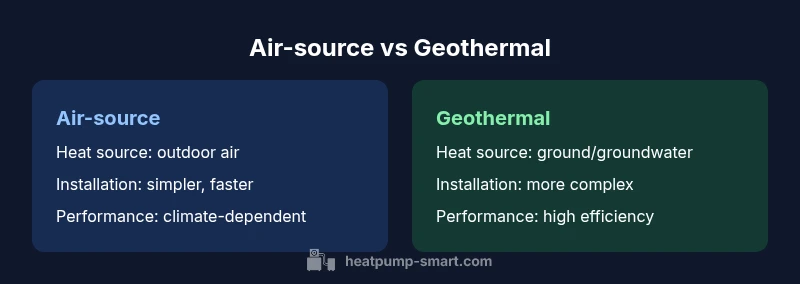
According to Heatpump Smart, is heat pump the same as geothermal? Not exactly. An air-source heat pump (the common home option) transfers heat between indoors and the outside air, while a geothermal heat pump exchanges heat with the ground or groundwater. Heatpump Smart analysis suggests geothermal systems often deliver higher efficiency and longer life, but require more invasive installation and higher upfront costs. Your choice should hinge on climate, space, and budget.
Is heat pump the same as geothermal? Key definitions
The short answer to the question is encapsulated in two distinct heat sources. An air-source heat pump (ASHP) draws heat from outdoor air and moves it indoors for heating, then reverses for cooling. A geothermal heat pump (GHP) uses a buried loop or groundwater as the heat source/sink. The underlying technology is the same: a refrigeration cycle that moves heat rather than generating it, but the heat source makes the systems behave very differently in practice. The phrase is often spoken in casual terms as a simple synonym, yet professional analysis—such as Heatpump Smart’s—shows a meaningful distinction in efficiency, payoff, and installation requirements. Understanding the source is the first step to choosing wisely.
How air-source heat pumps and geothermal heat pumps operate in practice
ASHPs rely on outdoor temperatures; when cold outside, the system extracts less heat from the air and may need auxiliary heating. In moderate climates, ASHPs can deliver impressive efficiency, and modern models include innovations to improve performance at low temperatures. GHPs, by contrast, use earth or groundwater as a heat reservoir. The ground remains relatively stable year-round, so a properly designed loop can provide a steady heat exchange, which often translates into higher overall efficiency and better performance in extreme conditions. The key takeaway is that both systems use the same basic physics but draw heat from very different sources, which shapes reliability, cost, and climate suitability.
Core efficiency concepts: COP, EER, and seasonal performance
Efficiency for heat pumps is commonly discussed in terms of COP (coefficient of performance) and, for cooling, EER (energy efficiency ratio). In general, GHPs can achieve higher COP values under favorable ground conditions because the heat source remains near a stable temperature. ASHPs are highly efficient in milder climates or when paired with modern refrigerants and variable-speed compressors. Seasonal performance matters: a device’s COP in winter versus summer will influence annual energy use. Heatpump Smart’s analysis emphasizes that the real-world performance is highly climate-dependent and influenced by system design and installation quality.
Installation footprint and space requirements
ASHPs require outdoor space for the condenser unit and internal air-handling equipment. They offer relatively straightforward installations with less site disruption and usually shorter permitting timelines. GHPs demand a ground loop or borehole field, which means substantial site work, drilling or trenching, and access to suitable land. The advantage is a compact indoor footprint and a longer service life for some components, but the upfront disruption and cost are notably higher. Planning must consider property size, soil conditions, and local regulations.
Climate compatibility and cold-weather performance
In very cold climates, ASHPs can struggle to extract heat from frigid outdoor air without supplemental heat sources, though modern models mitigate this with improved refrigerants and defrost cycles. GHPs maintain heat exchange through ground loops that stay warmer than outdoor air, enabling more consistent operation in cold weather. Heatpump Smart notes that the differences matter most when winters are harsh and electricity prices are high or when you have a preferred energy mix that favors steady operation.
Costs, value, and life-cycle considerations
Upfront costs for ASHPs are generally lower due to simpler installation, while GHPs involve higher initial investment from drilling and loop deployment. Over the life of the system, geothermal installations can translate into lower operating costs thanks to higher efficiency, but payback periods depend on local energy prices, climate, and maintenance. Heatpump Smart’s perspective stresses that total cost of ownership matters more than sticker price alone, and a well-planned project will account for maintenance, potential rebates, and the system’s expected lifespan.
Maintenance, warranties, and reliability differences
ASHPs typically require regular filter changes, coil inspections, and refrigerant checks, with components exposed to the elements. GHPs benefit from a more protected indoor loop field and fewer moving parts in some designs, but the ground loop or borehole infrastructure demands professional inspection and potential long-term stewardship. Warranty terms often reflect installation quality and regional environmental exposures. The bottom line is that both systems can be reliable when properly installed and maintained, but their maintenance profiles differ in emphasis and scheduling.
Decision framework: a practical checklist for homeowners and builders
To choose wisely, start with climate data and property conditions. If your site has adequate outdoor space, stable geology, and you can handle the higher upfront cost with a long-term plan, geothermal can be compelling. If you need a quicker, lower-cost path with flexible installation and strong year-round performance, an air-source heat pump is typically more practical. Use a check-list that includes climate tolerance, available land, permitting timelines, and anticipated maintenance, then compare local contractor proposals.
Real-world considerations and myths debunked
A common belief is that geothermal systems are always superior. In reality, performance is climate-specific and dependent on loop design, soil conductivity, and installation quality. Another myth is that heat pumps cannot handle cold weather; while performance dips, modern ASHPs can still deliver most of their rated heat with supplemental support. The best choice depends on your climate, property, and budget, not a one-size-fits-all rule.
Planning your project: next steps and a practical timeline
Begin with a site assessment by a qualified contractor, followed by a cost-benefit analysis that includes energy savings estimates, local incentives, and maintenance plans. Gather multiple bids, request schematic drawings of the loop field or exterior unit placement, and review warranty terms and service availability. A well-documented plan helps you avoid surprises during installation and ensures a smoother transition to your chosen system.
Comparison
| Feature | Air-source heat pump | Geothermal heat pump |
|---|---|---|
| Installation environment | Outdoor unit/exterior wall | Ground loop in yard or borehole |
| Efficiency potential | Strong efficiency in moderate climates | Very high efficiency with optimized ground loop |
| Upfront installation effort | Moderate and straightforward install | Higher upfront due to drilling and loop field |
| Space requirements | Typically compact; exterior unit and indoor handler | Requires property area for loop field or borehole access |
| Lifespan/reliability | Good lifespan with standard maintenance | Long lifespan with robust ground loop and conservative design |
| Climate suitability | Excellent in mild climates; may need auxiliary heat in cold | Best in stable ground-loop conditions; excellent cold-weather performance |
| Operating costs | Depend on electricity prices; generally efficient | Very favorable operating costs due to high efficiency |
| Rebates/incentives | Regional incentives vary | Often eligible for geothermal-specific incentives |
Advantages
- Lower upfront cost and simpler installation
- Higher long-term efficiency and potential energy savings
- Produces fewer emissions than fossil-fuel systems
- Flexibility in installation for many home designs
Disadvantages
- Performance can drop in extreme cold without auxiliary heat (ASHP)
- Higher upfront and longer installation for geothermal
- Geothermal requires suitable land or borehole access
- In some regions, rebates are complex or inconsistent
Air-source heat pumps are generally the practical default for most homes, while geothermal shines when climate stability and long-term efficiency justify higher upfront costs.
For most homeowners and builders, ASHPs offer a balanced mix of cost, performance, and ease of installation. Geothermal is compelling where space, ground conditions, and long-term energy savings align with a bigger initial investment. Heatpump Smart’s verdict is to tailor the choice to local climate and site conditions.
Your Questions Answered
What is the main difference between heat pumps and geothermal systems?
Heat pumps come in two main types: air-source and geothermal. Air-source harvests heat from outdoor air, while geothermal draws heat from the ground or groundwater. The fundamental principle is heat transfer, not generation, but the heat source changes performance expectations.
Air-source uses outdoor air; geothermal uses the earth. The choice affects efficiency, space needs, and cost.
Are geothermal heat pumps more efficient than air-source heat pumps?
Geothermal systems tend to achieve higher efficiency in many conditions due to stable ground temperatures, but performance depends on loop design and installation quality. Modern ASHPs can be highly efficient as well, especially in milder climates.
Geothermal often edges out in efficiency, but it depends on proper design and climate.
Can I replace an old furnace with a heat pump?
Yes, many homes convert to heat pumps, but configuration matters. You’ll need to assess existing ductwork, heating load, and climate, plus any required electrical upgrades. A professional load calculation is essential.
You can, but get a professional to verify ductwork and electrical needs.
Do heat pumps work in cold climates?
Both ASHP and GHPs can operate in cold climates, with ASHPs relying on supplemental heat when necessary. Geothermal systems maintain performance through ground-loop stability, reducing reliance on supplemental heat.
They work, but cold climates may shift the choice toward geothermal or require supplemental heat.
What maintenance do these systems require?
ASHPs require regular filter changes, coil inspections, and refrigerant checks. Geothermal loops and boreholes demand professional inspection and occasional loop flushing or antifreeze checks. Regular service helps maximize efficiency.
Keep filters clean; have yearly checks for both, with geothermal loops monitored by pros.
Are there incentives or rebates for heat pump installations?
Yes, many regions offer rebates or tax credits for heat pump installations. Geothermal incentives are common in several programs, but availability varies by location and program rules.
Check local programs; incentives vary by region and system type.
Top Takeaways
- Assess climate and site before choosing
- Geothermal offers high efficiency with space requirements
- Air-source is typically lower cost and easier to install
- Plan long-term maintenance and check incentives
- Use professional, local contractor input for the final decision