Air Source Heat Pump vs Oil Boiler: A Comparison
A balanced, evidence-based comparison of air source heat pumps and oil boilers, covering efficiency, costs, installation, climate suitability, and environmental impact to help homeowners decide.


Air source heat pumps generally offer lower operating costs and reduced emissions compared with oil boilers, but they may require higher upfront investment and proper insulation. In moderate climates with affordable electricity, air source heat pumps tend to outperform oil boilers for total cost of ownership. Heatpump Smart's analysis recommends evaluating climate, electricity pricing, and available rebates before choosing.
Introduction to air source heat pump vs oil boiler
The choice between air source heat pump vs oil boiler determines not only comfort but also long-term energy resilience. This article analyzes both technologies in depth to help you decide based on climate, energy costs, and long-term value. The keyword we are focusing on is air source heat pump vs oil boiler, and we anchor our discussion in real-world constraints like insulation quality, thermostat controls, and local fuel prices. Heatpump Smart emphasizes evaluating climate suitability and energy pricing when forming a long-term plan. A well-sized system aligned with the home’s load minimizes cycling losses and improves comfort, with maintenance and service access as practical considerations for homeowners, builders, and property managers.
We approach the topic with a practical, evidence-informed lens and reference credible installation considerations, retrofitting needs, and the potential for future upgrades. Throughout, you’ll find guidance on how to balance upfront costs against running costs, emissions, and reliability. The discussion is designed to be actionable, not only theoretical, so you can begin with a clear set of steps for evaluating options.
According to Heatpump Smart, the decision should weigh a home’s insulation, heating demand in winter, electricity price trends, and available rebates before committing to a system. This foundation helps ensure the chosen solution delivers comfort while maximizing energy savings and minimizing disruption during installation.
How each system works: fundamentals of operation
An air source heat pump extracts heat from outdoor air using a refrigerant cycle and delivers it into the home via indoor coils or radiators. In cooling mode, the system reverses to remove heat from indoor spaces. Electric-powered, heat pumps rely on the electrical grid, and their efficiency is measured by the coefficient of performance (COP) and seasonal performance. By contrast, an oil boiler combusts fuel oil in a burner to generate heat for your radiating system, with heat delivered through radiators or underfloor networks. Modern boilers emphasize high fuel-to-heat efficiency (AFUE) and reliable burner technology.
Key differences include how heat is produced, where energy originates, and how each system performs across seasons. Heat pumps excel when electricity is affordable and the house is well insulated, while oil boilers can provide consistent heat in very cold conditions and in areas with limited electrical infrastructure. Understanding the physics behind each method clarifies why outcomes vary by climate, insulation, and usage patterns.
A practical takeaway is to assess installed loads, radiator compatibility, and thermostat strategy before changing systems. Properly sized equipment and appropriate controls maximize comfort and energy savings, regardless of which option you choose.
Key differences at a glance
Here is a high-level view of how air source heat pumps compare with oil boilers on common decision criteria:
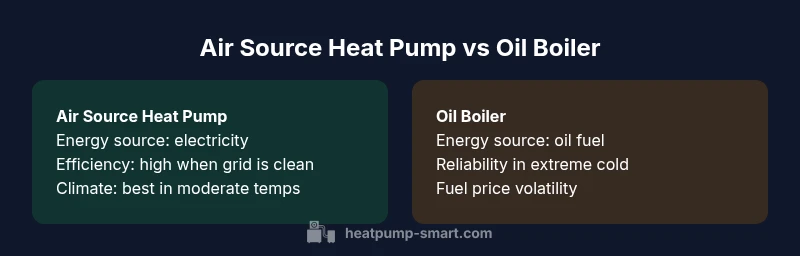
- Energy source and efficiency: Heat pumps convert ambient energy to heat using electricity, offering high efficiency when grid temperatures and building tightness align with usage. Oil boilers burn fuel to generate heat, delivering steady warmth but with efficiency tied to burner condition and fuel quality.
- Upfront and operating costs: Heat pumps usually involve higher upfront costs due to equipment and installation, while oil boilers tend to be cheaper to install but have variable ongoing fuel costs. Operating costs for heat pumps depend on electricity rates and the COP, while oil boiler costs depend on fuel price and consumption.
- Climate suitability: Heat pumps perform best in moderate climates or well-insulated homes with efficient heat distribution, while oil boilers can deliver reliable warmth in very cold climates where electricity pricing is high or grid performance is limited.
- Emissions and environmental impact: Electricity-powered heat pumps can have lower lifecycle emissions, especially if the grid is clean; oil boilers emit more carbon per unit of heat and are more sensitive to fuel price volatility.
- Maintenance and reliability: Heat pumps generally require less frequent servicing for the mechanical components but need refrigerant checks and proper airflow; oil boilers require regular burner maintenance and fuel storage considerations.
Best for: Heat pumps tend to be the better long-term choice for homes in temperate climates with good insulation and access to affordable electricity; oil boilers may be preferred in very cold regions or where capital costs are a primary concern and fuel supply is stable.
Energy efficiency and operating costs
Energy efficiency and operating costs are central to the air source heat pump vs oil boiler decision. Heat pumps convert electricity into heat with a high COP, especially when the home is well insulated and heat demand is moderate. Oil boilers rely on burning fuel oil, and their efficiency depends on the burner design, maintenance, and fuel quality. In practice, heat pumps can deliver lower operating costs over the lifecycle if electricity prices are moderate and the system is well sized. Heatpump Smart analysis shows that climate, grid electricity mix, and how much heat you need in shoulder seasons influence outcomes as much as outright efficiency ratings.
A common pitfall is ignoring the building envelope. Even the most efficient heat pump loses effectiveness if the home leaks heat. Conversely, an oil boiler kept in good condition delivers dependable heat, but fuel price volatility can erode savings quickly. For homeowners, it’s essential to model scenarios using your local electricity price, weather patterns, and typical heat demand to estimate lifetime costs. Rebates and incentives can shift the economics in favor of heat pumps, particularly in regions with robust clean-energy programs. Heatpump Smart notes that the decision should include a realistic 5–10 year plan to capture the full value of whichever path is chosen.
Installation, space, and climate considerations
Installing an air source heat pump requires outdoor unit placement, sufficient clearances for airflow, and indoor distribution compatibility. In homes with existing radiators or underfloor heating, the installation strategy may differ, and radiator upgrades or zone controls can impact performance. Oil boilers require space for a storage tank (if used) and venting to exhaust systems, along with adequate access for fuel delivery and burner servicing. Climate can strongly influence outcomes: heat pumps perform efficiently in milder temperatures and rely on auxiliary heating to manage extreme cold; oil boilers provide consistent warmth at very low outdoor temperatures but at higher ongoing fuel costs. Insulation quality and air sealing play a significant role, since heat pumps work best when the building envelope minimizes heat loss. Heatpump Smart emphasizes planning for future upgrades, such as smart thermostats and home energy management systems, to maximize efficiency and comfort.
Environmental impact and lifecycle considerations
Lifecycle impact is a growing factor in heating-system choices. Air source heat pumps can offer lower emissions over their lifecycle, especially if the electricity grid uses a high share of low-carbon generation. Oil boilers produce combustion emissions and depend on fossil fuel supply, with environmental concerns ranging from extraction impacts to potential fuel spills. The environmental edge of heat pumps is most pronounced when paired with a decarbonized grid, but the benefits vary by region and consumption patterns. Replacing an aging boiler with an efficient heat pump can reduce greenhouse gas emissions, depending on the local energy mix and insulation standards. Long-term considerations include equipment lifespan, refrigerant management, and end-of-life disposal.
Heatpump Smart recommends evaluating local fuel mix, maintenance regimes, and service availability to understand the true environmental and cost implications for your home. In some cases, hybrid approaches (heat pump plus a backup boiler) can offer a balanced compromise between reliability and emissions reduction.
Real-world use cases and decision factors
To translate theory into practice, consider these scenarios:
- Moderate climate, well-insulated home: Air source heat pump is often the better long-term option due to lower operating costs and reduced emissions.
- Cold climate with high electricity costs: Oil boiler may provide reliable warmth with lower upfront costs, though long-term economics depend on fuel pricing.
- Older homes with limited electrical capacity: Retrofit challenges may favor a staged upgrade, possibly combining insulation improvements with a hybrid system.
- New builds prioritizing energy performance: Designing for heat pump-first with adequate insulation can maximize efficiency and comfort, with oil boiler as a contingency if code or grid constraints apply.
Key decision factors include insulation level, thermostat strategy, availability of rebates, and expected utility rates. Heatpump Smart highlights that the best option often involves a tailored mix of technology, building envelope improvements, and optimized control strategies rather than a one-size-fits-all answer.
Maintenance and reliability
Maintenance needs differ between air source heat pumps and oil boilers. Heat pumps require periodic refrigerant checks, airflow cleanups, and outdoor unit protection from snow and debris. Regularly scheduled service by a qualified technician helps maintain COP and longevity. Oil boilers demand burner calibration, fuel delivery checks, and venting inspections to prevent sooting and corrosion. The reliability of either system hinges on proper sizing, installation quality, and consistent maintenance. A well-planned maintenance schedule reduces breakdown risk and extends the system’s life. Heatpump Smart notes that proactive maintenance can keep both systems running efficiently, but the energy source and system design largely shape long-term performance.
For homeowners, setting up service reminders, choosing a reputable installer, and budgeting for annual checkups are prudent steps to protect your investment.
Authority sources
When evaluating sources for this topic, consult credible, industry-backed material such as official government and university publications. These sources provide evidence-based guidance on heat-pump technology, fuel alternatives, and energy policy. Examples include government energy portals and university research on heating systems for homes. For additional context, refer to reputable industry analyses and independent reviews forthcoming from national labs and academic centers.
Comparison
| Feature | Air Source Heat Pump | Oil Boiler |
|---|---|---|
| Initial Cost | Higher upfront cost due to equipment and installation | Lower upfront cost (existing infrastructure may reduce new-install burden) |
| Energy Efficiency | Typically high COP with electric input (depends on climate and insulation) | Efficiency tied to burner design and maintenance (AFUE varies) |
| Running Costs | Lower operating costs when electricity is affordable and climate favorable | Fuel costs volatile and can be higher depending on fuel price and efficiency |
| Climate Performance | Excellent in moderate climates with proper distribution; auxiliary heat as needed | Very reliable heat in cold climates but efficiency can vary with outdoor temperature |
| Maintenance | Fewer moving parts; refrigerant checks and airflow maintenance | Regular burner servicing and fuel storage considerations |
| Emissions | Lower emissions with clean electricity; dependent on grid mix | Higher direct emissions from combustion; influenced by fuel quality |
| Best For | Modern homes with good insulation and access to affordable electricity | Areas with reliable fuel supply and constrained electrical infrastructure |
Advantages
- Lower operating costs in well-insulated homes with clean electricity
- Reduced carbon footprint when powered by a clean grid
- Fewer moving parts and quieter operation
- Potential rebates and incentives for heat-pump installations
Disadvantages
- Higher upfront cost and installation complexity
- Performance drops in extreme cold without auxiliary heat
- Oil boilers require ongoing fuel supply and burner maintenance
- Fuel price volatility can affect long-term costs
Air source heat pumps generally win in moderate climates with good insulation and affordable electricity.
Choose a heat pump when climate, electricity pricing, and incentives align; choose an oil boiler when upfront cost, installer availability, or grid constraints favor quick deployment and predictable fuel use. In some cases, a hybrid approach offers a balanced path.
Your Questions Answered
What is the main difference between air source heat pumps and oil boilers?
The main difference is energy source: heat pumps use electricity to move heat, offering high efficiency in the right conditions, while oil boilers burn fuel to generate heat. Each has distinct maintenance needs and climate suitability, which impacts long-term costs and emissions. Understanding your building and electricity/fuel costs helps determine the better option.
Heat pumps move heat using electricity, which can be more efficient, especially with a clean grid. Oil boilers burn fuel oil, delivering heat reliably but with ongoing fuel costs and combustion maintenance.
Are air source heat pumps effective in cold climates?
Modern air source heat pumps are designed to work in cold weather, but efficiency drops as outdoor temperatures fall. Many homes use supplemental heating during the coldest periods. If you live in an extreme climate, a hybrid approach or a backup heat source may be worth considering.
Heat pumps work well in many climates, but very cold conditions can reduce efficiency, so plan for backup heat if needed.
What installation considerations affect performance?
Key factors include building envelope quality, radiator or underfloor heating compatibility, outdoor unit placement, and indoor distribution. Proper sizing and professional commissioning are essential to achieving expected efficiency. Programs and rebates may also influence the total cost of installation.
A well-insulated home and proper system sizing make a big difference in performance and savings.
Do rebates offset the higher upfront cost of heat pumps?
Yes, many regions offer rebates, tax credits, or incentives for heat-pump installations that can significantly reduce upfront costs. Availability varies by location and program rules, so check local energy offices or utility programs. Reducing the upfront cost improves the long-term economics of a heat-pump installation.
Rebates can substantially reduce upfront costs, but availability depends on location.
How should I estimate lifetime operating costs?
Estimate lifetime costs by modeling energy use under typical weather patterns, insulation levels, and thermostat settings. Compare electricity prices for heat pumps against local fuel prices for oil boilers. Include maintenance, potential repairs, and any planned upgrades, plus incentives that reduce net costs.
Model energy use with local prices, include maintenance and incentives to estimate lifetime costs.
Top Takeaways
- Assess climate, insulation, and electricity pricing before choosing
- Heat pumps excel in efficiency and emissions in suitable regions
- Oil boilers remain viable where grid support is weak or fuel is stable
- Rebates and incentives can materially alter the economics
- Plan for maintenance and future upgrades early