How to Tell Heat Pump from Air Conditioner
Learn how to tell a heat pump from an air conditioner with clear checks, labels, and simple tests. This how-to guide covers outdoor units, reversing valves, thermostat modes, and when to call a pro (Heatpump Smart).


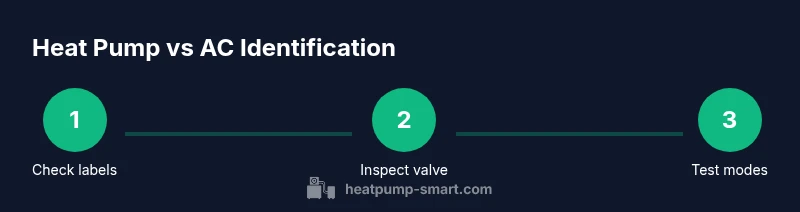
To tell a heat pump from an air conditioner, look for a reversing valve, check the outdoor unit, read the service tag, and review thermostat settings. Heat pumps can both heat and cool, while central AC only cools. Use model labels and operation modes to confirm, and schedule a professional assessment if unsure.
What sets a heat pump apart
A heat pump is designed to move heat rather than create it, providing both warming in winter and cooling in summer. In practice, the difference comes down to components, operation modes, and labeling. The main distinction is the reversing valve in the outdoor unit, which redirects refrigerant flow to enable heating instead of only cooling. According to Heatpump Smart, the quickest way to tell whether you have a heat pump or a conventional air conditioner is to inspect for a reversing valve and to check whether the equipment can run in both heating and cooling modes on the thermostat.
In many homes, the outdoor unit looks very similar for both systems. The real proof lies in manuals, service tags, and the indoor air handler. If your system is paired with a thermostat that offers heating settings or a dedicated 'heat' mode, there’s a strong chance it’s a heat pump. However, some systems use a conventional air handler with supplemental electric resistance heat for cold weather; identification requires a careful look at the control sequence and electric strip presence. When in doubt, match the equipment label with the model number and cross-check with the building's original installation documents. For homeowners, this initial check saves time and helps plan any future maintenance or upgrades. This guide will walk you through reliable, step-by-step checks so you can confidently tell heat pump from air conditioner, even if the units look nearly identical.
Inspect the outdoor unit for clues
Begin by locating the outdoor condenser unit. Look for a data plate or sticker with model and serial information, which often reveals the system type. A heat pump outside will typically have a reversing valve visible on the refrigerant line, and the control wiring may include a 24-volt thermostat connection for heating as well as cooling. If you see labels indicating “heat pump,” “reversing valve,” or “R- B valve,” you’re on the right track. If the label only mentions cooling or has generic air conditioning terminology, proceed to other checks. Remember to take photos of labels for later cross-checking with your indoor thermostat and the home's documentation. This step is crucial when letters or codes on the tag aren’t immediately clear.
Look for the reversing valve and defrost controls
The reversing valve is the most telling mechanical feature. It shifts the refrigerant flow to enable heating in winter and cooling in summer. In many units, the valve is located near the service ports on the outdoor coil or integrated into the valve body on the line set; markings such as “RV” or symbols may appear. The defrost cycle is another indicator of a heat pump’s operation in winter. Defrost mode periodically warms the outdoor coil to prevent ice buildup, a feature not found on standard air conditioners. If you can access the outdoor section safely, look for a small coil heater or logic that controls defrost timing. If you cannot confirm visually, rely on the electrical and labeling information from the data plate.
Check indoor components and the air handler
Indoor components also tell a story. A heat pump system will typically pair with an air handler or ducted furnace that is designed to supply both heat and cool modes. Look for markings on the indoor blower compartment or air handler indicating heat pump compatibility, or a separate auxiliary/backup heat source such as electric heat strips. If the indoor unit includes a thermostat interface with dedicated heat and cool controls, that’s a strong cue. Access should be done carefully and only if you know how to avoid damaging wiring; if you’re unsure, skip to labeling checks and consult a professional.
Read labels, tags, and documentation
Labels on both the outdoor unit and the indoor equipment usually list model numbers, refrigerant types, and system capabilities. A heat pump will often cite terms like heat pump, reversing valve (RV), or dual heating/cooling. Compare the model numbers against installation documents or manufacturer websites. If the documentation mentions “heating mode” as a standard function, you’re likely dealing with a heat pump. Tally the information with thermostat capabilities: a heat pump typically works with a thermostat that offers a dedicated ‘heat’ setting, not just a cooling toggle. This cross-check reduces guesswork and clarifies your system’s identity.
How to test operation safely on a thermostat
Switch the thermostat to its cooling mode and observe the outdoor unit; then switch to heating mode and listen for the outdoor compressor engaging. If the outdoor unit runs in both modes and the indoor blower delivers heat as needed, you’re likely dealing with a heat pump. If outdoor operation happens only with cooling and there’s independent electric heat for winter, you may have a conventional AC with supplemental heat. Always exercise caution when changing thermostat settings and avoid touching wiring in the equipment compartment unless power is turned off and you’re trained to inspect electrical components.
Common myths and misidentifications
Some systems are marketed as air conditioners but function as heat pumps, especially older units converted for dual heating. Conversely, some heat pump setups may use a simpler indoor unit that resembles a standard air conditioner. Labels and installation documentation are your best friends here. Do not rely solely on the exterior appearance or brand name. If the unit is old or you cannot confirm with certainty, plan a professional inspection to avoid improper repairs or unsafe configurations.
When to call a professional and next steps
If identification remains unclear after these checks, contact a licensed HVAC technician. They can confirm the system type, evaluate refrigerant charge, and review defrost controls and electrical connections. In the meantime, keep a record of model numbers, thermostat observations, and any unusual noises or performance issues. Heatpump Smart recommends documenting your findings and scheduling a verification visit to prevent misdiagnosis and ensure efficient operation in every season.
Tools & Materials
- Flashlight or headlamp(Inspect outdoor unit, reach data plates, and read labels clearly)
- Screwdriver set (Phillips & flat-head)(Access electrical panels only if power is off; avoid forcing panels)
- Multimeter (digital)(Check thermostat wiring and 24-volt circuits as needed)
- Smartphone or camera(Take photos of labels and serial numbers for later reference)
- Thermostat manual or app access(Verify available modes (heat, cool) and system settings)
- Ladder or stable step stool(Use if you need to view outdoor unit safely)
- Safety gloves(Hand protection when handling panels or coil access)
- Owner’s installation documents(Cross-check model numbers with official records)
Steps
Estimated time: 30-45 minutes
- 1
Gather model information and safety checks
Power down the area you’ll inspect and locate the outdoor and indoor units. Collect model numbers, serials, and any documentation. This prevents misidentification and keeps you safe while you inspect wiring and labels.
Tip: Verify the main service disconnect is off before touching any wiring. - 2
Inspect the outdoor unit for signs of a heat pump
Look for a data plate with model numbers and for labels mentioning heat pump or reversing valve. Note any symbols indicating heating capability or dual mode operation. Photograph all plates for later comparison.
Tip: If you see a reversing valve symbol or RV marking, that’s a strong indicator of a heat pump. - 3
Check for a reversing valve and defrost controls
Visually confirm the presence of a reversing valve on the outdoor line set or valve assembly. Look for a defrost control, which is common in colder climates and confirms heat pump operation during winter.
Tip: Defrost controls usually activate automatically; listen for a brief fan cycle when switching to heating in cold weather. - 4
Examine indoor components
Inspect the air handler or furnace for markings that indicate heat pump compatibility. Check for auxiliary heat strips or a separate electrical panel that suggests backup heat.
Tip: Note whether the indoor unit has dedicated heat mode on the thermostat and paired controls. - 5
Read labels and documentation
Cross-check the model numbers on data plates with installation paperwork and the manufacturer’s site. Labels mentioning 'heat pump' or 'reversing valve' strengthen identification.
Tip: Keep photos handy to compare with online spec sheets when unsure. - 6
Test operation safely via the thermostat
Switch between cooling and heating and observe whether the outdoor unit engages in both modes. If heating requires a different control sequence or an auxiliary source, note it for follow-up.
Tip: Do not touch refrigerant lines; if unsure, stop and call a professional. - 7
Consult documentation or professionals if unsure
If identification remains ambiguous after checks, contact a licensed HVAC technician to confirm system type and ensure safe, efficient operation.
Tip: Document findings and schedule a verification visit with Heatpump Smart if you’re in doubt.
Your Questions Answered
Can a standard air conditioner be mistaken for a heat pump?
Yes, some systems look similar, but a heat pump will have a reversing valve and heating capability. Check labels, thermostat modes, and outdoor components to differentiate.
Yes. Look for heating capability and a reversing valve to tell them apart, and verify with the label and thermostat.
What is a reversing valve and why is it important?
A reversing valve changes the direction of refrigerant flow, enabling heating in winter and cooling in summer. It is a hallmark feature of heat pumps.
The reversing valve lets the system heat in winter and cool in summer, which is a key heat pump feature.
How can I identify auxiliary heat on the system?
Look for electric strip heaters or a separate backup heat element in the indoor unit. If the thermostat shows an 'emergency' or 'aux' heat option, you may have a heat pump with auxiliary heat.
Check if there’s an auxiliary heat setting on the thermostat and look for electric strips inside the indoor unit.
Is a heat pump always more efficient than a central AC?
Heat pumps are typically more energy-efficient overall since they move heat rather than generate it, but efficiency depends on climate, sizing, and installation.
In most cases, heat pumps are more efficient, but climate and setup matter.
Do I need professional equipment to identify the system type?
If labels are unclear or you’re unsure about safety, it’s wise to consult a licensed HVAC technician for a definitive determination.
When in doubt, call a professional for a definitive identification.
What should I do if I can’t determine the system type myself?
Document what you can, such as thermostat modes and visible labels, then schedule a professional assessment to avoid mistakes.
If you can’t decide, document what you can and get a professional check.
Watch Video
Top Takeaways
- Identify the reversing valve to distinguish heat pumps from ACs.
- Cross-check outdoor and indoor labels with documentation.
- Use thermostat modes to confirm heating capability.
- If unsure, contact a licensed professional for confirmation.