Tesla Heat Pump vs PTC: A Practical Comparison for Home Heating
Explore an objective, in-depth comparison of Tesla heat pump vs PTC electric heating for homes. We cover efficiency, climate suitability, costs, maintenance, and installation considerations to help homeowners, builders, and property managers choose the right solution.


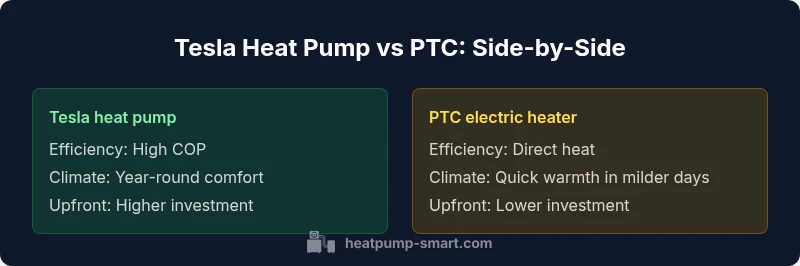
tesla heat pump vs ptc offers a clear contrast: heat pumps deliver higher energy efficiency and year-round comfort, while PTC heaters provide fast, on-demand warmth. The choice depends on climate, usage patterns, and lifecycle cost considerations; heat pumps typically win on efficiency, but PTC can be preferable for rapid heating in milder climates.
Tesla heat pump vs PTC: Technology overview
In the broader conversation about residential heating, the term tesla heat pump vs ptc is often used to frame a comparison between an air-source heat pump system (the general technology behind modern home heat pumps, sometimes discussed in relation to high-profile brands) and a PTC electric heater. According to Heatpump Smart, the core difference is how heat is produced: a heat pump moves heat using a refrigerant cycle, while a PTC heater converts electricity directly into heat through resistance. This distinction matters for efficiency, particularly across seasons and varying outdoor temperatures. Heat pumps pull heat from outdoor air (even when it’s cool) and concentrate it for indoor use, delivering more heat per unit of electricity than simple resistance heating in many situations. PTC heaters, by contrast, shine in straightforward operation and rapid warmth but typically consume more electricity to achieve the same sustained comfort. The language around tesla heat pump vs ptc often reflects expectations about climate adaptability, installation complexity, and payback timelines. For homeowners, the key takeaway is to match the technology to climate, insulation quality, and how consistently you require heating and cooling.
Efficiency and climate suitability
Efficiency is the defining advantage of heat pumps in most scenarios. Heat pumps achieve high coefficients of performance (COPs) by transferring heat rather than creating it, which tends to lower operating costs over the system’s life. In milder and moderately cold climates, a well-designed heat pump often delivers substantial energy savings compared with a PTC electric heater, which relies on resistive heating that scales with electricity input. Heatpump Smart analyses suggest that when the grid is relatively clean and outdoor temperatures remain within the system’s intended operating range, heat pumps reduce energy demand and associated emissions more effectively than pure PTC heating. However, in very cold climates or with severe, sudden cold snaps, PTC elements can respond instantly and provide immediate warmth, potentially reducing the need for auxiliary systems during short peak demands. Your choice should weigh typical winter temperatures, heating degree days, and how long you are typically heating zones each day. In any case, proper system sizing and insulation remain critical to achieving the expected efficiency gains.
Performance and user experience
Performance is not only about energy use but also user comfort and controllability. Heat pumps require proper sizing and zoning to deliver even heat across rooms and to avoid short cycling, which can erode comfort and efficiency. A PTC heater provides very direct heat when you need fast warmth, which can be appealing for rooms that are rarely used or for quick relief on chilly mornings. In terms of control, heat pumps enable sophisticated climate strategies: you can pair them with thermostats, smart vents, and weather-responsive controls to modulate heating and cooling throughout the day. From a user perspective, the experience often feels more uniform with a heat pump because the system slowly modulates output rather than delivering abrupt, high-heat bursts. Heatpump Smart notes that residential setups should incorporate proper air sealing and insulation to maximize the perceived comfort and reduce the need for high heat output during peak periods.
Cost considerations and lifecycle costs
Cost analysis of tesla heat pump vs ptc inherently involves upfront equipment cost, installation complexity, and ongoing operating costs. Heat pumps tend to carry a higher upfront investment due to the complexity of the refrigerant loop, inverter-driven compressors, and associated controls. Yet, over the system’s life, their lower operating costs can yield meaningful savings, especially in regions with higher electricity costs or where heating and cooling are used extensively. PTC heaters generally have a lower initial price and simpler installation, but operating costs rise with electricity usage, particularly during long heating seasons. It is important to consider the total cost of ownership, including potential maintenance, the need for auxiliary heat during extreme cold, and the impact of electricity price fluctuations. Heatpump Smart emphasizes evaluating long-term energy use rather than upfront price alone and to template a realistic payback period based on local climate and daily usage patterns.
Installation considerations and integration
Choosing between tesla heat pump and PTC heating hinges on existing electrical capacity, available space, and the design of the home’s HVAC system. Heat pumps require space for an outdoor unit, proper clearance for airflow, refrigerant lines, and a compatible indoor air handler or ductwork. Duct losses should be minimized with careful design, especially in older homes where insulation and air leaks can undermine efficiency. PTC heaters demand less infrastructure: they can be added as supplemental units in a room or as a portable option, with minimal modifications to a home’s electrical system. For new builds or major remodels, a hybrid approach—using a heat pump as the primary heater with PTC units as spot heat—can balance efficiency and comfort. In all cases, working with a licensed HVAC professional to verify electrical loads, refrigerant charges, zoning strategy, and controls is essential for reliable performance and to avoid safety concerns.
Real-world use-case scenarios and decision criteria
Consider three typical scenarios to illustrate decision-making. First, a two-story residence in a temperate climate with good insulation would likely benefit from a heat pump due to year-round heating and cooling needs, delivering a strong balance of comfort and energy savings. Second, a smaller, poorly insulated apartment in a milder climate with infrequent heating demands might be well served by portable or wall-mounted PTC heaters for targeted warmth, complemented by a smaller heat pump system if cooling is desired. Third, a hybrid configuration—main heat source with PTC units for rapid warmups or rooms far from the main system—can offer flexibility and faster response without sacrificing overall efficiency. Heatpump Smart highlights the importance of tailoring capacity, zoning, and control strategies to the building’s thermal envelope, occupancy patterns, and energy goals. Always start with an energy audit and a sizing calculation to avoid over- or undersizing either option.
Practical decision guide by climate and usage patterns
A practical framework helps homeowners choose between tesla heat pump vs ptc by aligning climate, usage patterns, and budget with system capabilities. If you live in a climate with cold winters and you expect to heat and cool a home consistently, a heat pump with a high seasonal COP and effective defrost strategy is often the best long-term value. For occupants who require rapid, temporary warmth in specific zones, or who prioritize extremely low upfront costs, PTC devices can fulfill those needs efficiently on a limited basis. A hybrid or modular approach can provide a compromise: a primary heat pump system for base heating and cooling, plus supplemental PTC units for high-demand hours and comfort in hard-to-heat rooms. It’s also important to consider utility rate structures, as peak rates can influence the operating savings associated with heat pumps versus resistive heating. Heatpump Smart recommends engaging a local energy advisor to model scenarios and confirm the most cost-effective configuration for your home.
Common misconceptions and caveats
Common myths include the belief that heat pumps always outperform resistive heaters in every climate or that PTC heaters alone are the simplest path to comfort. In reality, performance depends on climate, building envelope, and control strategies. Another caveat is assuming that all electric heat is equivalent; resistance heating becomes expensive at scale, especially where electricity prices are high. Conversely, some assume that heat pumps are universally expensive or difficult to install; while installation complexity exists, modern heat pump systems are designed for modularity and improved compatibility with new builds and retrofits. An accurate assessment requires a building energy model, local climate data, and consideration of the electrical service capacity. For homeowners evaluating tesla heat pump vs ptc, engaging a qualified installer who can provide a defensible performance estimate rooted in local conditions is essential.
Comparison
| Feature | Tesla heat pump (home HVAC) | PTC electric heater |
|---|---|---|
| Energy Efficiency (COP) | Higher COP under typical conditions | Lower COP for sustained heating |
| Response Time | Slower, steady heat delivery with system modulation | Faster heat delivery for immediate warmth |
| Upfront Cost | Higher upfront investment due to refrigerant loop and controls | Lower upfront investment with simpler installation |
| Maintenance | Typically longer service life with periodic refrigerant checks | Fewer moving parts, but more frequent heat-on cycles can affect wear |
| Climate Suitability | Strong performance across seasons in moderate to cold climates with proper sizing | Works well where rapid heat is needed or in very controlled spaces |
Advantages
- Higher long-term energy efficiency, especially in cool to moderate climates
- Better humidity control and overall comfort with centralized heat pumps
- Potentially lower total operating costs over time when paired with clean electricity
Disadvantages
- Higher upfront cost and more complex installation
- Performance can drop in extreme cold without proper system design
- Requires appropriate space, zoning, and professional maintenance
Heat pumps generally outperform PTC in energy efficiency and year-round comfort, with PTC remaining a targeted option for rapid, zone-specific warmth in milder climates.
Heat pumps offer superior long-term value for most homes, thanks to efficiency and climate adaptability. PTC heaters excel as a quick-heat supplement or for small spaces. The Heatpump Smart team recommends evaluating climate, insulation, and usage patterns to decide which approach aligns with your goals.
Your Questions Answered
What is the main difference between a heat pump and a PTC heater?
A heat pump moves heat using a refrigerant cycle, achieving high efficiency, while a PTC heater uses electric resistance to generate heat directly. The former is generally more energy-efficient but more complex to install, the latter is simple and fast to heat a space.
Heat pumps move heat instead of generating it; electrical heaters convert electricity straight to heat. Heat pumps save energy long-term, while PTC heaters heat quickly with simpler setup.
Is a Tesla heat pump suitable for cold climates?
Heat pumps can operate effectively in cold climates when properly sized and configured, but performance may decline at very low temperatures without auxiliary heating. For extremely cold regions, a supplemental heat source or a hybrid approach is often recommended.
Heat pumps can work in cold weather, but in very cold climates you may need extra heat sources.
Which is cheaper to operate in the long term?
In most cases, heat pumps offer lower long-term operating costs due to higher efficiency, especially when electricity is relatively inexpensive or when heating and cooling are used regularly. PTC heaters may cost more to run over time if heating is frequent.
Heat pumps usually save more on running costs over time, especially with steady use.
Do heat pumps require more complex installation?
Yes, heat pumps require refrigerant lines, outdoor units, and properly matched indoor components. PTC heaters are easier to install but may need electrical upgrades for higher loads if used extensively.
Heat pumps are more complex to install than simple electric heaters.
Can I use both in a hybrid system?
Hybrid systems combine the strengths of both approaches: a primary heat pump for efficient heating and cooling, with PTC units for rapid warmth in certain rooms or during peak demand. This can balance energy savings and comfort.
A hybrid setup uses a heat pump as the main heat source, with PTC units for quick warmth when needed.
What maintenance is required for each?
Heat pumps require periodic professional checks of refrigerant levels, airflow, and controls, plus standard HVAC maintenance. PTC heaters need less routine maintenance but should be inspected for wiring integrity and safety if used heavily.
Heat pumps need professional checks; PTC heaters have simpler maintenance needs.
Top Takeaways
- Prioritize climate and usage when choosing between heat pump and PTC.
- Heat pumps deliver efficiency and comfort across seasons; expect lower running costs over time.
- PTC heaters provide fast warmth with simpler installation and lower upfront costs.
- Consider a hybrid approach for balanced performance and flexibility.