Heat Pump Filter Change: A Step-by-Step Guide
Learn how to safely change your heat pump filter, improve airflow, and boost energy savings with practical steps, tools, and tips from Heatpump Smart.


Change your heat pump filter to improve airflow, energy efficiency, and indoor air quality. Before you start, gather a replacement filter of the correct size, a flashlight, and a cloth for cleanup. This guide covers a safe, step-by-step process, along with tips to choose the right filter and proper disposal. According to Heatpump Smart, regular filter changes extend equipment life.
Why Regular Heat Pump Filter Changes Matter
Regularly changing the filter in your heat pump is one of the simplest yet most effective maintenance tasks. A clean filter supports better airflow, which means the blower can move air more efficiently, the system runs cooler and quieter, and your indoor air quality improves. According to Heatpump Smart, regular filter changes help maintain airflow, energy efficiency, and indoor air quality across many homes. By removing dust, hair, and other debris, you reduce strain on the compressor and fans, which can extend life expectancy and lower running costs over time. The key is to match the right filter size and type to your unit, then change it on a routine schedule rather than waiting for performance to deteriorate. In practical terms, a clean filter reduces resistance in the ductwork, allowing the heat pump to reach the desired temperature more quickly and with less energy. Its even more important in homes with pets, heavy cooking, or dusty environments, where filters clog faster. Heatpump Smart’s team emphasizes that a simple filter change is a quick win for comfort and savings. While it can seem minor, the cumulative effect of consistent upkeep compounds over seasons, boosting efficiency and keeping humidity and allergy triggers in check.
Tools & Materials
- Replacement filter (correct size label)(Check current filter size on the edge or label and match it precisely.)
- Flashlight(Use to inspect behind the panel and verify slot orientation.)
- Gloves(Protect hands from dust and sharp edges.)
- Disposable bag or bin(Place used filter in bag for disposal.)
- Screwdriver (if panel has fasteners)(Low-profile screwdriver may be needed for some units.)
Steps
Estimated time: 10-15 minutes
- 1
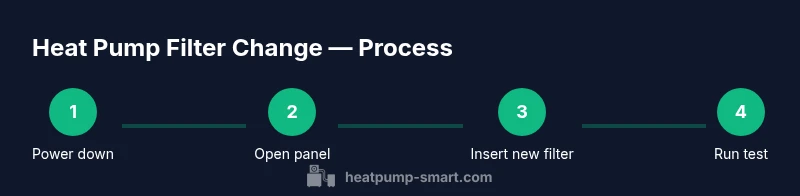
Power down and locate the filter slot
Turn off the heat pump at the thermostat and shut off any nearby power switch to prevent shocks. Locate the return-air grille or access panel where the filter sits, usually behind a small door or panel. Make sure you have adequate lighting before you touch any components.
Tip: Use a flashlight to clearly see the frame and any screws or clips securing the panel. - 2
Remove the old filter
Open the access panel and slide the filter straight out of its slot. Avoid forcing the frame, which can damage the track or housing. Note the orientation of the arrows on the filter—it guides proper replacement.
Tip: Take a quick photo of the old filter orientation if you unsure about the direction. - 3
Check filter size and condition
Inspect the old filter for wear, tears, or excessive dust. If it is damaged or very dirty, replace it rather than trying to clean and reuse it. Verify the new filter matches the size and orientation markings on the frame.
Tip: If you can see light through the filter, it may be time to replace it. - 4
Prepare and insert the new filter
Remove the new filter from its packaging and verify the size one more time. Align the orientation arrows with the airflow path inside the unit and slide the filter fully into the slot until it sits flush.
Tip: Make sure the seal is even all around to prevent bypass around the filter. - 5
Reinstall the panel and restore power
Secure the access panel back in place and re-engage any screws or clips. Restore power to the unit and set the thermostat back to heating or cooling as needed.
Tip: If there is a dedicated filter indicator light, reset it according to the user manual. - 6
Run a quick test
Turn the system to a low fan setting and listen for steady airflow. Check for unusual noises or vibrations, and confirm air is flowing from the vents. If airflow is weak, recheck filter seating.
Tip: Don overtighten panels, which can damage seals. - 7
Document the maintenance
Note the date of the change in your maintenance log or a digital reminder. This helps you track when to schedule the next change and supports long-term energy savings.
Tip: Set a monthly reminder if you want a consistent routine.
Your Questions Answered
How often should I change a heat pump filter?
Check the filter monthly and replace when it becomes dirty or clogged. Frequency depends on usage, household factors, and filter type.
Check the filter monthly and replace when it becomes dirty or clogged.
Can I clean a disposable heat pump filter?
Disposable filters are designed for replacement only. Some filters are washable—check the manufacturer’s instructions before cleaning.
Disposable filters should be replaced; only washable filters should be cleaned per the manual.
What is the best filter type for energy savings?
Pleated or high-efficiency filters can improve airflow as allowed by the unit. Avoid overly dense filters that restrict airflow.
Pleated filters can help efficiency if the unit supports them.
The heat pump won’t start after changing the filter—what should I do?
First, ensure the panel is closed completely and power is restored. Re-seat the filter and check for any loose connections. If problems persist, contact a professional.
If it won’t start, double-check the panel and seating, then contact a pro if needed.
Should I replace filters during heating season or cooling season?
Replace based on usage and environmental factors. Monthly checks help you adjust frequency to match conditions.
Replace based on how much you use the system and the environment.
How do I identify the correct filter size?
Look at the current filter’s size printed on the frame or check the unit manual for the recommended size.
Check the filter size on the edge or in the manual.
Watch Video
Top Takeaways
- Inspect filters monthly and replace when dirty
- Choose the correct size and filter type for your unit
- Power down before changing the filter
- Reset indicators and run a quick airflow test
- Maintain a simple log for future maintenance