Trane Heat Pump Maintenance: A Practical Guide
Master Trane heat pump maintenance with our expert, homeowner-friendly guide. Learn filters, coils, airflow, safety, and when to call a pro to maximize efficiency and comfort.


This guide explains how to perform essential Trane heat pump maintenance to keep your system efficient and reliable. You’ll learn a practical, homeowner-friendly checklist, safety steps, and when to call a pro. By following these steps, you can extend life and reduce energy use. Heatpump Smart's team provides field-tested practices to help homeowners, builders, and property managers succeed.
What maintenance covers on a Trane heat pump
Trane heat pump maintenance focuses on keeping the air moving efficiently, preventing dirt buildup, and ensuring safe electrical operation. A practical homeowner routine covers the air filters, outdoor condenser cleanliness, evaporator coil access, blower and air handler inspection, thermostat controls, condensate drain, and visible refrigerant-line insulation. Focus on the basics first: replace or clean filters monthly or every 90 days during heavy use; clean the cabinet top and fins to restore airflow; inspect wiring for wear and corrosion; and verify the outdoor unit has clear space around it. Regular attention to these elements helps maintain the system’s efficiency and heating/cooling capacity. Heatpump Smart emphasizes that a disciplined maintenance habit translates into fewer service calls and steadier indoor comfort, which homeowners, builders, and property managers appreciate. In this context, trane heat pump maintenance is more than a task list; it’s a safety check and a performance frame that guides seasonal checks and year-round operation. Involve household members by budgeting a regular 12-month schedule and marking tasks on a calendar to build consistency.
Seasonal maintenance tasks
Seasonal maintenance aligns with heating and cooling demands. In fall, prepare the system for heating by checking air filtration, outdoor coil visibility, and condensate drainage with a focus on proper airflow. In spring, prep for cooling by inspecting the outdoor unit for debris, confirming clean fins, and testing the thermostat and reversing valve operation. Monthly, inspect filters and listen for unusual noises during startup. Keeping a simple calendar ensures tasks aren’t skipped even during busy weeks. Heatpump Smart recommends synchronizing maintenance with energy-bill reviews to gauge efficiency changes across seasons. When you follow a regular cadence, you’ll notice smoother operation, fewer surprises, and a more comfortable indoor climate across the year.
Cleaning and filter care
Clean or replace air filters before each season switch and at minimum every 90 days if you use the system heavily. Choose filters that match your Trane model’s specifications, and avoid washing disposable filters unless the manufacturer permits it. Use a soft brush or vacuum with a brush attachment to remove dust from the blower housing, evaporator coil access panels, and return air grilles. For outdoor coils, gently remove debris with a soft brush and a low-pressure blast of air from a safe distance. Do not use high-pressure water directly on fins, as this can bend or damage them. Keeping coils clean preserves heat exchange efficiency, reduces energy use, and lowers the risk of overheating.
Inspecting outdoor unit and coil
The outdoor condenser should sit on a clear, unobstructed pad with about 2 feet of clearance on all sides. Remove leaves, grass clippings, and any debris that may block airflow. Inspect the condenser fins with a light touch; if you see bent fins, use a specialized fin comb to straighten them gently. Check the refrigerant lines where they enter the cabinet for insulation wear or damage, and ensure the line-set is protected from physical impact. A clean outdoor unit not only improves heat transfer but also reduces strain on the compressor and fan motor, extending service life. As you inspect, photograph any signs of wear for future reference.
Electrical connections and safety
Turn off power at the main breaker and outdoor disconnect before inspecting electrical components. Look for loose or discolored wiring, burnt smells, or signs of arcing. Do not tighten or adjust capacitors if you’re not trained; instead, note any concerns and schedule a licensed technician visit. Replace any damaged fuses or breakers and verify that the control board connections are snug. If you have a multimeter and the training to use it, you can check basic voltages when the power is safely isolated. Always follow local codes and manufacturer guidelines to avoid risk of shock or fire, and consider calling a pro for anything beyond basic visual checks.
Airflow and ductwork considerations
Airflow problems often stem from dirty filters, blocked returns, or leaky ducts. Inspect return-air pathways for blockages (furniture, drapes, or debris) and ensure registers aren’t obstructed. Seal obvious gaps around ductwork with appropriate sealing methods, and consider a professional Duct Leakage test for larger homes. Proper duct integrity helps maintain the system’s rated efficiency and reduces compressor workload. If you notice cold spots, excessive cooling cycles, or uneven room temperatures, document locations and plan a duct assessment as part of your ongoing maintenance.
Thermostats and controls
Calibrate the thermostat against a room reading to ensure accurate temperature reporting. Replace batteries if required and ensure the thermostat communicates correctly with the heat pump. Review schedule-based programming to align with occupancy patterns and energy goals. If you have a smart thermostat, verify firmware is up to date and test auto-changeover (heat to cool) transitions. A well-configured control system reduces unnecessary cycling and improves comfort consistency.
Defrost cycle and refrigerant health signs
In cold weather, your heat pump may enter a defrost cycle to remove frost from the outdoor coil. Listen for unusual cycling sounds or longer defrost intervals, which could indicate air flow or refrigerant issues. Visible ice buildup on the outdoor coil is a sign to pause long cooling cycles and check filtration and airflow first. If frosting persists, do not sandblast or forcibly remove ice; instead, contact a licensed tech to verify refrigerant pressures and leak integrity. Maintaining proper refrigerant charge is essential for heat pump performance and efficiency.
Maintenance record keeping and scheduling future service
Create a simple maintenance log with dates, tasks completed, and any notes about performance. Record filter sizes, part replacements, coil cleaning dates, and thermostat changes to build a history you can reference during service calls. Schedule the next maintenance window at least once before peak season starts, and align it with your annual energy review. A documented history helps technicians diagnose issues faster and helps you track the long-term health and efficiency of your Trane heat pump.
Troubleshooting and when to call a pro
If you notice persistent strange noises, unusual odors, frequent short cycling, or a drop in cooling/heating performance, begin with a surface check: filters, debris, and thermostat settings. Do not open pressurized refrigerant lines or service electrical components beyond basic checks unless you’re trained and licensed. For refrigerant-related concerns, electrical faults, or persistent faults after basic maintenance, contact a qualified HVAC technician. Proactive maintenance reduces risk and supports system reliability over the long term.
Tools & Materials
- Safety gear (gloves, eye protection)(EN/ANSI rated PPE; wear during all handling tasks)
- Screwdriver set (Phillips & flathead)(For service panels and housing screws)
- Multimeter or voltage tester(Useful for basic electrical checks with power off)
- Soft brush or coil brush(Gentle brushing to avoid denting fins)
- Vacuum with brush attachment(Dirt removal from blower housing and accessible areas)
- Replacement air filters(Match the model's size and MERV rating)
- Low-pressure water source or spray bottle(Use for outdoor coil cleaning only with caution)
- Thermometer or temperature gauge(Optional for assessing supply vs. return temperatures)
- Ladder or stable access equipment(Only if needed to reach outdoor unit safely)
Steps
Estimated time: 90-120 minutes
- 1
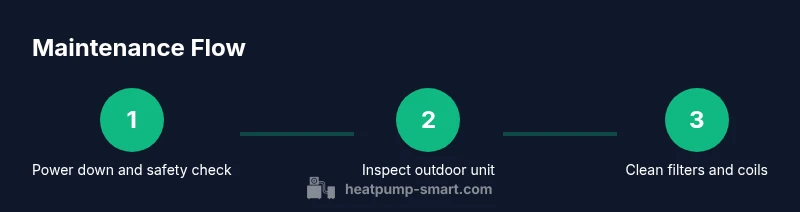
Power down and secure
Turn off the main electrical power and outdoor disconnect. Verify there is no voltage before touching any components. This protects you from shocks and prevents accidental startup while inspecting.
Tip: If you’re unsure, wait for the unit to fully discharge and consult a professional. - 2
Inspect outdoor unit and coil
Check the outdoor condenser for debris and ensure there is at least 2 feet of clearance. Remove leaves or dirt with a soft brush, and straighten any bent fins with a fin comb.
Tip: Take photos before cleaning to document condition for future reference. - 3
Clean or replace air filters
Remove the indoor filter; clean if reusable or replace with a new one of the correct size and MERV rating. Clean or replace monthly during heavy use.
Tip: Do not wash disposable filters; replace them instead to maintain airflow. - 4
Clean evaporator coil and blower area
Gently brush dust from the evaporator coil access panel and use a vacuum to remove debris around the blower. Keep the motor and electrical components dry.
Tip: Avoid bending or stressing coil fins; use light, even strokes. - 5
Check condensate drain
Inspect the condensate pan and drain line for blockages. Clear any buildup to prevent overflows. A blocked drain can trigger overflow switches and water damage.
Tip: Pour a small amount of clean water through the line to test flow. - 6
Inspect refrigerant lines and insulation
Visually inspect line-insulation for wear or cracks. Do not attempt to recharge refrigerant; this requires licensed technicians.
Tip: Take note of any hissing sounds or ice on low-temperature side—these warrant a pro check. - 7
Test thermostat and controls
Verify the thermostat reads accurately and communicates with the heat pump. Check programmed schedules and test heat and cool modes.
Tip: If using a smart thermostat, ensure firmware is current and that auto-switching works. - 8
Check electrical connections
With power off, inspect visible wiring for wear, discoloration, or loose connections. Do not tighten non-user-serviceable components.
Tip: Record any concerns and plan a professional inspection for electrical issues. - 9
Document results and plan next maintenance
Log the tasks completed, parts replaced, and any performance notes. Schedule the next maintenance before peak season begins.
Tip: Keep a simple notebook or digital log for easy reference. - 10
Know when to call a pro
If you detect refrigerant issues, persistent abnormal noises, icing, or poor performance after basic checks, contact a licensed HVAC technician.
Tip: Provide your maintenance log to the technician to speed diagnostics.
Your Questions Answered
How often should I perform Trane heat pump maintenance?
Aim for at least biannual checks, before heating and cooling seasons. A homeowner can handle filters, cleanliness, and thermostat checks; major refrigerant or electrical issues require a pro.
Most homeowners should perform maintenance twice a year, focusing on filters, airflow, and controls. For refrigerant or electrical issues, contact a licensed technician.
Can I service refrigerant myself?
No. Handling refrigerant requires licensing and proper equipment. Attempting to recharge or seal leaks can be dangerous and illegal.
Refrigerant work must be done by a licensed professional.
What tools do I need for basic maintenance?
Basic safety gear, screwdrivers, a soft brush, a vacuum, and replacement filters are enough for most at-home maintenance tasks.
You’ll need safety gear, basic tools, and new filters for routine upkeep.
How can I tell if my Trane needs service beyond DIY tasks?
Persistent strange noises, icing, poor cooling/heating performance, or frequent cycling indicate issues outside DIY scope. Schedule a pro inspection promptly.
If you notice persistent problems after basic checks, call a licensed HVAC technician.
Is thermostat maintenance important?
Yes. Calibrate, test, and update the thermostat regularly to keep the system aligned with room conditions and occupancy.
A well-calibrated thermostat improves comfort and efficiency.
What safety precautions should I follow?
Always shut off power before inspections, avoid touching live components, and don’t attempt risky repairs beyond your training.
Safety comes first—power off, stay clear of high-voltage parts, and call a pro if unsure.
Watch Video
Top Takeaways
- Schedule regular checks before peak seasons.
- Keep the outdoor unit clean and free from obstructions.
- Document maintenance tasks and results for future service.
- Know when to call a licensed pro for refrigerant or electrical issues.