Wash Heat Pump: A Practical Homeowner's Guide
Learn safe, practical steps to wash a heat pump, including outdoor coil cleaning, filter care, drainage checks, and long-term maintenance tips for higher efficiency and reliability.


You can safely wash a heat pump by unplugging the unit, removing debris from the outdoor coil, cleaning filters, and checking drainage. Start with basic safety: turn off power at the breaker, leave the unit dry, and avoid high-pressure hoses. This guide shows step-by-step actions to clean without damaging components.
What is a wash heat pump and why it matters
A wash heat pump refers to the routine cleaning of both the outdoor condenser coil and the indoor air handler to maintain efficiency and reliability. Dirt, pollen, and dust can build up on the coil fins, in the filter housing, and along drainage paths. When these parts are dirty, the system has to work harder to move heat, leading to higher energy use and potential wear. According to Heatpump Smart, regular cleaning helps sustain performance and comfort without expensive repairs. In this guide, you will learn a careful, DIY-friendly washing approach that protects delicate electrical components while restoring airflow and heat transfer. Keeping the system clean is especially important in dusty climates or near construction sites, where debris can rapidly accumulate and reduce efficiency. By following the steps outlined, homeowners can extend heat pump life and preserve comfort without turning to costly service calls.
In addition to outdoor coil care, don’t overlook indoor components. A clean air handler and fresh filters ensure the indoor coil doesn’t become a bottleneck for heat transfer. Heatpump Smart notes that a well-maintained system not only runs more efficiently but also reduces wear on compressor components over time. This section lays the foundation for a safe, effective wash that respects electrical safety and refrigerant pathways while delivering tangible performance benefits.
Safety first: essential precautions
Safety should always come first when washing a heat pump. Begin by turning off power at the main breaker and, if possible, switching off any disconnect near the outdoor unit. Use a lockout/tagout procedure if you share a panel with others. Never spray water directly into electrical enclosures or onto exposed wiring. Wear protective gloves and eye protection, and keep a dry path to your work area to avoid slips. Avoid climbing on the outdoor unit or standing on wet surfaces. Heatpump Smart reminds homeowners that most cleaning tasks can be done with the unit offline and de-energized, which minimizes shock risk and prevents refrigerant-related hazards. If you detect sharp edges on fins, handle them with care or use a soft brush to avoid cuts. If you’re unsure about electrical work, consult a licensed technician. This mindset keeps your washing routine safe and effective while protecting warranties and system integrity.
Scheduling and weather considerations
Choose a dry day with mild temperatures to wash your heat pump. Avoid washing in freezing conditions where water can freeze on coils or in drainage paths, and skip days with high wind that could blow debris into the unit. Plan around pollen seasons or dusty construction activity for outdoor units. If you must wash in early morning or late afternoon, ensure the unit has ample time to dry before cooling loads peak. Heatpump Smart recommends scheduling maintenance when outdoor humidity is reasonable to prevent rapid evaporation that can mask dirt or debris. A controlled environment makes it easier to see dirt accumulation, clean thoroughly, and reduce re-soiling after replacement of filters and coils.
The washing process: an overview
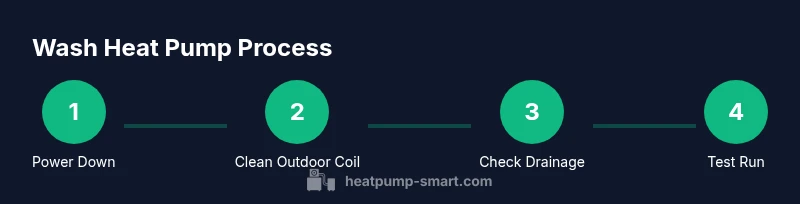
This guide is designed for safe, practical cleaning without professional equipment. The core tasks are to (1) disconnect power, (2) clear loose debris, (3) wash coils with a low-pressure spray, (4) gently brush fins to realign bent paths, (5) clean or replace filters, and (6) inspect drainage. Throughout the process, prioritize comfort and safety, and remember that heat pumps move refrigerant and electricity has real hazards. Heatpump Smart’s approach emphasizes no-guesswork, using gentle cleaners and minimal water pressure to preserve fin geometry and avoid refrigerant leaks. The aim is to restore airflow, improve heat transfer, and keep drainage clear for efficient operation.
Step-by-step overview: Step 1 to Step 6
The following steps break the process into clear actions with safety and maintenance in mind. Each action is designed to be completed by a homeowner with common tools. The sequence emphasizes keeping water away from electrical components, using gentle cleaning methods, and validating system function after washing. By following these steps, you’ll maintain efficiency and prolong the life of your heat pump while safeguarding indoor comfort.
Step-by-step: Step 1 — Power down and access the outdoor coil
Power down the system at the main breaker and, if applicable, at the unit’s disconnect near the outdoor coil. Confirm the power is off with a non-contact tester before touching any components. Clear the area around the unit and remove loose debris that could blow back toward the coil during washing. Pro tip: take a quick photo of any wiring connections before you touch them to help you reassemble correctly. After confirming safety, prepare your cleaning materials and plan your approach for the outdoor coil.
Step-by-step: Step 2 — Inspect outdoor coil and fins
Carefully inspect the outdoor coil for visible dirt, leaves, or light corrosion. Note bent fins and consider straightening with a soft, non-metallic tool or fin comb designed for condensers. Avoid prying or forcing fins, which can break the coil. If you see damaged tubing or refrigerant lines, stop and contact a professional. Pro tip: document any damage with photos and keep a log for maintenance records. This step ensures you know what you are cleaning and what requires professional attention.
Step-by-step: Step 3 — Clean outdoor coil and fins
Rinse the coil from the bottom up with a garden hose using a gentle spray, keeping water pressure low to avoid bending fins. Apply a mild coil cleaner or soapy solution, following product directions for dwell time. Use a soft brush or sponge to loosen dirt, then rinse again. Do not use harsh chemicals or high-pressure nozzles. Pro tip: work in sections to avoid oversaturation and ensure complete drying of each area before reassembly.
Step-by-step: Step 4 — Clean indoor air handler and filters
Open the indoor air handler access panel and remove washable filters. If filters are disposable, replace them with the correct size and rating. Vacuum loose dust from the blower compartment or use a damp microfiber cloth if needed. Let any damp areas air-dry before closing the panel. Pro tip: keep spare filters on hand for quick replacement during routine maintenance. A clean indoor coil improves air quality and system efficiency.
Step-by-step: Step 5 — Check drainage lines and pan
Inspect the condensate drain line for blockages and clear any buildup with a flexible brush or pipe cleaner. Check the drain pan for cracks or standing water and address leaks promptly. Ensure the line exits away from the foundation to prevent moisture damage. Pro tip: pour a small amount of water into the drain to confirm proper flow and listen for unusual noises indicating a blockage.
Step-by-step: Step 6 — Reconnect power and run a test cycle
With all components dry, restore power and run a short test cycle to verify operation. Listen for unusual noises and observe for frost buildup on coils during the first heating or cooling cycle. If you notice leaks, strange smells, or poor airflow, turn off power and recheck connections or contact a professional. Pro tip: monitor energy use and indoor comfort for a few days after washing to assess effectiveness.
Tools & Materials
- Gloves (rubber or nitrile)(Protect hands from sharp fins and cleaning solutions)
- Safety goggles(Eye protection against debris and cleaners)
- Soft brush or fin comb(Gently realign bent fins; avoid metal tools)
- Garden hose with adjustable nozzle(Low-pressure spray to rinse without damage)
- Mild coil cleaner or soap solution(Follow label directions; avoid harsh chemicals)
- Microfiber cloths(Dry surfaces and wipe interior components)
- Disposable or washable air filters(Replace or clean per manufacturer spec)
- Flat-head screwdriver or nut driver(For panel screws or access panels if needed)
- Notebook or app for maintenance log(Record dates, observations, and parts replaced)
Steps
Estimated time: 60-90 minutes
- 1
Power down and access outdoor coil
Power off at the main breaker and the unit's disconnect. Verify with a test tool before touching any wiring. Clear the area around the outdoor coil to ensure a safe washing space.
Tip: Take a photo of wiring before touching it to simplify reassembly - 2
Inspect outdoor coil and fins
Visually inspect for dirt and bent fins. Straighten any bent fins gently with a fin comb. Note any damage that may require professional service.
Tip: Document any damage with photos for your maintenance log - 3
Clean outdoor coil and fins
Rinse with a low-pressure spray from bottom to top. Apply a mild cleaner if needed and brush dirt away. Rinse again to remove all residue and allow to dry before testing.
Tip: Avoid high-pressure spray that can bend fins or force debris into the enclosure - 4
Clean indoor air handler and filters
Open the interior panel, remove and inspect filters. Clean or replace filters according to type. Wipe down accessible surfaces and let air paths dry before reassembly.
Tip: Keep spare filters on hand for quick maintenance - 5
Check drainage lines and pan
Inspect the condensate drain for obstructions. Clear clogs with a flexible tool and ensure the pan is free of cracks. Confirm drainage empties away from your home.
Tip: Pour a little water to test the drain after clearing obstructions - 6
Reconnect power and run a test cycle
Restore power and run a short heating/cooling cycle to confirm airflow and operation. Listen for odd noises and watch for frost on coils during initial operation.
Tip: If anything seems off, power down and re-check connections or contact a pro
Your Questions Answered
Is it safe to wash a heat pump myself, or should I hire a pro?
Washing can be safe for many homeowners if you follow basic electrical safety, use low-pressure cleaning, and avoid damaging components. If you notice refrigerant lines, unusual noises, or refrigerant odors, stop and contact a licensed technician.
You can wash your heat pump if you follow safety steps and stay away from refrigerant areas; call a professional if you see damage or leaks.
How often should you wash a heat pump?
Frequency depends on climate and environment. Clean or replace filters regularly and wash outdoor coils when you notice reduced airflow, higher energy use, or visible dirt buildup.
Wash more often in dusty or pollen-heavy areas; otherwise, schedule a cleaning when you notice performance decline.
What signs indicate it’s time to wash?
Visible dirt on coils, reduced airflow, higher energy bills, or longer run times are good indicators that cleaning is needed.
If you see dirt on the coil or your system runs longer than usual, it’s time to clean.
Will washing affect warranty?
Washing is generally acceptable when done within manufacturer guidelines. Avoid disassembly of sealed components and consult your manual if unsure.
Check your heat pump manual; improper washing could affect warranty on certain parts.
Do I need refrigerant service after washing?
Refrigerant service is not a routine result of washing. If you notice leaks, frost buildup, or a drop in cooling efficiency, call a licensed refrigerant technician.
Refrigerant issues require a pro—washings alone don’t fix leaks or pressures.
Watch Video
Top Takeaways
- Power down before any cleaning actions
- Use gentle cleaning methods to protect fins
- Clean both outdoor and indoor components
- Inspect drainage and refrigerant lines regularly