Mini Split Heat Pump Repair: A Complete Homeowner Guide
A practical, safety-focused guide to diagnosing and repairing common issues in mini split heat pumps, with DIY tips, when to call a pro, and maintenance strategies.


Learn how to diagnose and safely address common issues with a mini split heat pump repair. This guide covers safe foundational checks, when DIY is appropriate, and how to decide to call a professional for refrigerant or electrical faults. By following these steps, homeowners can identify fault codes, verify power, and reduce downtime.
Understanding the mini split heat pump system
A mini split heat pump is a ductless system consisting of an outdoor condenser unit and one or more indoor air-handling units connected by refrigerant lines. These systems are popular for room-by-room comfort and flexibility. Key components include the inverter-driven compressor in the outdoor unit, the indoor fan coil, the thermostatic sensor, and the check-valve that ensures refrigerant flows correctly. Because there are no ducts, issues often relate to airflow, refrigerant pressure, electrical wiring, or control circuitry rather than a leaky duct network. When considering repairs, homeowners should note that refrigerant handling and major electrical work typically require licensed technicians. Regular maintenance, such as cleaning filters, clearing obstructions around the outdoor unit, and ensuring proper incline of lines, reduces the likelihood of faults and improves energy efficiency. According to Heatpump Smart, investing in routine inspections can extend the life of the equipment and preserve performance. In this section, we’ll break down how to recognize symptoms and approach diagnostics safely and systematically.
Common fault indicators and diagnostic approach
Mini split heat pumps communicate faults through error codes displayed on the indoor unit, unusual noises, frost on the evaporator coil, reduced heating or cooling capacity, and longer runtimes. Common culprits include dirty air filters, blocked outdoor coils, restricted airflow due to furniture or debris, failed capacitors, and loose electrical connections. Since every brand uses its own fault code system, start by consulting the manual and noting the exact code or blinking pattern. Next, perform a high-level check: verify power supply is stable, confirm the outdoor unit is free of obstructions, and check for ice accumulation on the indoor coil. When a code points toward an electrical component like a capacitor or contactor, proceed with caution—capacitors can hold a dangerous charge even after power is removed. If frost or ice persists after simple defrost cycles, or if the fault involves refrigerant or compressor symptoms, escalate to a licensed technician. Heatpump Smart emphasizes documenting symptoms with dates and photos to avoid misdiagnosis and speed up service.
Safe, foundational checks you can perform
Before touching any internal components, ensure power is turned off at the main breaker and the indoor disconnect. Use a non-contact voltage tester to confirm there is no live voltage at service panels. Inspect the air filters; a dirty filter reduces airflow and reduces efficiency. Check the indoor and outdoor coils for dirt, debris, or grime; clean with a soft brush or coil cleaner following manufacturer guidelines. Ensure there's unobstructed airflow around the outdoor condenser—at least 2–3 feet of clearance is recommended. Inspect thermostat settings and verify that the temperature differential matches actual conditions. If you notice a frost pattern on the indoor coil, set the defrost cycle to auto and observe for improvement. Keep track of any error codes and how long the behavior persists. Remember: this is a safety-focused diagnostic and does not replace professional service for refrigerant or high-voltage issues. Heatpump Smart advises documenting every step for reference.
When to attempt DIY repairs vs professional service
DIY steps are acceptable for simple maintenance like filter replacement, coil cleaning, or reseating loose panels and connections that do not involve high voltage or refrigerant. If the fault code indicates a failed capacitor, a loose wire, or poor airflow that you can address without disassembling sealed components, you can proceed carefully. However, avoid refrigerant handling, attempts to charge a system, or replacement of the outdoor compressor yourself. These tasks require licensed professionals, proper disposal, and specific equipment. If you observe burnt smells, melted insulation, buzzing from the outdoor unit, or persistent fault codes after basic checks, stop and call a pro. If you’re unsure whether a step is safe, pause and contact a licensed technician. This approach protects you and respects local regulations while ensuring warranty and system integrity.
Maintenance to prevent future failures
Preseason service and routine maintenance are the best defenses against unexpected breakdowns. Schedule annual inspections that include a refrigerant check by a licensed technician, coil cleaning, filter replacement every 1–3 months depending on usage, and outdoor unit clearance checks. Clean the indoor coil and replace the air filter monthly during heavy use seasons. Inspect electrical connections for signs of corrosion; tighten any loose screws with the appropriate tool and ensure that the service panels are securely closed. Ensure the thermostat and control wiring are correctly matched to the system’s configuration. Keep documentation of previous repairs and codes to help technicians diagnose future issues. When done correctly, these steps help maintain efficiency and keep energy costs in check. Heatpump Smart’s guidance suggests pairing maintenance with smart thermostats for optimal comfort control.
Cost considerations and energy implications
Repair costs for mini split heat pumps vary widely depending on the fault, parts availability, and required expertise. Basic maintenance is relatively inexpensive, while more complex electrical issues or compressor-related problems can require substantial investment. It is important to weigh the repair cost against the remaining expected life of the system and the potential energy savings from improved efficiency. Consider the long-term energy impact: a well-tuned system uses less electricity to achieve the same comfort, and a failed unit might force you to rely on supplemental heating or cooling. When evaluating repairs, request a written estimate that itemizes parts, labor, and any diagnostic charges. Heatpump Smart recommends seeking quotes from multiple, reputable technicians and asking about warranty coverage on parts and workmanship.
Choosing a qualified technician for mini split heat pump repair
Start by verifying licensing and insurance status in your region, and ask for references or recent customer reviews. Request a diagnostic plan before work begins and insist on a written estimate with a clear scope. Confirm whether the technician will perform refrigerant-related work, electrical testing, and any necessary system recharging, and ensure proper disposal of replaced components if required. Inquire about manufacturer-specific training and whether the tech uses manufacturer-approved tools and parts. Finally, discuss warranty considerations and follow-up support. By selecting a technician with clear communication, transparent pricing, and demonstrated expertise in mini-splits, you reduce the risk of hidden charges and subpar results. Heatpump Smart’s team emphasizes choosing a pro who aligns with your project goals and energy-saving objectives.
Tools & Materials
- Non-contact voltage tester(Test for live power in both indoor and outdoor units before opening panels.)
- Digital multimeter(Verify voltage, resistance, and capacitor charge where applicable.)
- Screwdriver set (Phillips & flat)(Remove access panels and service covers.)
- Nut driver set(Loosen mounting screws and panel hardware.)
- Flashlight(Inspect dark corners and read labels clearly.)
- Protective gloves(Electrical safety; insulated work gloves.)
- Safety goggles(Eye protection against debris and refrigerant splash (if any).)
- Leak-detection spray or bubble solution(For identifying refrigerant leaks; use only with proper training.)
- Clipboard and notebook(Record codes, symptoms, and timestamps for reference.)
- Infrared thermometer(Optional for checking coil temperatures without contact.)
Steps
Estimated time: Estimated total time: 90-150 minutes
- 1
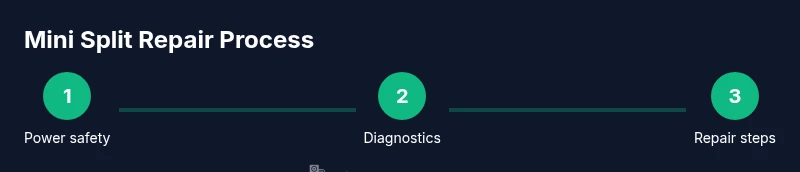
Power down and safety
Turn off power at the main breaker and the indoor disconnect. Use the non-contact tester to confirm no voltage at exposed terminals before touching any components.
Tip: Always verify both indoor and outdoor circuits are de-energized before starting work. - 2
Access indoor and outdoor units
Remove the service panels carefully and photograph connections for reference during reassembly. Keep track of screws and connectors to avoid mix-ups.
Tip: Label wires or use color-coded tape to map each connection. - 3
Test electrical components with a multimeter
Check for continuity on suspected fuses or capacitors and verify supply voltage at the terminal block. Look for loose or burnt wires and tighten or replace as needed.
Tip: Discharge capacitors only following manufacturer guidance; never bypass safety devices. - 4
Inspect filters, coils, and airflow
Clean or replace air filters, inspect indoor/outdoor coils for dirt, and ensure unobstructed airflow around the outdoor unit.
Tip: Even small obstructions dramatically reduce efficiency. - 5
Check for refrigerant-related concerns and frost
Look for frost on the indoor coil and listen for unusual refrigerant sounds. Do not attempt to recharge refrigerant; escalate if you suspect a leak.
Tip: Persistent frost or ice usually indicates a refrigerant or airflow problem that requires a pro. - 6
Read fault codes and logs
Note indoor unit fault codes and compare with the manufacturer's guide. Record duration and conditions of the fault.
Tip: Codes help triage whether the issue is electrical, sensor-related, or refrigerant. - 7
Decision point: DIY vs professional
If the fault involves refrigerant, sealed components, or high voltage, stop and call a licensed technician. For safe, non-refrigerant issues, proceed with caution and reassemble carefully.
Tip: Document findings to share with the pro to speed up service.
Your Questions Answered
What is a mini split heat pump and what parts fail most often?
A mini split heat pump is a ductless system with an outdoor compressor and indoor air handlers. Common failures involve restricted airflow, dirty filters, thermostat issues, and electrical faults.
A mini split has an outdoor unit and indoor air handlers; common failures are airflow and electrical faults.
Can I fix refrigerant leaks myself?
No. Refrigerant work requires licensed technicians and proper disposal. Leaks should be repaired by a pro and the system recharged with approved equipment.
Refrigerant work is for licensed technicians.
How long does a typical mini split repair take?
Most minor repairs can be completed within a few hours; more complex issues may require a scheduled visit and parts.
Most fixes take a few hours, but some calls may take longer.
What fault codes should I expect on a mini split?
Codes vary by brand; common ones indicate sensor, outdoor unit, or refrigerant issues. Refer to the manual for exact meanings.
Common fault codes point to sensor or refrigerant issues.
When should I replace the system instead of repairing it?
If repairs exceed a significant portion of the system cost or the unit remains inefficient, replacement may be the better option.
Consider replacement if repairs are costly or efficiency is poor.
Will repairing affect the warranty?
DIY repairs can void warranties. Having a licensed pro perform work often preserves coverage, but terms vary by warranty.
Warranties vary; check terms.
Watch Video
Top Takeaways
- Power safety comes first; verify with a tester.
- Use a multimeter to identify electrical faults accurately.
- Keep filters clean and coils free of debris for efficiency.
- DIY work is limited to safe, non-refrigerant tasks.
- Call a licensed pro for refrigerant or compressor issues.