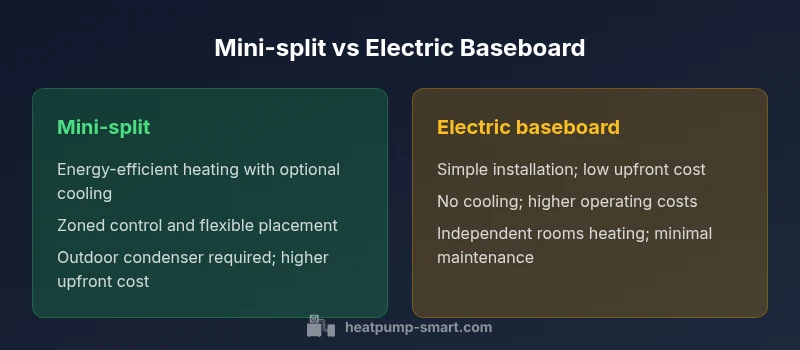
Mini split heat pump vs electric baseboard: which is better for your home
A thorough, data-informed comparison of mini split heat pumps and electric baseboard heating, covering energy efficiency, operating costs, installation, comfort, and long-term value for homeowners and property managers.


TL;DR: For most homes, a mini split heat pump outperforms electric baseboard heating in energy efficiency and climate control. Baseboards are cheaper upfront but run at higher operating costs and offer no cooling. The choice depends on climate, insulation, and long-term goals; for those seeking year‑round comfort and lower bills, mini splits generally win when properly sized and installed.
What you are choosing between: mini split heat pump vs electric baseboard
When evaluating a heating setup for a home or apartment, the two most common options are a mini split heat pump and electric baseboard heaters. The phrase mini split heat pump vs electric baseboard captures a fundamental choice: a ductless, heat-pump system that moves heat rather than just generating it, versus individual electric resistive heaters mounted along walls. According to Heatpump Smart, homeowners who plan long-term energy savings typically lean toward a properly sized mini split, especially in climate zones that experience cold winters but also want cooling in warm seasons. The decision hinges on climate, insulation, home size, retrofit feasibility, and the value placed on year-round comfort. This block sets the stage for a practical, criteria-driven comparison rather than a sales pitch.
Energy performance and efficiency: how they operate and why it matters
Efficiency is the backbone of any heating choice. A mini split heat pump uses a refrigeration cycle to move heat into or out of a space, achieving a coefficient of performance (COP) that often surpasses resistance heaters when temperatures are reasonable. In contrast, electric baseboards generate heat directly through resistance, which is simple but tends to consume more electricity for the same level of comfort. The energy performance of mini splits is highly dependent on proper sizing, installation, and outdoor conditions; when these factors are optimized, the system can deliver significant efficiency gains and potential cooling capability in warm months. For homeowners, this translates into lower operating costs over time and more stable indoor temperatures.
Operating costs and long-term savings: budgeting beyond the upfront price
Upfront cost is only part of the equation. Electric baseboard heaters typically require less initial investment and simpler installation, but their ongoing electricity bills can be substantially higher, especially in larger spaces or colder climates. Mini splits may have higher installation costs due to outdoor units, refrigerant lines, and zoning controls, but their lower energy usage and ability to cool in summer can yield substantial long-term savings. The total cost of ownership should account for electricity rates, maintenance, potential rebates, and the expected lifespan of equipment. Heatpump Smart analyses indicate that, in most scenarios, correctly sized mini splits can offer meaningful savings over several years, particularly in energy-conscious homes.
Comfort, zoning, and climate control: practical implications for daily life
Comfort is not a single-number metric; it’s how evenly heated spaces feel and how quickly rooms respond to changes in setpoint. Mini splits provide zoned heating, enabling you to tailor comfort by room or area, which is a major advantage in multi-room homes or retrofits where ductwork is not feasible. They also bring cooling capabilities to warm seasons, delivering year-round climate control. Electric baseboards heat individual zones discretely but offer no cooling and typically require manual adjustment of multiple units to achieve even temperatures, which can be less convenient for households with diverse comfort needs.
Installation considerations and space planning: what fits where
Installing a mini split involves an outdoor condenser, interior air-handling units, and refrigerant lines that connect them. This requires some planning for exterior exposure, indoor wall space, electrical capacity, and the aesthetic impact of outdoor equipment. Baseboard heaters are easier to install—often simply replacing existing baseboards or adding a new line along a wall—without outdoor units or refrigerant lines. If you’re renovating or retrofitting, weigh the visibility of the indoor units and the feasibility of outdoor installation when selecting between these options.
Maintenance, reliability, and expected lifespan: how the two compare in practice
Maintenance needs differ in kind more than in amount. Mini splits require periodic filter cleaning, occasional professional service for refrigerant checks, and attention to outdoor unit cleanliness because performance can drop with dirt or debris. Electric baseboards demand minimal routine maintenance—dusting and occasional inspection—but do not benefit from the same long-term efficiency gains as properly maintained heat pumps. Longevity depends on usage, climate, and maintenance; with routine care, both systems can perform well, but mini splits have the potential for longer effective lifespans in modern homes with adequate insulation.
Environmental impact and incentives: incentives can tip the balance
Both systems have environmental implications tied to energy use and emissions. Mini splits, when powered by clean electricity, reduce fossil-fuel reliance and can be a cornerstone of a low-carbon home. Electric baseboards, while simple, can be less efficient — meaning higher electricity consumption for the same heat output in many scenarios. Incentives, rebates, and tax credits vary by region; Heatpump Smart analysis shows that local programs can significantly reduce the net cost of a mini split installation, accelerating payback and improving overall value.
Real-world scenarios and best-fit use cases: which option makes sense when
In new builds or major renovations where you can install ductless zoning, a mini split often shines for energy efficiency, comfort, and flexibility. For smaller condos or retrofit projects with limited space for outdoor equipment or limited electrical capacity, electric baseboards might be the simplest choice. In regions with hot summers, the cooling capability of mini splits adds a practical bonus that electric baseboards cannot match. The best-fit decision rests on climate, space, insulation, and long-term energy goals.
Getting started: planning checklist for mini split vs baseboard decisions
Before committing, verify insulation quality, assess the climate, and map out the number of zones you want to control independently. Gather quotes from licensed HVAC professionals for mini split installations and compare with baseboard coverage options. Consider future-maintenance requirements, potential rebates, and the impact on property value. A clear plan helps ensure you choose the heating solution that aligns with energy goals, comfort preferences, and budget constraints.
Comparison
| Feature | Mini split heat pump | Electric baseboard |
|---|---|---|
| Heating performance in cold climates | Excellent with proper sizing and cold-climate models | Consistent heat but limited efficiency benefits in low temps |
| Cooling capability | Yes — provides both heating and cooling | No |
| Energy efficiency | High efficiency when sized and installed correctly | Low efficiency relative to heat pumps; higher running costs |
| Installation complexity | Moderate; requires outdoor unit, refrigerant lines, and professional installation | Low; relies on existing electrical infrastructure and wall-mounted bases |
| Upfront cost | Medium-to-high (equipment + installation) | Low (single heaters, simple retrofit) |
| Operating costs | Lower long-term costs with efficient operation | Higher ongoing electricity costs |
| Maintenance | Regular filter cleaning; periodic professional service | Minimal maintenance; dusting and inspection of baseboards |
| Space and aesthetics | Wall-mounted indoor units; outdoor condenser impacts exterior space | Low-profile baseboards; minimal visual impact |
| Best for | Energy savings, zoning, and climate versatility | Simple, budget-friendly heating with minimal disruption |
Advantages
- Significant potential energy savings with proper sizing
- Zoned heating and optional cooling for year-round comfort
- No need for ductwork, reducing installation disruption
- Flexibility for retrofits where ducts are not feasible
- Possible access to rebates and incentives
Disadvantages
- Higher upfront cost and more complex installation
- Outdoor unit may affect aesthetics and noise in some settings
- Performance depends on correct sizing and professional service
- Electric baseboards may be simpler in very small or budget projects
Mini split heat pump generally wins for long-term energy efficiency and comfort.
If you want year-round temperature control with cooling in summer and can manage the upfront costs, a mini split is the stronger choice. Electric baseboards can be suitable for simple, budget-friendly heating in limited spaces or climates where heating demand is modest.
Your Questions Answered
Is a mini split heat pump suitable for very cold climates?
Many modern mini splits are designed for cold climates, but performance can still decline as outdoor temperatures drop. Ensure you select cold-climate models and have proper insulation. For extremely harsh regions, a supplemental heat source may be recommended during peak cold snaps.
Yes, many models perform well in cold weather, but in extreme cold you may need backup heating.
Can a mini split fully replace electric baseboard heating?
In most cases, a properly sized mini split can replace electric baseboard heat, especially in regions with moderate to cold winters and where cooling is also desired. The decision should consider climate, building envelope, and space for outdoor equipment.
Most homes can replace baseboards with a mini split if you plan for proper sizing and layout.
What is the typical cost range to install a mini-split system?
Costs vary by system size, number of zones, and installation complexity. You should expect to compare multiple quotes and factor in potential rebates. A range is common in planning discussions, but final figures depend on your home and location.
Costs vary; get quotes and consider rebates to estimate your payback.
Do electric baseboards provide cooling?
Electric baseboards provide heat only and do not offer cooling. If you need year-round comfort, a separate cooling solution or a heat pump with cooling is required. This is a key differentiator when climates have warm seasons.
No, baseboards heat only; you’ll need another cooling solution.
What maintenance do mini-splits require?
Mini splits require regular filter cleaning and periodic professional service for refrigerant checks and coil cleaning. Proper maintenance helps sustain efficiency and prevent outdoor unit blockages. Baseboards require minimal maintenance but won’t gain efficiency from servicing.
Keep filters clean and schedule occasional professional service.
Are there incentives for installing a mini-split?
Many regions offer rebates or tax credits for energy-efficient heat pumps. Availability varies by location and program rules, so check local programs and utility offers. These incentives can substantially reduce net costs and improve payback periods.
Yes, check local programs; incentives vary by region and can help with costs.
Top Takeaways
- Choose mini split for energy savings and zoning
- Baseboards suit small spaces with tight budgets
- Proper sizing and professional installation are critical
- Consider climate and incentives to determine payback
- Mini splits offer cooling, which adds value in warm climates