Troubleshooting a Broken Heat Pump: Step-by-Step Guide
Diagnose and repair a broken heat pump with urgent, practical guidance. Learn safe quick checks, common causes, diagnostic flow, and when to call a professional from Heatpump Smart.


An urgent quick fix: start with safety, check power and thermostat, then inspect the outdoor unit for obstructions. If the unit still won’t operate, reset the breaker and call a pro. The quickest path is to rule out simple issues before deeper diagnosis.
Why a broken heat pump demands urgent action
A broken heat pump isn't just an inconvenience—it's a source of discomfort and higher energy bills, and in cold weather it can lead to frozen pipes or frozen coils. The Heatpump Smart team stresses that acting quickly protects equipment and keeps your home safe. Common causes range from simple power issues to refrigerant leaks. Start with the simplest checks before assuming a major failure. If you smell burnt plastic, hear buzzing, or notice ice on outdoor coils, treat it as urgent and shut down the system if safe to do so. For homeowners, a quick assessment now can prevent costly repairs later. According to Heatpump Smart, most breakdowns begin with a preventable maintenance gap and a battery of small, safe checks you can perform safely. This guide walks you through practical steps to identify the likely culprit and prioritize actions to restore comfort as soon as possible.
Immediate safety first: what not to do
Before you touch any component, power off at the thermostat and, if safe, switch off the outdoor unit’s disconnect switch. Never poke around electrical connections with wet hands or in standing water. Avoid using makeshift tools or bypassing safety devices; refrigerant systems can be hazardous and require licensed handling. If you heat with a gas furnace, ensure combustion areas are well ventilated while you troubleshoot, as a malfunction can create dangerous fumes. Keep children and pets away from the equipment. If there is a strong burning smell, or you observe smoke, evacuate and call emergency services. Remember: safety comes first, then a structured diagnosis.
Common symptoms of a broken heat pump
Recognize the typical signs that point to a fault rather than a temporary fluctuation in weather. The system may fail to start, run but not reach the set temperature, cycle on and off rapidly (short cycling), emit strange noises, or produce little to no airflow. Frost on outdoor coils or ice accumulation can indicate low refrigerant, improper airflow, or a defrost failure. Strange smells, frequent tripping of the circuit breaker, or high energy bills despite normal usage are red flags. Document when each symptom occurs, the duration, and the outdoor temperature. Heatpump Smart's analysis shows that symptoms clustered together—like airflow loss with freezing coils—often indicate a refrigerant or fan issue that needs professional attention.
Quick checks you can perform safely (no tools)
Start with basic, safe checks that don’t require tools or specialized knowledge. Verify the thermostat is calling for heat and that the unit is set to the correct mode. Check the air filter—if it’s dirty, replace it. Ensure outdoor vents and the condenser coil aren’t blocked by debris or snow. Visually inspect for ice buildup on the outdoor coil during operation; if ice is present, leave it to melt naturally or follow the defrost sequence if your model has one. Confirm the indoor blower is circulating air and feels warm at the supply registers. If anything seems off, note the exact symptoms and prepare to test power or reset later.
Diagnostic flow: symptom to diagnosis (overview)
This section introduces a practical diagnostic flow you can apply after basic checks. Start with symptom mapping: what exactly is failing, when did it begin, and under what conditions? Then compare to common failure modes: power supply, thermostat communication, airflow, refrigerant integrity, compressor operation, and sensor or control board faults. For heat pump systems, refrigerant or airflow issues often cause multiple symptoms in combination. The flow below helps you move from observation to probable cause and then to a safe, tested fix path. Remember Heatpump Smart's guidance: if you suspect low refrigerant or a leak, stop and call a pro—refrigerant work requires licensed handling and leak detection equipment.
Step-by-step fixes for the most likely causes
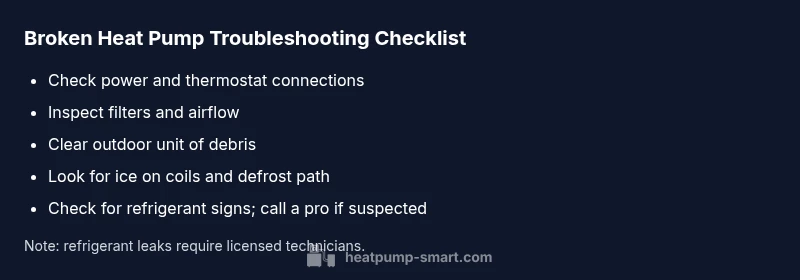
- Check power and control signals: confirm the thermostat is communicating with the outside unit and that the circuit breaker is fully on. 2) Reset the system: a controlled reset can clear minor control faults; wait a few minutes and test again. 3) Inspect air filtration and airflow: replace dirty filters and ensure registers aren’t blocked so the indoor coil can evaporate and condense properly. 4) Clear outdoor area: remove snow, leaves, and debris from around the condenser and ensure there’s at least a few feet of clearance for proper airflow. 5) Defrost and frost management: if ice forms, allow natural defrost cycles or engage the defrost mode if your system supports it. 6) Check for unusual odors or noises: buzzing, rattling, or banging can indicate loose components or fan issues. 7) Confirm refrigerant status: if you observe oily residues or suspect leaks, do not attempt to recharge; professional service is required. 8) Professional evaluation: if symptoms persist after these steps, call a licensed HVAC technician for leak testing, component checks, and refrigerant service. Tip: document error codes and thermostat readings to share with the technician.
Prevention and maintenance to avoid future breakdowns
A proactive maintenance plan reduces the odds of a breakdown. Schedule annual professional inspections, clean or replace filters every 1-3 months depending on usage, and keep the outdoor unit clear of debris and vegetation. Install a programmable thermostat and ensure proper zoning to reduce strain on the system. Check ductwork for leaks and seal as needed to maintain efficiency. Keep an eye on energy bills; a sudden uptick can signal a developing problem. Heatpump Smart’s recommended practices emphasize simple, routine checks that catch issues early and extend equipment life.
When to call a professional and what to expect
If basic checks don’t restore operation, or you detect refrigerant signs, unusual noises, or electrical burning smells, call a licensed HVAC technician immediately. HVAC professionals will perform refrigerant leak tests, electrical checks, pressure testing, and control board diagnostics, and they will evacuate and recharge refrigerant if needed. Ask for a written estimate, confirm warranty coverage, and request a detailed explanation of recommended repairs and parts. A professional service may involve system recharging, coil cleaning, and safety testing. Early professional consultation can prevent further damage and costly downtime.
How to communicate with a tech: questions to ask
Prepare a concise brief for the technician: when the problem started, what symptoms are observed, whether the issue is heating or cooling biased, and if there are any error codes on the thermostat or outdoor unit. Ask about refrigerant type and charge, potential leak points, expected lifespan of major components, and any recommended upgrades for efficiency. Request a written plan with a timeline and a post-service maintenance schedule. Finally, inquire about safety, warranty implications, and any safety contingencies if a breakdown recurs.
Steps
Estimated time: 60-90 minutes
- 1
Check power and controls
Confirm the thermostat is calling for heat and the outdoor unit is powered. Inspect the circuit breaker and any disconnect switches. If a tripped breaker is found, reset it and test the system after a few minutes.
Tip: Document any error codes on the thermostat or outdoor unit for the technician. - 2
Reset the system safely
Power down the thermostat and outdoor unit for a full minute, then power back up. This can clear minor control faults and restore normal communication between components.
Tip: Wait a full minute after power restoration before testing operation. - 3
Inspect air filtration and airflow
Replace dirty filters and ensure air can flow freely through supply and return registers. Restricted airflow is a leading cause of poor heating performance.
Tip: Keep filters on a regular schedule to prevent future blockages. - 4
Clear outdoor area and inspect coils
Remove snow, leaves, and debris around the condenser. Check the outdoor coil for visible frost or ice that could impede heat transfer.
Tip: If you see ice, allow natural defrost cycles or follow your unit’s defrost mode. - 5
Check refrigerant signs
Look for oily residue on connections or hissing sounds that may indicate a leak. Do not attempt to recharge refrigerant yourself.
Tip: Refrigerant work requires licensed technicians with proper equipment. - 6
Test for abnormal noises or smells
Unusual buzzing, rattling, or burnt odors can signal loose parts or electrical issues. Identify the source before proceeding.
Tip: Note the exact location and timing of noises to aid diagnosis. - 7
Evaluate indoor blower performance
Ensure the indoor blower is operating and delivering warm air at the vents. Weak or no airflow points to blower or duct issues.
Tip: Make sure vents aren’t closed and ducts aren’t blocked. - 8
Call a professional if unresolved
If no fix after these steps, schedule a licensed HVAC technician for a thorough leak test, component inspection, and refrigerant service.
Tip: Ask for a written estimate and a maintenance plan to prevent recurrence.
Diagnosis: Heat pump won't turn on or stops unexpectedly
Possible Causes
- highPower or wiring issue
- mediumThermostat communication failure
- mediumOutdoor condenser blocked or iced
- lowRefrigerant leak or low charge
Fixes
- easyVerify power at the outlet and thermostat; reset breakers; check disconnect switch
- easyTest thermostat settings and firmware; replace batteries if needed
- easyClear obstructions around outdoor unit and check for ice; ensure airflow
- hardCall a pro for refrigerant leak test and recharge
Your Questions Answered
What counts as a broken heat pump?
A broken heat pump fails to heat or cool, cycles irregularly, makes unusual noises, or shows signs of ice on the outdoor unit. When symptoms persist after basic checks, it’s often a sign of a faulty component or refrigerant issue.
A heat pump that won’t heat or cool, or shows persistent abnormal behavior, is considered broken and should be diagnosed with a structured check.
Is it safe to reset the breaker or thermostat?
Yes, performing a controlled reset of power to the system is usually safe and can clear minor faults. Do not reset if you smell burning, hear buzzing, or see smoke. If unsure, skip the reset and contact a pro.
You can reset power if nothing seems damaged, but avoid it if you smell burning or hear noises.
Can low refrigerant cause multiple issues?
Yes. Low refrigerant or leaks can cause cooling/heating failure, ice formation, and high energy use. Leaks require a professional to locate and repair the leak and recharge the system.
Low refrigerant can cause several problems and needs a professional to fix.
Why is my heat pump noisy but still working?
Unusual noises often point to loose components, fan issues, or motor bearing wear. A professional should inspect mounting points, coils, and fans to prevent further damage.
Noise usually means something is loose or worn; get a technician to check it.
How long should a defrost cycle take?
Defrost cycles typically last several minutes, depending on the model and outdoor temperatures. If it runs for unusually long or never defrosts, service is advised.
Defrost cycles are usually short, but if it lasts too long, you should have it checked.
What maintenance can prevent future breakdowns?
Regular filter changes, system cleaning, and annual professional inspections can prevent many failures. Keeping vegetation away from the outdoor unit helps airflow and efficiency.
Regular maintenance is the best defense against breakdowns.
Watch Video
Top Takeaways
- Take quick safety-first actions to prevent harm
- Follow a structured diagnostic flow to identify the culprit
- Prioritize simple fixes before complex repairs
- Know when to call a licensed pro for refrigerant or electrical issues
- Heatpump Smart recommends regular maintenance to prevent future breakdowns