What Is Wrong with My Heat Pump? A Practical Troubleshooting Guide
Facing heat pump issues? This comprehensive guide helps homeowners diagnose common faults, perform safe checks, and know when to call a professional.


Most heat-pump problems start with simple clues you can verify at home. If your unit won t start, or it does not heat or cool as expected, begin with power, thermostat settings, and airflow checks. Many issues come from dirty filters, a tripped breaker, or blocked outdoor airflow. Use this guide to identify likely causes and safe next steps before calling a professional.
What is wrong with my heat pump? Common symptoms and their meanings
According to Heatpump Smart, most heat-pump failures begin with observable symptoms you can verify at home. If you are asking what is wrong with my heat pump, start by listing symptoms and matching them to likely causes. Typical problems include the unit not starting, it failing to heat or cool adequately, frequent cycling on and off, ice buildup on the outdoor coil, unusual noises, rising energy bills, water leaks around the indoor unit, or humidity control problems. Each symptom points to different root causes, from power and control issues to airflow restrictions and refrigerant concerns. The Heatpump Smart team has found that many problems stem from simple, addressable items such as dirty filters or blocked airflow. Starting with these checks can save time and prevent unnecessary service calls.
Steps
Estimated time: 60-90 minutes
- 1
Check power and thermostat settings
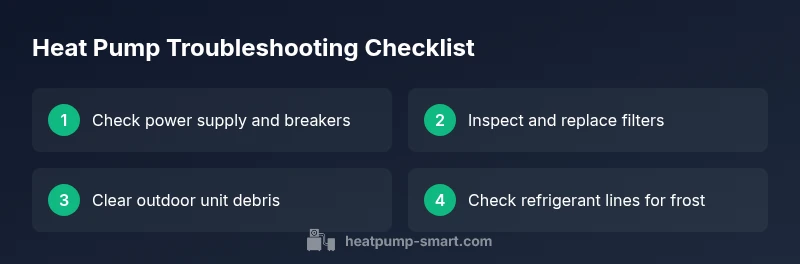
Begin by ensuring the unit is powered on and the thermostat is set to the correct mode (heat or cool) and temperature. If the display is blank or nonresponsive, inspect the circuit breaker, fuses, and wiring from the thermostat to the air handler.
Tip: Always shut off power at the breaker before handling any electrical components. - 2
Inspect air filters and indoor airflow
Remove and inspect the indoor air filter. A dirty or clogged filter can reduce airflow and cause the system to struggle. Replace if dirty and run the system to see if performance improves.
Tip: Set a reminder to replace filters every 1-3 months depending on use and filter type. - 3
Check the outdoor unit and clear debris
Walk around the outdoor unit and remove leaves, grass, snow, and other debris. Ensure there is at least 2 feet of clearance on all sides and that the condenser fins are not bent or blocked.
Tip: Do not use sharp tools near fins; a soft brush can help remove surface debris. - 4
Test thermostat communication and wiring
If the thermostat is communicating with the system poorly, re-pair or re-program it as needed. Check for loose wires at the thermostat and air handler terminals.
Tip: Consider replacing older thermostats with modern, compatible models for reliable communication. - 5
Inspect electrical panel and breakers
Look for tripped breakers or blown fuses in the main panel and the branch circuits feeding the heat pump. Reset tripped breakers one at a time and test the system.
Tip: If breakers trip repeatedly, there may be an underlying electrical fault that requires a pro. - 6
Check for ice and defrost issues
Inspect the outdoor unit for ice on the coils. Ice can indicate a refrigerant or defrost problem, or restricted airflow. Allow ice to melt only when safe and never attempt to chip it away with metal tools.
Tip: A defrost cycle is normal in cold weather; persistent icing requires professional evaluation. - 7
Listen for unusual noises
Unusual grinding, squealing, or rattling noises can indicate loose components, a failing fan motor, or a failing compressor. Note the timing and pattern of noises.
Tip: If you hear loud or persistent noises, stop and contact a pro rather than continuing to run the unit. - 8
Document symptoms and next steps
Keep a record of symptoms, when they started, and any actions you tried. This information helps a technician diagnose the issue faster.
Tip: Provide photographs or videos of visible issues such as ice buildup or leaks when you call for service.
Diagnosis: Heat pump not starting or not delivering expected heating/cooling
Possible Causes
- highPower supply issue or breaker tripped
- mediumThermostat settings or communication error
- mediumClogged air filter or restricted airflow
- lowOutdoor unit blocked or dirty coil
- lowRefrigerant leak or low charge
Fixes
- easyReset the breaker and confirm power to the outdoor unit
- easyReplace or clean indoor air filters and clear debris around the outdoor unit
- easyVerify thermostat mode and set temperature; re-pair with the heat pump if necessary
- easyClear obstructions from the outdoor unit and ensure 2 ft of clearance around it
- hardIf refrigerant issues are suspected, contact a licensed HVAC professional for leak detection and charging
- mediumSchedule a professional inspection if strange noises persist after basic checks
Your Questions Answered
What are the most common signs my heat pump needs service?
The most common signs are no start, weak heating or cooling, unusual noises, ice on the outdoor coil, and unusual energy bills. These symptoms often point to simple causes such as airflow restrictions, dirty filters, or electrical issues that you can address safely before calling a pro.
Common signs include no start, weak heating or cooling, odd noises, ice on the outdoor coil, and higher energy bills.
Can a faulty thermostat cause heat pump problems?
Yes. A misconfigured or failing thermostat can send incorrect signals to the heat pump, causing improper heating or cooling. Check settings, batteries, and compatibility, and re-pair if needed.
A bad thermostat can mislead the system and cause heating or cooling problems.
Should I attempt refrigerant work myself?
No. Handling refrigerant is dangerous and requires licensed HVAC professionals. Leaks can cause health hazards and environmental harm.
Do not try to fix refrigerant leaks yourself; contact a pro.
Is the defrost cycle related to ice buildup?
Yes. The defrost cycle melts frost on the outdoor coil. If ice recurs frequently, there may be a refrigerant or airflow issue.
Ice on the outdoor coil during cold weather may indicate a defrost or airflow problem.
How often should I maintain a heat pump?
Aim for a professional maintenance check twice a year, plus regular DIY tasks like filter replacement and outdoor coil cleaning.
Maintenance twice a year helps keep heat pumps running efficiently.
What safety steps should I take before inspecting the unit?
Turn off power at the breaker, wear eye protection, and avoid touching electrical components directly. If unsure, call a professional.
Always switch off power and be cautious. When in doubt, call a pro.
Watch Video
Top Takeaways
- Start with power and thermostat checks.
- Keep outdoor units clear of debris and ensure proper airflow.
- Replace dirty filters to restore efficiency.
- Do not ignore ice buildup or unusual noises; seek pro help.
- Regular maintenance prevents many common heat pump problems.