Heat Pump Keeps Shutting Off: Urgent Troubleshooting Guide
Learn how to diagnose and fix a heat pump that keeps shutting off. Step-by-step checks, safety tips, and prevention strategies from Heatpump Smart to restore comfort fast.


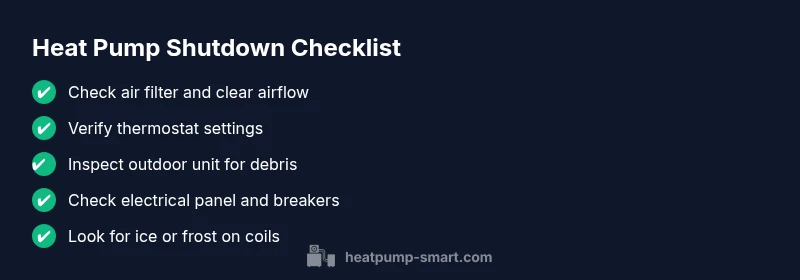
The most likely cause is a control issue or restricted airflow causing the heat pump to shut off to protect itself. Start with quick checks: verify power and safety switch, inspect and replace dirty filters, and confirm thermostat settings are correct. According to Heatpump Smart, addressing airflow and control problems often resolves the shutdowns.
Why a heat pump keeps shutting off
Heat pumps are sophisticated systems that balance comfort with safety protections. When a unit keeps shutting off, the cause is often a protective response rather than a simple fault. According to Heatpump Smart, two of the most frequent culprits are control system problems and airflow restrictions. A faulty sensor, a miscalibrated thermostat, or a hiccup in the control board can trigger an automatic shutdown to prevent damage. The good news is that many shutdowns are the result of easy-to-fix issues rather than catastrophic failures. Start with the basics: ensure power is reaching both indoor and outdoor units, verify the thermostat is calling for heat or cool correctly, and check for any obvious signs of electrical trouble. If you address these simple items first, you’ll typically uncover the root cause without a service call.
If you notice the unit restarting after a brief shutdown or cycling on and off repeatedly, make note of any fault codes displayed on the thermostat or outdoor unit. Those codes point to a subsystem—thermostat, compressor, pressure switch, or reversing valve—so you can target your next steps more efficiently. Heatpump Smart’s experience shows that most shutdowns begin with airflow or control-related issues, which means your first actions should focus on filters, vents, and sensor integrity. Remember: safety first, and when in doubt, consult a qualified technician.
Steps
Estimated time: 60--90 minutes
- 1
Ensure safety and power down
Before touching any components, switch off power at the main breaker and at the outdoor disconnect. Lockout/tagout if available. This prevents electrical shock while you inspect filters, panels, and wiring.
Tip: Wear gloves and use a flashlight to inspect wires without strain. - 2
Inspect and replace air filters
A clogged filter reduces airflow, makes the system work harder, and can trigger shutdown signals. Remove the old filter, clean the housing, then install a new filter of the correct size.
Tip: Check both supply and return paths—blocked returns can mimic a dirty filter. - 3
Check outdoor unit for debris
Clear leaves, grass, snow, or ice from the outdoor unit to maintain proper airflow into the condenser coils. Ensure the condenser fins aren’t bent or damaged.
Tip: Gently straighten fins with a non-metallic tool if needed. - 4
Verify thermostat settings and controls
Confirm the thermostat is calling for heat or cool, not auxiliary heat, emergency heat, or a vacation mode that might shut down the system. Recalibrate if readings seem off.
Tip: If you suspect reading drift, compare with a separate room thermometer. - 5
Inspect electrical connections and components
Check accessible wiring and contactor for signs of wear, overheating, or looseness. If you notice buzzing, burning smells, or damaged insulation, discontinue use and call a pro.
Tip: Only handle electrical components you can safely reach; otherwise, stop and call an electrician. - 6
Check refrigerant lines and frost on coils
Ice on the evaporator coil or refrigerant lines can trigger protective shutdown. If you see frost, thaw the coil and ensure proper airflow. Do not attempt refrigerant work yourself.
Tip: Persistent frosting indicates a leak or airflow problem needing professional service. - 7
Assess whether professional service is needed
If the unit still shuts off after these steps, there may be a deeper issue such as a refrigerant leak, failed pressure switch, or faulty control board. Schedule a service call rather than continuing DIY attempts.
Tip: Document symptoms and fault codes to expedite diagnosis.
Diagnosis: Heat pump shuts off during operation
Possible Causes
- highPower issue or unsafe electrical supply
- highAirflow restriction due to dirty filter or obstructed vents
- mediumThermostat or control board fault
- mediumDefrost cycle or ice buildup on outdoor coil
- lowRefrigerant leak or low refrigerant pressure
Fixes
- easyCheck the main electrical panel and confirm all breakers are set correctly; look for signs of loose wiring or scorch marks.
- easyReplace dirty or clogged air filters and ensure returns are free of obstructions; clear all supply registers.
- easyReset the thermostat, verify correct mode and setpoints, and recheck sensor placement; reseat C-wire if applicable.
- mediumIf ice buildup or restricted defrost is suspected, allow the unit to defrost and ensure outdoor airflow is unobstructed; if recurring, service may be needed.
- hardA refrigerant leak or low refrigerant pressure requires a licensed HVAC tech to diagnose and recharge as needed.
Your Questions Answered
Why does my heat pump keep shutting off?
Shutdowns usually come from safety protections triggered by airflow problems, thermostat faults, or electrical issues. Start with power, filter, and thermostat checks before calling a pro.
Shutdowns are often safety protections caused by airflow or control problems; start with power, filters, and thermostat checks.
Can a dirty filter really cause a shutdown?
Yes. A blocked filter reduces airflow, which can cause the system to overheat or go into a protective shutdown. Replacing the filter and clearing obstructions often resolves the issue.
A dirty filter can trigger a shutdown by restricting airflow.
Is it safe to reset the thermostat myself?
Resetting the thermostat is generally safe if done following the manual. If readings seem off after reset, recalibrate or consider replacing the thermostat.
You can reset per the manual, but watch for persistent issues that may need replacement.
When should I call a professional?
Call a professional if the unit continues to shut down after basic checks, if you notice refrigerant signs, unusual noises, or burning smells, or if you’re unsure about electrical work.
If shutdowns persist after basic checks or you smell burning, call a professional.
Can cold weather cause shutdowns?
Cold outdoor temperatures can affect defrost cycles and pressure readings, occasionally triggering shutdowns. Ensure proper airflow and defrost function in cold seasons.
Yes, cold weather can impact operation and defrost cycles.
How can I prevent shutdowns in the future?
Regular maintenance, timely filter changes, clean outdoor coils, and a properly sized system reduce shutdowns. Keep an eye on fault codes and schedule professional checkups annually.
Keep up with maintenance and annual professional checkups to prevent shutdowns.
Watch Video
Top Takeaways
- Start with airflow and controls.
- Check filters, vents, and thermostat accuracy.
- Power and safety first—shut off before inspection.
- Call a pro for refrigerant or electrical failures.