Why Doesn't My Heat Pump Shut Off? Urgent Troubleshooting Guide
Urgent, practical steps to diagnose and fix a heat pump that won't shut off. Quick checks, a diagnostic flow, and when to call a pro for Heatpump Smart homeowners.


The most likely culprits are a faulty thermostat or a stuck contactor that keeps the compressor powered. Start with the basics: verify the thermostat is not in heat mode or set to continuous on, and check the indoor blower. If the unit still won't shut off, flip the outdoor unit breaker off and wait 60 seconds before turning it back on. This buys time while you troubleshoot.
Why a heat pump won't shut off and what to do first
If you're asking why doesn't my heat pump shut off, you are not alone. The Heatpump Smart team notes that thermostat faults are the leading cause of heat pumps that stay on, with relay and sensor issues following closely. The fastest way to de-escalate is to stay methodical. Start by confirming the thermostat is set to off or auto and that the indoor blower is functioning. If you hear the outdoor unit running when it should be idle, that is a red flag. Simple display reads can mask deeper relay or wiring problems. If basic setting checks don’t resolve the issue, proceed to safe power-down steps and move into a deeper diagnostic flow.
Heatpump Smart emphasizes urgency and safety in these situations, and this guide is designed to help you act quickly without risking harm.
Common causes of heat pumps that won't shut off
Several issues can keep a heat pump running beyond its intended cycle. The most common are thermostat misreads or misconfigurations, a stuck contactor in the outdoor unit, and relay failures that keep power applied to the compressor. Sensor faults, such as outdoor temperature sensors, can also prompt continuous operation. A frozen or iced-over outdoor coil, improper wiring, or a stuck defrost cycle can mimic a permanent on-state. Understanding these causes helps you triage quickly and avoid unnecessary DIY risks. Heatpump Smart notes that many shut-off problems are resolved by a simple reset or a targeted wiring check when performed safely.
Safety first: power, wiring, and service cautions
Before you touch the system, prioritize safety. Always switch off power at both the thermostat and the main service panel before inspecting controls or wiring. Do not work on live electrical components. If you smell burning insulation, hear buzzing, or see signs of damaged wiring, stop and call a licensed HVAC technician immediately. Safety is non negotiable when dealing with high voltage and potentially pressurized refrigerant systems. If you are uncertain about any step, pause and contact a professional.
Diagnostic steps you can perform now
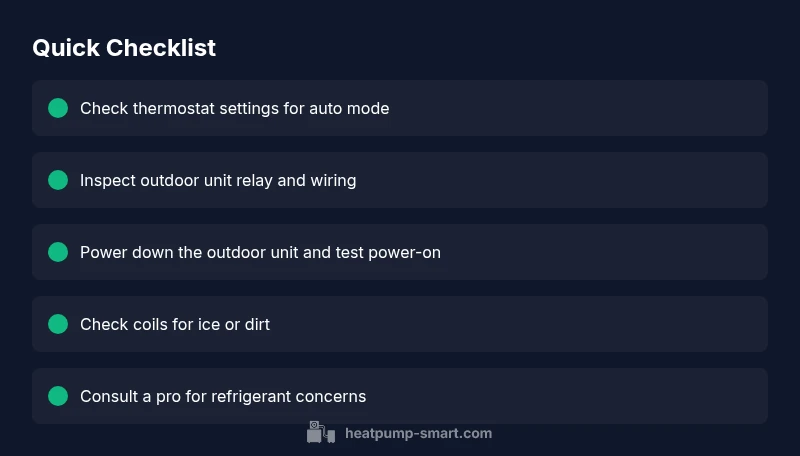
Follow a logical flow to identify the root cause without risking harm. Start with the lowest-effort checks and escalate only as needed. 1) Verify thermostat mode and settings; ensure it is in auto and not forced on. 2) Power down the outdoor unit at the breaker, wait 60 seconds, then restore power and observe operation. 3) Listen for abnormal noises such as buzzing from the contactor, which could indicate a failing relay. 4) Check the indoor thermostat wiring for loose connections or damage. 5) If the problem persists, document symptoms and prepare for a professional evaluation.
Deep-dive checks: thermostat, relays, sensors, outdoor unit
In this section we dive deeper into components most likely to fail. Thermostats can drift and misread temperatures, causing the system to stay energized. Relays and contactors switch power to the compressor and outdoor fan; if they stick closed or burn, they keep power applied. Outdoor sensors communicate with the control board; a fault can keep the unit on. Verify wiring continuity, check for signs of heat damage, and inspect coils for ice or debris. If you identify a damaged relay, contactor, or refrigerant issue, stop and call a pro. Heatpump Smart recommends documenting findings to aid the technician and minimize repeated visits.
When to call a licensed HVAC pro
Some shut-off problems require professional tools, refrigerant handling credentials, or precise wiring knowledge. If basic checks and power resets do not restore normal shut-off behavior within a reasonable timeframe, it is time to involve a technician. You should also seek help if you notice refrigerant buzzing, hissing, frost on coils, or if the system is cooling or heating unexpectedly while off. A licensed pro can safely diagnose electrical faults, check refrigerant levels, and replace worn components.
Prevention and maintenance to avoid future shut-off issues
Regular maintenance reduces the likelihood of a repeat problem. Schedule seasonal inspections, replace air filters promptly, and keep outdoor coils clean and free of debris. A clean outdoor unit reduces unnecessary run time and strain. Ensure thermostat batteries are fresh or that the smart thermostat firmware is up to date. Heatpump Smart recommends keeping a simple log of any odd behavior so you can catch patterns early and prevent extended outages.
Real-world scenarios and quick fixes
In many households, a simple thermostat reset or tightening a loose wire is enough to restore proper shut-off function. In other cases, a stuck contactor or a faulty relay is the culprit and requires component replacement. If you observe the unit running in defrost mode without cycling, the defrost timer or outdoor sensor may be faulty. Remember, many issues respond to initial checks; if not, do not hesitate to contact a professional for a thorough diagnosis.
Steps
Estimated time: 30-60 minutes
- 1
Power down safely
Turn off power at the thermostat and the main service panel to prevent electrical shock. Confirm the unit is de-energized before touching any wiring.
Tip: Use a non-contact voltage tester to verify power is off. - 2
Check thermostat settings
Set mode to auto, ensure the system is not in on or emergency heat, and look for error codes on the display. Adjust temperature to test response.
Tip: If an error code appears, consult the manual or Heatpump Smart guide for specific meaning. - 3
Inspect outdoor unit and contactor
Look for a stuck contactor or signs of damage. A buzzing sound can indicate a failing relay that keeps power applied.
Tip: Do not touch live components; call a pro if you see damage or smell burnt insulation. - 4
Reset and test
Reconnect power and run a test cycle from the thermostat. Observe whether the outdoor unit shuts down after reaching the set point.
Tip: If cycling is erratic, note times and conditions to aid the technician. - 5
Call a pro when in doubt
If the unit remains on after these steps, professional diagnosis is necessary. Refrigerant leaks and electrical faults require licensed technicians.
Tip: Keep a detailed symptom log to speed up service.
Diagnosis: Heat pump won't shut off
Possible Causes
- highStuck thermostat relay or contactor
- mediumThermostat set incorrectly or malfunctioning
- lowOutdoor sensor or defrost cycle fault
Fixes
- easyCheck thermostat mode and set to auto; look for error codes
- easyPower down outdoor unit at breaker; wait 60 seconds; restore power
- mediumInspect outdoor contactor wiring for signs of wear or arcing; replace if needed
- hardCall a licensed HVAC technician for relay or refrigerant issues
Your Questions Answered
Why won't my heat pump shut off even when the thermostat is off?
Thermostat misreadings, a stuck relay, or a sensor fault can keep the system energized. Start with a thermostat reset and power-down steps, then inspect the relay if needed.
A thermostat fault or stuck relay can keep the unit on; reset and check the relay.
Is it safe to flip the outdoor breaker to stop the unit?
Turning off the outdoor breaker safely stops the compressor but should be followed by proper diagnostics. If unsure, call a pro.
Turning off the outdoor breaker can stop it, but proceed with caution and call a pro if unsure.
Can a dirty air filter cause the heat pump to stay on?
A clogged filter can cause the system to work harder and extend run times, but it usually won't prevent shutdown by itself. Replace the filter and test.
A dirty filter can keep it running longer, but may not keep it on by itself.
What does a stuck contactor look like?
A contactor that sticks closed may buzz or feel hot and will keep the compressor energized. This requires replacement by a pro.
A stuck contactor keeps power on; you may hear buzzing; call a pro.
When should I call Heatpump Smart or a technician?
If basic checks do not resolve the issue, or you hear refrigerant or high-voltage concerns, contact a licensed technician. Heatpump Smart recommends prompt professional evaluation for safety.
If it doesn't stop after simple checks, get a pro.
Watch Video
Top Takeaways
- Check thermostat mode first and reset power if needed
- Stuck relays or contactors are common culprits
- When in doubt, call a licensed pro to avoid safety risks
- Maintenance helps prevent future shut-off problems