Heat Pump Running Constantly: Troubleshooting Guide
Urgent troubleshooting guide for homeowners and pros: uncover why a heat pump runs nonstop, diagnose common causes, and follow a step-by-step plan to restore comfort and save energy. Heatpump Smart analysis informs practical fixes.


If your heat pump is running constantly, it's usually a sign of thermostat mis-set, airflow restriction, dirty filters, or a stuck defrost cycle. Start with the basics: verify thermostat settings, inspect the air filter, and check the outdoor unit. If unresolved, follow the diagnostic flow to pinpoint the cause and prevent energy waste.
Why heat pump running constantly matters
When a heat pump runs continuously, it not only wastes energy but also accelerates component wear, raises utility bills, and can reduce home comfort. Homeowners frequently notice higher temperatures on indoor surfaces and a thermostat that never seems to reach the set point. In many cases, the root cause is a simple setting or airflow issue, but persistent running can also signal refrigerant or sensor problems. The Heatpump Smart team emphasizes that addressing constant runtime quickly minimizes damage and extends system life. Regular maintenance and prompt troubleshooting help maintain efficiency and reduce running costs while keeping your home comfortable across seasons.
Common causes of constant running
Several practical causes explain why a heat pump might run nonstop. A mis-set thermostat or a scheduled program forcing continuous operation tops the list. Clogged or dirty air filters restrict airflow, causing the system to work harder and run longer. Blocked outdoor condensers due to debris, snow, or nearby vegetation reduce cooling capacity and trigger extended cycling. An over-sized system can short cycle or run continuously without a proper load. Finally, a defrost cycle that sticks or sensor faults can keep the unit active longer than needed, especially in shoulder seasons. Understanding these causes helps you target the fix efficiently and safely.
Quick checks you can perform safely
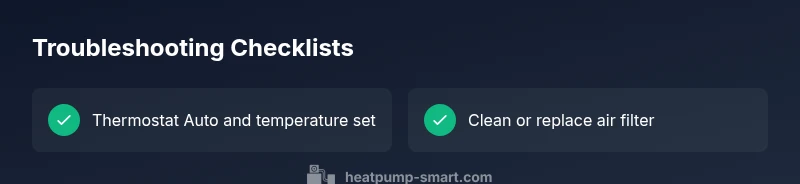
Before diving into professional service, try these safe, straightforward checks. Confirm that the thermostat is set to Auto and at a reasonable temperature range; do not manually override continuous operation. Inspect and replace or clean the air filter if it appears dirty. Ensure the indoor air handler is blowing warm air when the unit runs and that the filter grille is unobstructed. Check the outdoor unit for leaves, debris, or snow buildup and ensure at least a few inches of clearance around it. If you hear unusual noises or notice frost on the outdoor coil, stop and seek help—these indicate more serious issues.
Diagnostic flow you can follow
This diagnostic flow guides you through symptom-driven checks to identify the most common causes. Start with basic, non-invasive steps: thermostat settings, filter condition, and outdoor unit clearance. If the unit continues to run, verify the blower and fan operation, listen for abnormal noises, and inspect for ice or frost on coils. When a symptom points toward a specific cause, apply the corresponding fix before moving to the next potential issue. If you reach a point where the problem remains unresolved, it’s time to contact a licensed HVAC technician for refrigerant, electrical, or sensor diagnoses.
Steps
Estimated time: 45-60 minutes
- 1
Verify thermostat settings
Check that the thermostat is set to Auto and at a reasonable target temperature. Review any schedules that might force continuous operation and disable them if needed. Ensure the system is not set to a constant heat mode.
Tip: Use a temporary setback to reduce runtime and improve efficiency. - 2
Inspect or replace the air filter
Remove the filter and inspect for visible dirt. If clogged, replace with a filter of the correct MERV rating and size. A clean filter improves airflow and reduces run time.
Tip: Record the filter change date to establish a maintenance cadence. - 3
Check indoor blower and ducts
Ensure the blower is operating and that supply vents are open and not blocked. Look for leaks or obstructions in accessible ductwork that could restrict airflow.
Tip: If you hear rattling or abnormal noise, stop and call a pro. - 4
Assess the outdoor unit
Clear leaves, snow, and debris from the condenser. Confirm there is adequate clearance (at least a few inches) around the unit for proper heat transfer.
Tip: Avoid using a pressure washer or hose directly on the coil—risk of damage. - 5
Look for frost or ice on coils
If frost is present on the outdoor coil, the defrost cycle may be faulty or there could be airflow restrictions. Do not attempt aggressive de-icing; contact a professional.
Tip: Note the time and weather conditions when frost appears for troubleshooting context. - 6
Call a licensed technician if unresolved
If the unit continues to run nonstop after these steps, schedule a service call. Persistent running could indicate refrigerant or sensor problems beyond DIY scope.
Tip: Document symptoms, timing, and any alerts to aid the technician.
Diagnosis: Heat pump running nonstop
Possible Causes
- highThermostat mis-set or programming forcing continuous operation
- highClogged or dirty air filter reducing airflow
- mediumOutdoor unit blocked by debris, snow, or vegetation
- lowSystem oversized for the space leading to long runtimes
- mediumStuck defrost cycle or faulty sensor triggering continuous operation
Fixes
- easyReset thermostat to Auto, confirm target temperatures, and disable any forced continuous mode
- easyReplace or clean the air filter; ensure airflow from return ducts is unobstructed
- easyClear debris around the outdoor unit and trim nearby vegetation for proper airflow
- mediumCheck system sizing with a load calculation; if oversized, discuss rebalancing with a pro
- mediumIf frost or ice is present, avoid scraping; contact a tech to inspect defrost sensor and refrigerant levels
Your Questions Answered
Why is my heat pump running constantly?
Common causes include thermostat mis-settings, dirty filters, airflow restrictions, and a stuck defrost cycle. Start with basic checks and progress through the diagnostic flow.
Common causes are thermostat settings, dirty filters, airflow limits, or a defrost cycle. Begin with simple checks and follow the diagnostic flow.
Is it safe to use the heat pump when it’s running nonstop?
Running nonstop is not ideal; it increases energy use and wear. If it persists, perform safety checks and consider professional evaluation if unusual noises or frost appear.
It's not ideal or safe long-term. If it continues, perform checks and call a pro if you hear noises or see ice.
Can a dirty air filter cause constant running?
Yes. A clogged filter reduces airflow, forcing the system to work harder and run longer to reach the set temperature.
Yes. A dirty filter restricts airflow, causing longer runtimes.
When should I call a technician?
If basic checks don’t resolve the issue, or you notice ice, unusual noises, or refrigerant concerns, contact a licensed HVAC technician.
Call a licensed HVAC tech if the issue isn’t resolved or you hear noises or see ice.
How can I prevent this in the future?
Schedule annual maintenance, replace filters regularly, and ensure proper airflow and proper system sizing.
Get regular maintenance, replace filters, and ensure proper airflow and sizing.
Watch Video
Top Takeaways
- Start with thermostat and filter checks to stop unnecessary cycling
- Clear outdoor area improves efficiency and reduces runtime
- If unresolved, call a licensed pro for refrigerant or sensor issues
- Regular maintenance saves energy and prolongs heat pump life