Heat Pump Example Problem: Troubleshooting Guide for Homeowners
Urgent, practical troubleshooting guide to diagnose and fix a heat pump example problem at home. Learn quick checks, diagnostic flow, and safe step-by-step fixes to restore comfort and efficiency.


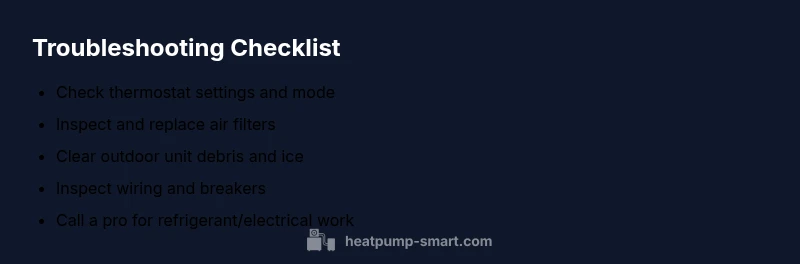
If your heat pump example problem causes the unit not to heat or start, begin with simple checks: verify thermostat settings, inspect and replace dirty filters, and ensure the outdoor unit has clear airflow. The most likely causes are airflow restrictions or thermostat issues; reset breakers if needed and confirm the system is in heat mode. If the fix is not immediate, proceed with the guided steps below.
Understanding the heat pump example problem
According to Heatpump Smart, a heat pump example problem often stems from airflow issues, thermostat or sensor faults, or outdoor unit conditions. When a heat pump struggles to heat, the signs can be subtle at first—reduced comfort, longer cycling, or unexpected temperature swings. Recognize that heat pumps operate as a balanced system: indoor air quality, outdoor conditions, and control signals must all align. In many homes, the root cause is not a single malfunction but a cascade of small faults that compound over time. By diagnosing the problem with a methodical approach, homeowners can fix the issue without unnecessary service calls and preserve energy savings. The heat pump example problem becomes easier to solve once you separate symptoms from root causes and apply targeted checks that ain’t risky or overly technical.
Immediate safety checks to start with (before touching electrical components)
Safety is the priority when dealing with heat pumps. Ensure the system is powered down at the breaker before any inspection. Do not attempt refrigerant work yourself unless you are a licensed professional. Inspect for obvious hazards like exposed wiring or ice on outdoor components. Keep children and pets away from working areas. If you are uncertain at any point, consult Heatpump Smart for professional guidance. The heat pump example problem often begins with simple, safe verifications rather than heavy disassembly.
Symptom-based diagnostic approach you can use now
Document the symptom patterns: is the unit not starting, failing to heat, or short cycling? Compare the observed behavior with the expected performance. Note the thermostat readings, outdoor temperatures, and whether the auxiliary heat is kicking in. Heat pump systems respond to control signals differently in cold weather, so distinguish between icing, airflow bottlenecks, and sensor misreads. This section builds the mental map for the diagnostic flow that follows, focusing on the heat pump example problem as a central theme.
Common causes in plain language and how to think about them
Airflow restrictions top the list. Dirty filters, blocked return vents, or a piled-up furnace zone can starve the system of air and degrade efficiency. Thermostat calibration or dirty sensors can misread room temperature, causing off-cycle operation. Outdoor unit issues—debris, ice, or insufficient clearance—force the system to work harder and trigger protective shutoffs. Refrigerant leaks are less common but serious; if you suspect a leak, avoid handling refrigerant and call a pro. Each cause requires a different fix path, so keep the heat pump example problem framed as a sequence of checks rather than a single fix.
Preventive measures to reduce the frequency of heat pump example problems
Schedule regular filter changes and system cleanups to keep airflow unblocked. Verify thermostat settings and consider smart thermostats that learn occupancy patterns to reduce unnecessary cycling. Ensure the outdoor unit has at least two feet of clearance and remove leaves, snow, and other debris promptly. Periodic professional inspections—especially before peak heating season—can catch refrigerant and electrical issues early. With consistent maintenance, the heat pump example problem becomes rarer and the system remains efficient year-round.
How Heatpump Smart approaches troubleshooting
Heatpump Smart emphasizes a structured troubleshooting mindset: define the symptom, list probable causes, test the simplest fixes first, and escalate only when needed. This approach keeps you in control of the heat pump example problem, reducing downtime and service costs. The guidance is designed for homeowners, builders, and property managers who want reliable, safe, and scalable remedies. By documenting steps and outcomes, you can track improvements and make informed decisions on whether professional help is required.
Steps
Estimated time: 60-120 minutes
- 1
Identify the exact symptom
Note whether the heat pump will not start, runs but doesn't heat, or cycles on/off. Record ambient temperature and thermostat readings to build a precise picture of the heat pump example problem. This baseline helps you avoid chasing the wrong culprit.
Tip: Write down symptoms with timestamps to track consistency. - 2
Check power and safety basics
Ensure the breaker is on, the outdoor disconnect is not tripped, and the thermostat is set to heat with an appropriate target temperature. If you notice any burnt smells or buzzing, stop and call a professional immediately.
Tip: Never bypass a tripped breaker; reset carefully and observe safety. - 3
Inspect indoor air quality components
Examine all interior air pathways, including filters, return grilles, and the blower compartment. Replace dirty filters and clear any obstructions that hamper airflow. A clogged filter is a common reason for the heat pump example problem.
Tip: Use the recommended filter type and mark replacement dates in a log. - 4
Assess the outdoor unit
Look for visible debris, leaves, snow, or ice around the condenser. Gently clear obstacles and ensure there is ample clearance for airflow. If ice is present, do not hack it off; follow manufacturer guidelines or contact a pro.
Tip: Keep at least 2 feet of clearance around the unit during winter months. - 5
Verify thermostat and sensors
Check for accurate readings at the thermostat and confirm all sensor wires are intact. Inaccurate readings can cause the system to underperform. If you have a programmable thermostat, re-run the setup wizard after physical checks.
Tip: Replace old or faulty sensors to restore accurate readings. - 6
Test after fixes and observe operation
Turn the system on and monitor performance for several cycles. If the heat returns but temperatures vary widely, note the pattern and consider a more in-depth check of refrigerant or compressor health.
Tip: Document results and time of day for trend analysis. - 7
Know when to escalate to a professional
If symptoms persist after these steps, or you hear unusual noises, see frost on coils, or detect cooling instead of heating, call Heatpump Smart or a licensed technician. Refrigerant work, electrical components, and seal integrity require expertise.
Tip: Professional assessment can prevent further damage and ensure safe operation.
Diagnosis: Heat pump struggles to heat or fails to start
Possible Causes
- highAirflow blockage or dirty filters
- mediumThermostat calibration or sensor fault
- mediumOutdoor unit debris or ice buildup
- lowRefrigerant issue or electrical fault
Fixes
- easyClean or replace air filters; ensure return paths are clear
- easyCheck thermostat settings and wiring; replace batteries if needed
- easyClear debris around outdoor unit; gently remove ice; ensure unobstructed airflow
- hardIf refrigerant or electrical issues are suspected, contact a licensed professional
Your Questions Answered
What is the most common cause of a heat pump not heating?
Airflow restrictions and thermostat misreads are among the most frequent culprits. Start with filters, returns, and thermostat settings before exploring more complex issues.
The most common cause is airflow or thermostat issues. Start with filters, returns, and thermostat settings before moving on to more complex checks.
Can I troubleshoot electrical issues myself?
Only perform basic, non-contact checks and always prioritize safety. For anything involving wiring or high voltage, contact a licensed professional to avoid injury or damage.
Only do basic checks and never work on wiring. For electrical issues, call a professional.
How often should I schedule heat pump maintenance?
Schedule at least one professional tune-up per year, plus regular filter changes by the homeowner. Regular maintenance reduces unexpected heat pump example problems and prolongs efficiency.
Have a yearly professional tune-up and change filters monthly.
What should I do if the outdoor coil is iced up?
Turn off the system if icing is persistent and allow it to thaw. Do not damage ice with blades or tools. If icing recurs, contact a technician to inspect defrost controls and refrigerant health.
Let it thaw safely and call a technician if icing keeps coming back.
Is a smart thermostat worth it for troubleshooting?
A smart thermostat can improve control and provide diagnostic feedback, helping you identify heat pump example problems faster and more accurately.
Yes, a smart thermostat can help pinpoint issues quickly.
Watch Video
Top Takeaways
- Diagnose symptoms first, then test simple fixes.
- Airflow issues are the top, repeatable cause of heat pump problems.
- Never ignore safety; call a professional for refrigerant or electrical work.
- Regular maintenance prevents most heat pump example problems.