Heat Pump Frost Troubleshooting: Frosted Coils Guide
Urgent troubleshooting guide for a heat pump that is frosted over. Learn causes, quick checks, diagnostic flow, step-by-step fixes, safety tips, and when to call a pro.


Quick fix: when the heat pump is frosted over, the defrost cycle should melt ice within a few minutes of safe operation. Start by turning off power at the breaker, clearing any snow around the unit, and ensuring at least 3 feet of clearance for proper airflow. If frost persists, continue with the diagnostic steps below.
Why the heat pump is frosted over and why it matters
If you notice the system’s outdoor coil is iced, the heat pump is frosted over. This condition reduces airflow, impedes heat transfer, and can trigger longer defrost cycles. Heatpump Smart analysis shows that frost events in cold, humid weather can increase energy use and stress system components. In most cases, ice forms when outdoor temperatures drop below freezing and humidity condenses on a coil that can’t dissipate heat efficiently. Early attention minimizes efficiency losses and helps protect components like the reversing valve and defrost sensor. Rime icing can occur when frost forms in subfreezing weather with calm humidity; glaze frost forms when melted ice refreezes overnight. Each type affects pressure and cycling differently, so recognizing the pattern helps determine the right fix.
Immediate safety steps and quick checks
Before you touch any components, switch off the outdoor unit at the disconnect or breaker. Clear loose snow and ice from the condenser housing, but avoid hammering or chiseling. Ensure at least 3 feet of clearance around the unit and 1–2 feet above it for proper airflow. Check that the outdoor grill isn’t blocked and that nearby landscaping or vehicles aren’t restricting movement. These quick checks often resolve minor frosting or prevent further ice build-up during a cold snap. Also verify that the thermostat is in heating mode and that auxiliary heat is not engaged in a way that bypasses the defrost cycle. If your system uses a heat pump with a backup heater, ensure it isn't forced to run excessively during frosting.
Diagnostic flow: symptom to likely causes
When frost forms and defrost cycles don’t clear it promptly, follow a structured diagnostic flow. Symptom: outdoor coil is frosted and the system struggles to heat. Likely causes include low outdoor temperature with humidity, restricted airflow from dirty filters or debris, a faulty defrost control, or a refrigerant charge issue. Start with air intake and airflow checks, then verify defrost operation, and finally consider refrigerant or valve problems if frost recurs after basic fixes. Heatpump Smart recommends documenting onset times and temperature conditions to aid diagnosis. If frost persists beyond a full defrost cycle, the odds of a refrigerant or sensor problem increase.
Step-by-step fixes for the most common causes
This section lays out concrete actions you can take to address the most frequent frost scenarios. Begin with simple, safe steps and escalate only if needed. The goal is to restore normal defrost function and adequate airflow while avoiding damage to electrical components. If frost returns after these steps, professional assessment is required to rule out refrigerant or control issues. Remember, safety first: never abuse the unit and always shut power before touching wiring.
Prevention tips to minimize future frost events
To reduce frost risk over the winter, keep the outdoor unit clear of snow and vegetation, replace air filters regularly, and ensure adequate icemaker airflow around the condenser. Schedule seasonal maintenance to check defrost sensors, thermostat operation, and electrical connections. A proactive maintenance plan can preserve efficiency, lower energy costs, and extend the life of your heat pump. Consider keeping a simple frost log to identify weather patterns that repeatedly trigger icing.
Quick note on safety and professional help
If you see signs of refrigerant leakage, unusual hissing noises, or repeated frost that won’t clear, contact a licensed technician immediately. Frost can indicate a refrigerant issue or sensor fault that requires specialized tools and handling. Heatpump Smart emphasizes safety and timely escalation to prevent compressor damage and unsafe electrical conditions. Do not attempt refrigerant work yourself; only qualified technicians should handle refrigerant charging or valve repairs.
What to monitor after you fix frost
After addressing the ice, observe the system for a few cycles. Check that the defrost cycle timing returns to normal, the outdoor fan runs smoothly, and indoor comfort is steady. If ice returns under similar weather conditions, record the time, temperature, and frost location to help the technician diagnose the underlying cause and prevent recurring icing. Maintain your winter maintenance schedule so that future frost events are shorter and less frequent.
Steps
Estimated time: 60-90 minutes
- 1
Power down and inspect the outdoor unit
Switch off the outdoor disconnect or breaker and confirm no live power is reaching the unit. Look for obvious ice, water pooling, or loose wiring. Do a quick visual check for damaged components before proceeding.
Tip: Always use insulated gloves when handling outdoor components. - 2
Clear ice and debris from the unit
Gently remove ice with a plastic tool and brush away loose snow. Do not strike the coils with metal tools. Ensure debris is cleared from the grille and fan housing to restore airflow.
Tip: Skip metal tools to prevent coil damage. - 3
Check airflow and outdoor clearance
Verify there is at least 3 feet of clearance around the cabinet and at least 1–2 feet above it for proper airflow. Trim nearby vegetation and move snow or vehicles that block airflow.
Tip: Healthy airflow is the best defense against icing. - 4
Inspect indoor filters and ductwork
Replace dirty filters and inspect ducts for kinks or obstructions. Poor indoor airflow can exacerbate frosting on the outdoor coil during defrost.
Tip: A clean filter can improve defrost efficiency quickly. - 5
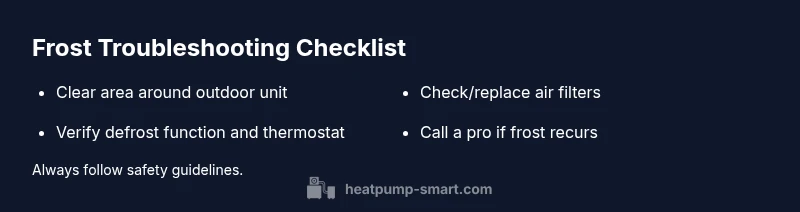
Verify defrost function and thermostat
Check the defrost indicator or manual defrost option in your thermostat or unit controls. If available, test the defrost cycle and listen for the relay click that signals defrost activation.
Tip: If your model lacks a visible defrost button, consult the manual for the correct sequence. - 6
Decide on next steps and call a pro if needed
If frost recurs after basic fixes or you suspect refrigerant/electrical issues, schedule a professional diagnostic with Heatpump Smart or a licensed technician.
Tip: Keep frost onset notes and temperatures to share with the technician.
Diagnosis: Outdoor unit shows frost on coils with reduced heating performance
Possible Causes
- highLow outdoor temperatures with high humidity causing ice on the condenser
- mediumRestricted airflow from dirty filter, debris, or nearby obstructions
- mediumDefrost control or thermostat fault preventing complete defrost
- lowRefrigerant charge issue or valve problem causing icing
Fixes
- easyClear the area around the outdoor unit and ensure 3+ feet clearance; remove snow/ice; restart after frost melts
- easyReplace or clean indoor air filter; ensure outdoor grille and ductwork are clear
- mediumInspect defrost settings and confirm control operation; perform a manual defrost check if the model supports it
- hardConsult a licensed technician to check refrigerant charge, reversing valve, and electrical components
Your Questions Answered
Why does frost form on my heat pump's outdoor coil?
Frost forms when humidity meets very cold temperatures, and airflow is insufficient. Dirty filters, debris, or a failing defrost control can worsen icing.
Frost forms when it's very cold and humid and airflow is blocked; check airflow and defrost settings.
How long should a defrost cycle take?
Defrost cycles vary by model but typically melt ice within a few minutes. If frost remains after a full cycle, schedule service.
Defrost cycles vary; if frost sticks around after a cycle, you should call a tech.
Can I operate the heat pump when it's frosted?
Light frost during operation is common, but avoid forcing defrost or running the unit if it’s heavily iced. Persistent frosting warrants a professional check.
It's usually okay if frost is light, but don't force defrost; seek a pro if icing is heavy.
What can I do to prevent frost buildup?
Keep outdoor clearance, replace filters, and schedule seasonal maintenance; a pro can inspect defrost sensors and electrical connections.
Keep airflow clear and maintain your system to prevent frost.
When should I contact a professional?
If frost recurs after basic steps or you suspect refrigerant or electrical issues, contact a licensed technician promptly.
If frost returns after basic steps or you suspect refrigerant issues, call a pro.
Watch Video
Top Takeaways
- Keep outdoor area clear for free airflow.
- Regular maintenance prevents recurrent frost buildup.
- Defrost faults often require professional inspection.
- Monitor frost patterns across cold snaps.