Heat Pump Issue Ireland: Quick Troubleshooting Guide
Urgent troubleshooting guide for heat pump issue ireland. Learn safe, step-by-step checks, a structured diagnostic flow, and when to call a pro to restore comfort and efficiency.


Most heat pump issues in Ireland start with the basics: power, controls, and airflow. If the unit won’t start or warms unevenly, first check the outlet and circuit breaker, thermostat settings, and air filters. If problems persist, follow our diagnostic flow and perform the safe, step-by-step checks before contacting a qualified technician. According to Heatpump Smart, quick fundamentals save time and money.
heat pump issue ireland: Common scenarios in Irish homes
Heat pumps in Ireland face weather-driven stress on the outdoor unit, improper installation, and simple control misconfigurations. In heat pump issue ireland, frost, humidity, and occasional power irregularities can make a well-sized heat pump behave oddly. The Heatpump Smart team notes that many Irish homeowners resolve most issues by tackling the basics first: confirm power, verify thermostat settings, and clean or replace air filters. When these fundamentals are in order, symptoms such as short cycling, insufficient heating, or unusually long run times usually point to one of a few common causes. This is where a structured approach helps. According to Heatpump Smart, the most common Irish issues stem from weather stresses and simple control faults. Addressing them promptly protects equipment, maintains comfort, and preserves energy savings over the winter months.
Common triggers: power, controls, frost, and airflow
In Irish homes, common heat pump faults fall into a few categories that are easy to test in order: electrical supply, control settings, outdoor unit clarity, and refrigerant or sensor problems. A tripped circuit breaker or a loose plug can mimic a system fault, so start with the simplest check. Thermostat wiring and sensor accuracy affect both heating and defrost cycles; miscalibration can mean rooms never reach target temperatures. Outdoor frost buildup reduces efficiency and can trigger longer defrost cycles. Debris around the outdoor unit blocks airflow, causing the unit to work harder and shorten its life. Heatpump Smart analysis shows that maintenance gaps—like unclean filters or blocked vents—account for many calls, especially in damp climates. Understanding these triggers helps you prioritize checks and avoid unnecessary service calls, preserving comfort and reducing wasteful energy use.
Safe quick checks you can perform today
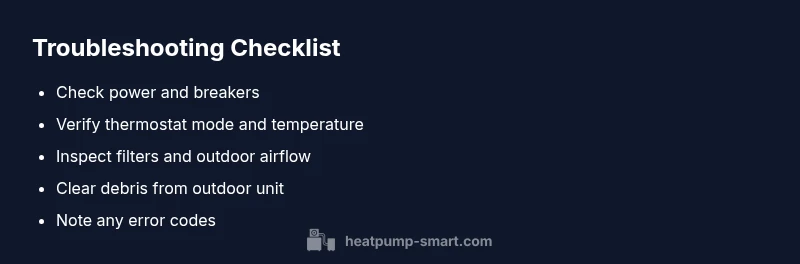
Begin with the obvious, but do not risk electrical shock. Check that the power outlet is functioning and the circuit breaker is fully on. Inspect the thermostat display for correct mode (heat/cool) and temperature setpoint. Clean or replace indoor air filters if they look dirty, and ensure internal vents are not blocked. Look at the outdoor unit: clear debris, snow, and ice; leave at least 30 cm of clearance around the coil. If you hear unusual noises, note the pattern and the duration. If the system still won’t start after these steps, do not attempt major repairs; switch off power and call a pro. Heatpump Smart notes that early, safe checks save time and money and prevent further damage.
Understanding error codes and how to interpret them
Thermostats and control boards often display error codes that point to specific faults. Common codes relate to sensor issues, communication faults between the indoor and outdoor units, or defrost cycle problems. Always reference your model’s manual to map codes to the right subsystem, then test the related component. If codes persist after resets, the problem is more likely electrical or refrigerant/coil related and should be handled by a qualified technician. Keep a log of codes, times, and observed symptoms; this helps technicians diagnose faster and avoid unnecessary replacements. A clear history reduces service time and costs.
Diagnostic flow overview
This diagnostic flow follows a simple, repeatable pattern: symptom → diagnosis → solution. Start with the most common, easily verifiable causes (power, thermostat, and airflow). If those checks fail, expand to electrical wiring and sensor health, then to the outdoor coil and defrost performance. For each symptom, you should have at least two potential causes and two corresponding fixes on hand. Use safe, documented steps and avoid guessing, which can lead to bigger faults. When in doubt, contact a licensed heat pump technician familiar with Ireland's climate and electrical standards.
When to call a professional and how to choose one
Some faults require professional intervention. If you discover refrigerant signs (hissing, oil residue around joints, or persistent cooling issues) or if electrical components like capacitors and contactors fail, stop troubleshooting and call a pro. In Ireland, working with refrigerants is regulated and dangerous without proper training. Before scheduling service, gather model numbers, error codes, last maintenance date, and a brief description of symptoms. Ask for a written quote and confirm which parts are covered under warranty. A local Heatpump Smart-approved technician will typically respond within 24–48 hours, depending on demand.
Steps
Estimated time: 60-90 minutes
- 1
Check power supply
Visually inspect the outlet and ensure the circuit breaker is on. If the breaker has tripped, switch it off fully, then back on and test the system. Confirm there is voltage at the outlet with a simple tester, if available.
Tip: Always switch off power at the main breaker before touching wiring. - 2
Verify thermostat settings
Set the thermostat to heat mode with a target temperature above the current room temperature. Check for any error indicators on the display and note them for later reference. If the reading is inconsistent, perform a short reset per the manual.
Tip: If your thermostat supports a calibration option, run it after verifying mode. - 3
Inspect filters and vents
Remove and examine indoor air filters; clean or replace if dirty. Ensure all vents are clear of furniture and obstructions. A clogged filter can force the system to run longer and harder, causing faults.
Tip: Use manufacturer-recommended filters and let them dry completely before reinstalling. - 4
Check outdoor unit clearance
Clear nearby leaves, snow, and debris. Ensure at least 30 cm of free space around the coil and remove any ice buildup if present and safe to do so. Do not strike frost with metal tools.
Tip: Never attempt aggressive ice removal; frost can indicate airflow problems that require professional assessment. - 5
Observe defrost cycle
If the unit seems to run for long periods in cold weather, monitor whether the defrost cycle engages. Prolonged defrost cycles may indicate a sensor or coil issue.
Tip: Note how many minutes the defrost cycle lasts and how often it triggers. - 6
Test run and evaluate
Return to normal operation, set temperatures for a sustained period, and observe for consistent heating. If issues recur or new codes appear, document the symptoms and contact a pro.
Tip: Keep a simple diary of times, codes, and outcomes for the technician.
Diagnosis: Heat pump won't start or cycles abnormally.
Possible Causes
- highPower issue (outlet, breaker, wiring)
- mediumThermostat, sensor, or control wiring fault
- highOutdoor frost buildup or blocked airflow
- lowRefrigerant leak or low refrigerant pressure
Fixes
- easyCheck power supply and reset breakers; test outlet and ensure the unit is receiving power
- mediumTest and recalibrate thermostat/sensors; replace faulty components if needed
- easyClear debris around outdoor unit, ensure 30 cm clearance, and remove light frost if safe
- hardIf refrigerant issues are suspected, do not attempt a repair; contact a licensed technician
Your Questions Answered
Why won't my heat pump start at all?
Most often the issue is power-related, a tripped breaker, or a thermostat fault. Check power at the outlet, verify the breaker is on, and review thermostat settings before calling a pro if it still won't start.
Most often the issue is power or thermostat faults. Check power and settings, then call a professional if it still won't start.
Why is my heat pump heating but not cooling?
This can be caused by incorrect mode on the thermostat, a faulty reversing valve, or sensor problems. Ensure the unit is in the correct mode and test new readings after any adjustments.
Make sure the unit is set to heat or cooling as intended, and check the reversing valve and sensors.
What should I do about frost on the outdoor unit?
Light frost during normal defrost cycles is common. Heavy frost or ice buildup often means airflow issues or blocked clearance around the outdoor coil. Clear debris and ensure proper spacing while following safety guidelines.
Light frost is normal during defrost; heavy frost means airflow problems. Clear debris and check clearance.
Can I reset the heat pump myself?
A soft reset via the thermostat or breaker can fix minor faults. Avoid frequent resets; if faults persist after a reset, consult a professional.
You can try a soft reset once, but don’t overdo it. If it returns, call a pro.
When should I call a professional in Ireland?
If you suspect refrigerant leaks, persistent error codes, electrical faults, or unusual noises, schedule a licensed technician. Gather model numbers, codes, and a symptom log to speed up service.
If you suspect a refrigerant leak or persistent error codes, call a licensed technician.
Is it safe to inspect the electrical panel myself?
Do not open live electrical panels. If you are trained, you may switch off at the main breaker and inspect safely; otherwise, contact a professional.
Don’t open live panels; if unsure, call a pro.
Watch Video
Top Takeaways
- Start with power, thermostat, and airflow checks.
- Interpret error codes using the manual and keep a log.
- Avoid refrigerant handling; call a licensed pro for leaks.
- Schedule annual maintenance to prevent future issues.