Heat Pump Keeps Switching to Auxiliary Heat: Troubleshooting Guide
Urgent troubleshooting guide for heat pumps that keep switching to auxiliary heat. Quick fixes, diagnostic flow, and when to call a pro to restore comfort and energy efficiency.


Most likely, your heat pump is switching to auxiliary heat because the system can't meet the heating demand at current outdoor temperatures or due to airflow or refrigerant issues. Start with simple checks: replace dirty air filters, clear debris from the outdoor unit, and confirm thermostat settings. If problems persist, schedule a professional inspection to avoid energy waste and comfort loss.
How auxiliary heat works and why it engages
A heat pump works by extracting warmth from outdoor air and transferring it indoors. When outdoor temperatures drop or the system cannot satisfy the heating load, the heat pump automatically engages auxiliary heat (often electric resistance heat) to maintain indoor comfort. This behavior is normal in very cold conditions or during periods of high heat demand. However, frequent switches to auxiliary heat can waste energy, raise bills, and shorten equipment life if the root cause isn’t addressed. Understanding what triggers auxiliary heat—and how to reduce it—is the first step toward consistent comfort. In this guide, Heatpump Smart explains practical diagnostics, fixes, and prevention strategies so homeowners can minimize unnecessary auxiliary heat without sacrificing warmth.
Common triggers that cause auxiliary heat to engage
There are several common reasons the heat pump may switch to auxiliary heat. Cold outdoor temperatures can reduce the system’s capacity, pushing it into auxiliary heat more often. A dirty air filter or restricted indoor airflow reduces efficiency and prompts the system to rely on auxiliary heat. Debris or snow surrounding the outdoor unit can block heat transfer, while refrigerant leaks or low charge lead to low efficiency. Thermostat issues, such as miscalibration or wiring faults, can also trigger unexpected auxiliary heat. Finally, an inefficient defrost cycle can cause temporary but repeated reliance on auxiliary heat during rapid temperature swings. By identifying which of these factors is at play, you can implement targeted fixes that restore efficiency.
How to confirm the problem isn’t a simple thermostat or sensor error
First, verify that your thermostat is set to heat and that the system isn’t in emergency heat or a similar mode. Check if the indoor temperature reading matches your actual room temperature; a misreading can cause the system to overcompensate with auxiliary heat. Listen for the compressor’s normal cycle and observe whether auxiliary heat engages only when the outdoor unit is struggling. If the system rapidly toggles between heat pump mode and auxiliary heat without significant temperature swings, a sensor fault or wiring issue may be present. In such cases, professional testing is advised to avoid misdiagnosis.
Diagnostics at a glance: quick checks you can do today
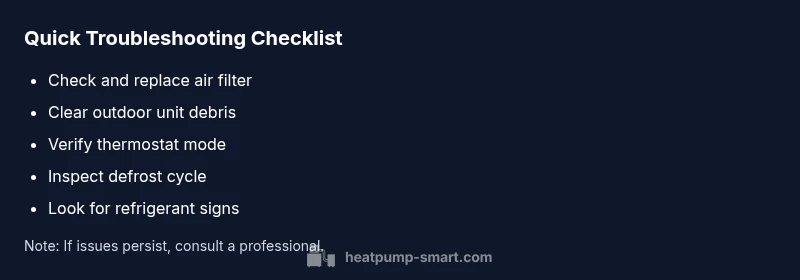
- Inspect the air filter and replace if dirty. A clogged filter reduces airflow and efficiency.
- Look at the outdoor unit: clear debris, ensure at least 3 feet of clearance on all sides, and remove any snow or ice buildup.
- Check thermostat settings and confirm the system is in heat mode with no abnormal fan or mode settings.
- Observe the defrost cycle: it should occur intermittently in cold weather and not persistently block heating.
- Listen for unusual noises that could indicate mechanical or refrigerant issues.
- If you notice ice on outdoor coils or oily residues around refrigerant lines, contact a pro.
These checks can reveal the most common culprits behind excessive auxiliary heat usage and guide you toward safer, quicker fixes.
Step-by-step fix 1: Improve heat pump efficiency with easy fixes
- Replace or clean the air filter to restore proper airflow. 2) Clear any obstructions around the outdoor unit, and ensure there is no debris clogging the condenser fins. 3) Verify thermostat wiring and settings; ensure no unintended schedules are forcing auxiliary heat. 4) Inspect indoor airflow paths (vents, ducts) for blockages or leaks. 5) If the defrost cycle seems abnormal, note the pattern and consult a pro for cycle timing checks.
Tip: Regular monthly air filter checks are a simple, high-impact habit that reduces the chance of unnecessary auxiliary heat.
Step-by-step fix 2: When to call a professional for hard problems
- If you observe refrigerant signs (oil around connections, hissing sounds) or suspect a leak, do not attempt repairs; refrigerant work requires licensed technicians. 2) If the outdoor coils are corroded, damaged, or severely dirty despite cleaning, a professional coil service is warranted. 3) Electrical controls, sensors, or the indoor air handler may require professional testing and calibration. 4) If the defrost cycle is consistently failing or the system runs excessively on auxiliary heat, schedule a full system diagnostic with an HVAC technician.
Tip: Schedule regular annual maintenance to catch refrigerant or sensor issues early and reduce emergency repair costs.
Prevention tips to reduce reliance on auxiliary heat
- Schedule routine professional tune-ups to maintain efficiency and refrigerant integrity.
- Keep outdoor unit clear of leaves, snow, and debris; ensure airflow clearance of at least 3 feet around the unit.
- Use a programmable thermostat to optimize heating schedules and reduce peak demand on the heat pump.
- Seal and insulate ductwork to minimize heat loss in the home.
- Address insulation gaps in attics and walls to lessen heat load and reliance on auxiliary heat.
Safety, warranty considerations and when to escalate
Safety should be the priority. Do not bypass electrical components or refrigerant systems. If you suspect a refrigerant leak, electrical fault, or if the system is under warranty but not functioning correctly, contact an authorized technician immediately. Regular maintenance can help preserve warranty coverage and prevent unexpected failures. If the issue persists after basic fixes, escalate to professional service to avoid safety hazards and costly energy waste.
Steps
Estimated time: 60-90 minutes
- 1
Verify thermostat settings
Check that the thermostat is set to heat, not emergency heat, and confirm the schedule isn’t forcing auxiliary heat. If the temperature reading seems off, recalibrate or replace the thermostat batteries as needed. Ensure fan is set to auto rather than on.
Tip: A misreading thermostat is a common, easy-to-fix cause of unexpected aux heat. - 2
Inspect air filtration and indoor airflow
Remove and replace dirty air filters. Inspect supply vents for blockages and ensure ducts are unobstructed. If airflow improves after filter replacement, the system should rely less on auxiliary heat.
Tip: Routine monthly filter checks prevent many comfort and efficiency problems. - 3
Check outdoor unit clearance
Visit the outdoor unit and remove any snow, ice, leaves, or debris. Ensure at least 3 feet of clearance around the unit and clean coil surfaces if needed. This improves heat transfer efficiency.
Tip: Keep the area around the unit free year-round for best performance. - 4
Observe the defrost cycle
During cold snaps, the defrost cycle will run intermittently. If you notice long or frequent defrost cycles that reduce heating, note the pattern and discuss with a pro.
Tip: A properly functioning defrost cycle is essential to maintain efficiency in cold weather. - 5
Check for refrigerant signs
Look for oily residues around service valves or hissing sounds indicating a leak. Do not attempt refrigerant repairs yourself; leaks require licensed technicians.
Tip: Early leak detection saves energy and prevents system damage. - 6
Consult a professional for persistent issues
If the problem persists after the simple fixes, schedule a diagnostic with a licensed HVAC technician to test refrigerant charge, sensors, and system controls.
Tip: Regular professional maintenance reduces long-term repair costs.
Diagnosis: Heat pump keeps switching to auxiliary heat, especially during cold weather, leading to higher energy use and reduced comfort.
Possible Causes
- highOutdoor temperatures too low for efficient operation
- highDirty air filter restricting indoor airflow
- mediumBlocked or restricted outdoor unit (debris, snow)
- mediumLow refrigerant charge or refrigerant leak
- lowThermostat miscalibration or sensor fault
- lowInefficient defrost cycle causing short, repeated cycles
Fixes
- easyReplace or clean the air filter and recheck airflow paths
- easyClear debris around the outdoor unit and ensure 3 ft clearance
- easyVerify thermostat settings and wiring; ensure mode is correct
- hardInspect for refrigerant leaks; schedule a professional refrigerant check
- mediumHave a pro calibrate sensors and diagnose defrost cycle timing
- hardConduct a full HVAC system diagnostic if persistent issues remain
Your Questions Answered
Why does my heat pump keep switching to auxiliary heat?
Auxiliary heat engages when the heat pump cannot meet the demand at the current outdoor temperature or due to airflow, refrigerant, or sensor issues. Persistent switching usually points to an underlying problem that should be addressed to restore efficiency.
Auxiliary heat comes on when the heat pump can't meet the heating demand, often due to outdoor temperature, airflow, or refrigerant issues.
Is auxiliary heat bad for energy bills?
Yes. Auxiliary heat uses electric resistance heat which is less efficient than the heat pump. Prolonged reliance increases energy use, so fixing root causes is important for comfort and costs.
Auxiliary heat uses more energy than the heat pump alone, so fixing the cause saves money.
How cold does it have to be before aux heat engages?
The exact threshold depends on your system, outdoor temperature, and home insulation. In many setups, auxiliary heat engages when outdoor temps fall low enough that the heat pump cannot meet demand efficiently.
Aux heat kicks in when outdoor temps are very cold and the heat pump can’t meet demand, varies by system.
Can a thermostat cause frequent auxiliary heat?
Yes. A miscalibrated sensor or wiring fault can cause incorrect temperature readings and switching behavior. Verifying wiring and calibrating sensors can resolve this.
Thermostat sensors can misread temperature, triggering extra heat; check wiring and calibration.
When should I call a professional?
If basic checks don’t resolve the issue, or you detect refrigerant signs, electrical faults, or persistent defrost problems, contact a licensed HVAC technician for a full diagnostic.
Call a pro if simple fixes don’t solve the problem or you suspect refrigerant or electrical issues.
Is it safe to run auxiliary heat for long periods?
Running auxiliary heat long-term is not ideal due to higher energy use and potential comfort inconsistencies. It’s best to fix the root causes and rely on the heat pump whenever possible.
Long-term use of auxiliary heat is less efficient; fix the cause and rely on the heat pump when possible.
Watch Video
Top Takeaways
- Identify root causes early to reduce aux heat reliance.
- Keep filters clean and outdoor unit clear for optimal efficiency.
- Address refrigerant or sensor issues with a licensed pro.
- Use a programmable thermostat to optimize heating schedules.
- Schedule regular maintenance to sustain efficiency and comfort.