Why Is My Heat Pump Not Heating: A Practical Troubleshooting Guide
Urgent, practical steps to diagnose and fix a heat pump that won’t heat. Follow this troubleshooting guide for quick fixes, safe diagnostics, and when to call a pro.


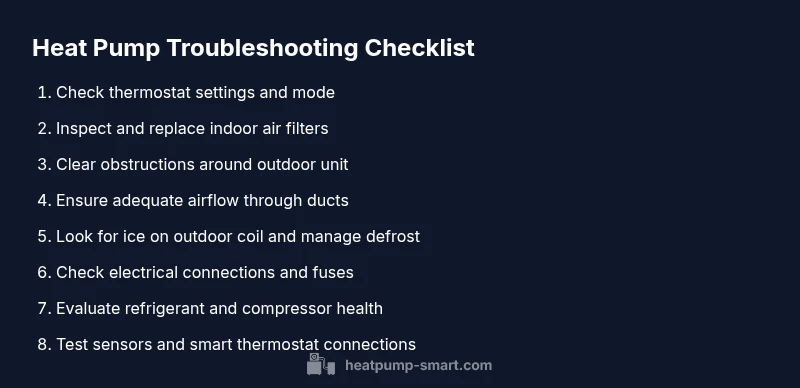
Most often, a heat pump won’t heat because of thermostat missettings, dirty filters, or a blocked outdoor coil. Quick fixes: switch the thermostat to heat, replace the air filter, and clear debris from the outdoor unit. If cold-weather defrost cycles linger or you hear unusual grinding noises, shut the system down and call a pro—refrigerant or compressor problems require professional service.
What 'not heating' looks and why it happens
If you're asking why is my heat pump not heating, start by clarifying symptoms: warm air dies out after a few minutes, or the system simply blows cool air. In many homes, the problem isn’t a failed furnace but the heat pump itself or its controls. According to Heatpump Smart, most no-heat issues come from simple, fixable misconfigurations—thermostat settings, filthy filters, or restricted airflow—rather than a major component failure. Understanding the signs helps you triage safely and efficiently.
Start with the basics: thermostat, power, and settings
Before diving into components, confirm the basics. Ensure the thermostat is set to Heat (not cool), the fan is on Auto, and the target temperature is above the room temperature. Check the system’s power: is the thermostat display lit? If the unit has a separate power switch or service disconnect, make sure it’s ON. Sometimes a simple reset at the thermostat or a power cycle at the outdoor unit resolves a stuck controller and restores heating quickly.
Indoor air path: filters, ducts, and airflow
Poor airflow is a common culprit. Dirty or clogged air filters choke the indoor coil, triggering the system to protect itself and reduce heating output. Replace disposable filters or clean reusable ones. Inspect supply registers for obstructions, and consider a quick blower test: with doors closed, listen for uniform airflow from several vents. If some rooms stay cold, you may have a duct blockage or a system balancing issue.
Outdoor unit inspection and weather-related defrost
The outdoor unit needs clear air around it and free of debris. Remove leaves, snow, or brush, and ensure at least 2–3 feet of clearance. In cold weather, ice on the outdoor coil during operation is normal only briefly; if ice forms and persists, defrost cycles should remove it. If you see heavy ice buildup, turn the unit off and contact a pro, since ice can indicate refrigerant or airflow problems.
Refrigerant, pressure, and compressor considerations
Refrigerant leaks or improper pressures prevent a heat pump from producing heat. This is a refrigerant issue that requires a licensed HVAC technician and may involve oil traces, hissing sounds, or a sudden drop in heating performance. Never attempt to recharge or seal refrigerant yourself. If you suspect low refrigerant, the technician will measure suction/liquid pressures and adjust as needed.
Electrical components: breakers, fuses, and contactors
Faulty electrical connections or a worn contactor can prevent heat from being sent to the indoor coil. Check the main service breaker and any fuses in the unit’s disconnect box. If you hear a buzzing sound or see a burned smell or melted plastic, power down immediately and call a licensed technician. Regular maintenance should include checking contactor operation.
Thermostat, sensors, and system controls
Incorrect readings from room or outdoor temperature sensors can cause the system to under-heat. Calibrate or replace faulty sensors as recommended by the manufacturer. If you use a smart thermostat, verify its connection, firmware, and app settings. Keep a log of any changes to help a technician diagnose faster.
When to call a professional and prevention tips
If basic checks don’t restore heating, or you suspect refrigerant leaks, a compressor fault, or electrical issues, call a licensed HVAC technician. Prevent future problems by scheduling annual tune-ups, replacing filters every 1–3 months, keeping outdoor coils clear, and testing the defrost function before cold snaps. Regular maintenance saves energy and extends the life of your heat pump.
Steps
Estimated time: 60-90 minutes
- 1
Verify thermostat settings and power
Ensure the thermostat is in Heat mode, set to a temperature higher than the room, and the fan is on Auto. Check for a recent system reset or power interruption. If you have a separate service disconnect, confirm it’s ON. A quick reset can clear minor controller faults.
Tip: If the display is dim, replace the batteries or check the thermostat’s power source. - 2
Check indoor air filters and ducts
Inspect the air filter and replace if dirty. Look for obstructions in supply vents and registers that could reduce airflow. A well-filtered system breathes easier and delivers more consistent heating.
Tip: Schedule routine filter changes every 1–3 months during peak heating season. - 3
Inspect the outdoor unit for debris
Remove leaves, snow, or brush that block airflow around the outdoor coil. Ensure at least 2–3 feet of clearance and no surrounding obstructions. Debris buildup is a common but easily fixed cause of heat loss.
Tip: Never poke at the coils while the unit is powered; shut off power first. - 4
Check for ice or frost on the outdoor coil
Ice buildup can indicate defrost issues or airflow problems. If you see ice, turn the unit off and allow defrost to occur. Persistent icing requires a professional to assess refrigerant and airflow.
Tip: If you must work near ice, wear protective gloves and avoid touching live electrical components. - 5
Inspect electrical connections and contactors
Look for tripped breakers or blown fuses in the disconnect box. Worn contactors can fail to engage the compressor. If you notice burn marks, heat, or buzzing, call a technician immediately.
Tip: Electrical work is hazardous; prioritize safety and professional service. - 6
Evaluate refrigerant and compressor health
Low refrigerant or a failing compressor will prevent heating. This requires a licensed HVAC tech to test pressures and inspect for leaks. Do not attempt to diagnose or repair refrigerant issues yourself.
Tip: Leaks can cause environmental harm and system damage; professional handling is required. - 7
Test thermostat and sensor accuracy
If you have a smart thermostat, confirm firmware updates and sensor calibration. Mismatched readings can cause the system to under-heat. Consider temporarily using a manual thermostat to compare results.
Tip: Keep a record of readings and settings to help the technician diagnose faster. - 8
Document findings and plan service
Note any patterns, noises, or intermittent performance. A clear summary helps the technician pinpoint the issue quickly and reduces diagnostic time.
Tip: Prepare your warranty and maintenance records for the technician.
Diagnosis: Heat pump won't heat or delivers cool air
Possible Causes
- highThermostat misconfiguration or programming error
- mediumDirty air filter or restricted indoor airflow
- mediumBlocked outdoor unit or debris around coils
- lowIce accumulation on outdoor coil during defrost cycle
- lowLow refrigerant due to a leak
Fixes
- easyDouble-check thermostat mode (set to heat) and temperature; ensure Fan is Auto
- easyReplace the air filter and clear obstructions in supply vents
- easyClear leaves or snow from around the outdoor unit; ensure 2–3 feet clearance
- mediumIf ice forms, turn off and allow defrost; contact pro if persistent
- hardIf refrigerant suspected, contact a licensed HVAC technician to test pressures and repair leaks
Your Questions Answered
Why is my heat pump not heating even though the thermostat is set to heat?
Common causes include thermostat misconfiguration, dirty filters, or blocked outdoor airflow. Double-check mode, temperature, and fan settings, then inspect filters and outdoor coil for obstructions.
First, check the thermostat settings and airflow; if it’s not heating, inspect filters and the outdoor unit for obstructions.
What should I check first if my heat pump blows cold air?
Verify the thermostat is in heat mode, check the indoor air path for blocked vents, and inspect the outdoor coil for ice or debris. If airflow is restricted, heating performance will drop.
Check thermostat mode, then inspect air filters and outdoor coil for ice or debris.
Is it safe to reset my heat pump to fix heating issues?
Resetting can resolve minor controller glitches. Power down, wait 60 seconds, then power back on. Avoid frequent resets as they mask underlying problems.
Yes, a quick reset can help, but if it repeats, you should investigate the underlying cause.
When should I call a professional for a heat pump issue?
If basic checks don’t restore heating or you suspect refrigerant leaks, electrical faults, or compressor issues, contact a licensed HVAC technician.
If basic checks fail or you hear unusual noises, call a technician.
Can dirty filters cause a heat pump to stop heating?
Yes. Dirty filters reduce airflow, which can cause coil icing or reduced heating output. Replace filters and check ductwork for obstructions.
Dirty filters can block airflow and reduce heating; replace them and clear vents.
What maintenance helps prevent heat pump heating problems?
Regular tune-ups, filter changes, outdoor coil cleaning, and system checks before winter help prevent failures. Keep a maintenance schedule.
Routine maintenance keeps your heat pump reliable and efficient.
Top Takeaways
- Verify thermostat settings and airflow first.
- Clear outdoor debris and ice buildup promptly.
- Refrain from DIY refrigerant work; call a pro for leaks.
- The Heatpump Smart team recommends regular maintenance to prevent future issues.