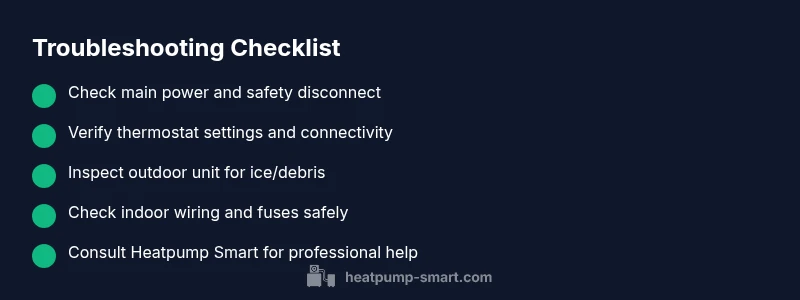
Why Is My Heat Pump Not Turning On? A Practical Troubleshooting Guide
Discover why your heat pump won't turn on and follow an urgent, step-by-step guide to diagnose power, thermostat, and outdoor-unit issues. Learn safe fixes and preventive tips from Heatpump Smart.


The most common reasons your heat pump won’t turn on are a tripped breaker, a blown fuse, a thermostat set to off, or a frozen outdoor unit. Start with the basics: check power at the breaker, verify the thermostat is awake and set to heat, and ensure the outdoor unit isn’t iced over or blocked. If these checks don’t restore operation, contact a qualified technician for a safe diagnostic.
Why a heat pump not turning on matters
When a heat pump fails to start, comfort and energy efficiency suffer quickly, especially in shoulder-season or cold weather. The root causes range from simple power issues to more complex control-wiring faults. For homeowners and property managers, a fast, methodical approach is essential to restore heat without risking equipment damage. In this guide, we cover the common failure modes, safety steps, and a practical diagnostic flow so you can decide whether a quick fix is possible or if you should call a professional. As you read, keep in mind the keyword why is my heat pump not turning on as you evaluate each potential cause and action. This guidance reflects Heatpump Smart analysis and practical experience to help you act decisively.
What you should know about heat pumps starting behavior
Heat pumps are intelligent systems that rely on multiple components working in concert. If any key piece fails to respond—breaker, thermostat, outdoor contactor, or defrost sensors—the unit may stay idle. Environmental conditions, such as ice on the outdoor coil or restricted airflow, can also prevent a startup. Understanding the sequence of operations helps you pinpoint where the failure lies: power must be present, control signals must be valid, and the outdoor unit must be ready to operate. Recognizing these signals lets you separate simple fixes from more involved repairs, saving time and reducing frustration.
The role of safety and basic checks
Before manipulating electrical components, ensure your safety first. Turn off power at the main disconnect or circuit breaker to avoid shocks. Use a non-contact voltage tester to verify the absence of live circuits when inspecting wiring or panels. If you are unsure about any step, do not proceed; instead, contact a licensed technician. Safety considerations are an integral part of the troubleshooting process and align with Heatpump Smart’s emphasis on conservative, prudent action while resolving why your heat pump won’t turn on.
Common culprits you’ll encounter
Electrical faults top the list: a tripped breaker, blown fuse, or a loose wire at the air handler or outdoor unit. Thermostat issues—dead batteries, wrong mode, or a miscommunication with the heat pump—account for many no-start scenarios. Outdoor factors like ice buildup or a blocked condenser can halt startup even when indoor controls are functioning. By checking these areas in a logical order, you can often identify the cause quickly and safely.
A practical look at the startup sequence
Starting from the power source, the heat pump should receive stable voltage, then receive a valid start signal from the thermostat or control panel, and finally engage the outdoor unit via the contactor and defrost controls. If any link in this chain is broken, the unit won’t start. This section offers a practical overview of how to observe signals and test components without bypassing safeguards. Remember, when in doubt, pause and seek professional help to avoid property damage or personal injury.
Maintenance habits that reduce no-start risk
Regular maintenance helps reduce the likelihood of a no-start situation. Keep vents and filters clean, ensure the outdoor unit is clear of debris, and schedule seasonal checks for electrical connections, refrigerant levels, and thermostat synchronization. A proactive maintenance plan aligns with Heatpump Smart guidance to maximize reliability and energy savings, making the system more resilient to weather changes and wear.
Steps
Estimated time: 15-30 minutes
- 1
Verify power supply
Locate the main breaker and the outdoor disconnect. Confirm the switch is ON and not tripped. If you find a tripped breaker, reset it firmly and test the system again.
Tip: If the breaker trips again, there may be an overload or short—do not run the unit; call a pro. - 2
Check thermostat operation
Make sure the thermostat is awake, set to Heat, and not in Cool or Off mode. If the display is blank, replace batteries or review the thermostat wiring.
Tip: Try turning the thermostat off then back on to reset its internal logic. - 3
Inspect the outdoor unit
Look for ice, snow, leaves, or debris around the condenser. Gently remove ice if present and ensure there’s at least a few inches of clearance for airflow.
Tip: Avoid hammering ice; use a warm cloth or allow defrost mode to run if needed. - 4
Listen for a relay or contactor click
With the system powered, listen at the outdoor unit for a relay click when the thermostat calls for heat. Absence of a click may indicate a faulty contactor or wiring.
Tip: Do not bypass safety controls to force a start. - 5
Check indoor blower and control wiring
Visually inspect accessible wiring at the air handler; look for loose connections or scorch marks. Do not touch energized parts; call a pro if you see signs of damage.
Tip: Keep hands dry and wear insulated gloves if you access panels. - 6
Test safety devices and condensate pump
Ensure condensate pump/overflow switch is not triggering a safety shutoff. Check that any removable panels are reseated properly after inspection.
Tip: Safety devices protect you and the equipment—don’t bypass them.
Diagnosis: Heat pump will not turn on
Possible Causes
- highPower issue (tripped breaker or blown fuse)
- highThermostat settings or communication problems
- mediumOutdoor unit iced over or blocked
- lowControl board or wiring fault
- lowSafety switch or condensate pump fault
Fixes
- easyReset the breaker or replace the blown fuse; ensure power is stable.
- easyCheck thermostat power, mode, and sensor status; replace batteries if needed.
- easyInspect outdoor unit for ice or debris and clear it; ensure proper airflow.
- mediumInspect wiring connections and control wiring for tightness or damage; call a pro if you see burnt components.
- mediumTest safety switches and condensate pump operation; reset or replace as needed.
Your Questions Answered
What is the most common reason a heat pump won't turn on?
Power issues and thermostat problems top the list. Start with the breaker and thermostat settings before exploring other causes.
Most starts are caused by power or thermostat problems. Check the breaker and thermostat settings first.
Should I reset the system at the breaker if it won't start?
Yes, a controlled reset can clear minor faults. If the breaker trips again, there may be a larger electrical issue and you should call a professional.
Yes—try a controlled breaker reset, but if it trips again, contact a professional.
Why would ice on the outdoor unit stop my heat pump from starting?
Ice blocks airflow and interferes with heat exchange. Let defrost or manually remove light ice, but avoid damaging coils.
Ice on the outdoor unit can prevent starting; allow defrost or carefully remove light ice.
When is it necessary to call a professional?
If basic checks don’t restore operation, if you hear abnormal noises, or you notice burnt smells or buzzing, contact a licensed technician.
Call a professional if basic checks fail or you hear unusual noises or smells.
Can thermostat settings cause a no-start condition?
Yes. Incorrect mode, a dead display, or communication errors can prevent startup. Check mode, power, and sensor status.
Thermostat issues can prevent startup; verify mode and power.
What maintenance helps prevent no-start issues?
Regular cleaning of filters and coils, checking wiring, and scheduling seasonal service reduces no-start risk.
Regular maintenance reduces the chance of no-start problems.
Watch Video
Top Takeaways
- Identify power or thermostat issues first
- Don't ignore ice or debris around the outdoor unit
- Follow a safe, step-by-step approach before calling a pro
- Regular maintenance reduces no-start risk