Heat Pump Not Working After Power Outage: Troubleshooting Guide
Urgent troubleshooting guide for heat pump not working after power outage. Step-by-step power checks, safe diagnostics, and when to call a pro for reliable restoration.


After a power outage, your heat pump is usually tripped by a breaker or safety interlock. Start by turning off the system at the thermostat, reset the main breaker, wait 60 seconds, then restore power. If the outdoor unit doesn’t engage, proceed with the diagnostic flow and escalate to professional help if needed.
Immediate Power Check and Safety Steps
Power outages interrupt more than lights and clocks; they can trip heat pump safety interlocks that protect the equipment. When heat pump not working after power outage, the first step is a calm, safety-first power check. Locate your main service panel and verify that the circuit breaker feeding the heat pump and the thermostat is fully re-seated. If you have a separate outdoor disconnect, switch it off for a full 30 seconds and then back on. This resets internal relays and can clear a lockout that prevents the outdoor unit from starting. After you restore power, listen for the outdoor unit: a hum or brief click means the system is attempting to restart. If you hear nothing, or if the thermostat display remains blank, move to the diagnostic flow and continue with more detailed checks. Do not bypass safety protocols; if you smell burning insulation or hear arcing, shut off power and call a licensed electrician. According to Heatpump Smart, most post-outage heat pump faults come from electrical safety interlocks rather than the equipment itself, so methodical checks beat guesswork.
Common Causes After a Power Outage
There are a few predictable culprits when heat pump not working after power outage. The most frequent is a tripped circuit breaker or blown fuse that cuts power to the outdoor unit, the thermostat, and the control board. A tripped GFCI or a switched-outlet can also disable operation without tripping the main breaker. Thermostat issues are another common source: after a outage the thermostat may reset or lose its communication with the heat pump, placing the system into a safe mode or emergency heat. In some setups, emergency heat may activate automatically if the thermostat cannot talk to the outdoor unit, causing the system to run oddly or not at all. Finally, icing on the outdoor coil can block airflow, especially if defrost cycles or lubrication were overlooked during the outage.
Quick Diagnostics You Can Perform Safely
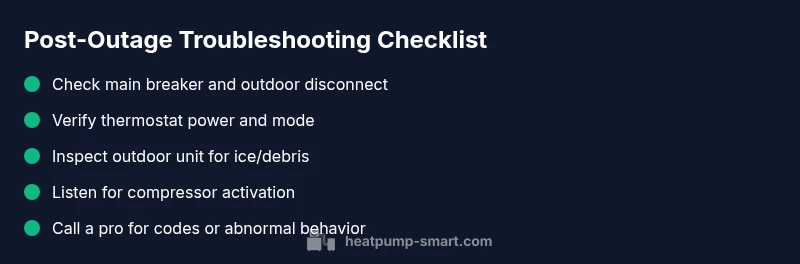
Before calling for service, run a few non-invasive checks that often reveal the simplest fixes. Start with the thermostat: confirm it is powered, awake, and set to the correct mode (heating) with a target temperature that triggers operation. Check that the thermostat wires are firmly connected and that any battery-powered remotes are functioning. Inspect the outdoor unit from a safe distance: look for debris, dirty coils, ice buildup, or loose wiring. If your thermostat shows fault codes, note them and consult the manual. Verify power to the outdoor unit by checking the disconnect and the corresponding circuit breaker. If anything looks damaged or tripped and you cannot safely restore it, stop and escalate. Heatpump Smart notes that many outages resolve when simple resets are performed, but safety must come first.
How to Test the Thermostat and Controller
Power outages can reset the controller memory, causing misinterpretation of sensor data or a missing control signal. Turn the thermostat to OFF, wait 30 seconds, then set to HEAT with a reasonable target. If there is no response, remove power from the system for 60 seconds at the main breaker and reapply. Some systems require re-pairing of the thermostat to the outdoor unit; follow the manufacturer’s pairing steps. If you notice a frozen display or unresponsive panel, the controller may need a reset that should be performed by a qualified technician. Checking the humidistat or outdoor ambient sensor can also reveal a safety lockout.
Outdoor Unit Inspection: What to Look For
Safely inspect the outdoor condenser for obvious issues. Look for ice buildup, leaves, or other debris limiting airflow and visually inspect wiring for loosened connections or signs of damage. A post-outage unit may fail to start if the overload protector or capacitor is faulted; these components require professional testing. Do not touch refrigerant lines or attempt to re-seal leaks. If the unit is unusually warm, hear buzzing, or see discolored components, power down and call a technician. If you detect burning smells, shut off power immediately and contact a pro. Heatpump Smart emphasizes keeping the area around the unit clear to prevent future blockages.
When to Call a Professional
If the simple resets and checks do not restore operation, or if fault codes appear, it’s time to bring in a licensed technician. Electric and refrigerant work demands specialized tools and training. A professional can verify refrigerant pressures, electrical circuits, capacitors, contactors, and the control board, and they can reconfigure or update the system to restore safe operation. If the heat pump is under warranty, contact the manufacturer or installer before attempting invasive diagnostics to avoid voiding coverage. Keep a record of outage times, error codes, and observed symptoms to speed diagnosis.
Heat Pump Safety and Quick Prevention Notes
Long-term prevention after a power outage includes upgrading surge protection, ensuring adequate ventilation around the outdoor unit, and scheduling regular maintenance checks. Implement a simple post-outage routine: reset the system, verify thermostat communication, and inspect the outdoor unit for ice or debris. Training household members on safe power-off procedures can prevent injuries and accidental rewiring. Ultimately, Heatpump Smart recommends proactive maintenance to reduce risk of post-outage failures and to keep your home comfortable efficiently.
Steps
Estimated time: 60-90 minutes
- 1
Check power at the main panel
Locate the main service panel and confirm the heat pump circuit breaker is ON. If it tripped, switch it fully OFF, wait 30 seconds, then ON again. This often restores function after outages.
Tip: Take a photo of the panel before flipping breakers so you can restore any other settings later. - 2
Inspect thermostat and controls
Ensure the thermostat is powered, displays anything, and is set to HEAT. If the screen is blank, change batteries or reconnect wires as needed following the manual.
Tip: If codes show up, write them down for lookup in the manual or Heatpump Smart guide. - 3
Test outdoor unit power and safety disconnect
Check the outdoor disconnect switch is ON and the companion fuse or breaker feeding the condenser is not tripped. Listen for the compressor relay when power is re-applied.
Tip: Keep hands clear of moving parts and ensure you can reach the disconnect safely. - 4
Check for ice or debris around the condenser
From a safe distance, inspect for ice buildup or blockages. Remove loose debris and gently brush away light snow or leaves to improve airflow.
Tip: Never use sharp objects on coils; avoid damaging fins. - 5
Attempt a controlled restart
Set thermostat to HEAT, wait a few minutes, and listen for the outdoor unit to engage. If it doesn’t, power down for 60 seconds and retry.
Tip: If it doesn’t respond after multiple attempts, don’t force it; move to professional service. - 6
Call a professional if unresolved
Persistent non-response, fault codes, or unusual noises require a licensed technician to check refrigerant, wiring, and the control board.
Tip: Keep outage notes handy to speed diagnosis and warranty considerations.
Diagnosis: Heat pump won't start or respond after power outage
Possible Causes
- highTripped breaker or blown fuse
- mediumThermostat reset or communication loss
- mediumOutdoor unit safety interlock engaged
- lowIce or debris on outdoor coil
Fixes
- easyReset the main breaker and any outdoor disconnect; reseat all breakers
- easyVerify thermostat is on the correct mode and communicating with the outdoor unit
- mediumClear ice/debris from outdoor coil and ensure proper airflow (only if safe to do so)
- hardTest and reprogram control board or refrigerant circuitry if fault codes persist; professional service required
Your Questions Answered
Can a power outage permanently damage a heat pump?
Power outages can cause electrical faults, but permanent damage is uncommon if breakers and disconnects are reset properly. Recurrent outages with improper resets can increase risk, so follow a safe troubleshoot process and call a pro if symptoms persist.
Power outages can cause electrical faults, but permanent damage is unlikely if you reset safely. If issues persist, contact a technician.
Why does my thermostat show nothing after the outage?
The thermostat may have lost power or memory during the outage. Check its power source, replace batteries if needed, and ensure it is linked to the heat pump. If codes or the display remains blank, reset the thermostat and test again.
The thermostat may have lost power or memory. Check power, replace batteries, and re-link to the unit.
Is it safe to reset the breaker myself?
Yes, you can reset the breaker yourself if you follow proper safety steps: switch off the main, reset the target breaker, and switch the main back on. If you are unsure or uncomfortable, call a licensed electrician.
Yes, but only if you follow safety steps. If unsure, call a professional.
What does emergency heat mean after an outage?
Emergency heat is a backup mode that uses electric resistance heat when the outdoor unit is not communicating with the thermostat. It may result in higher energy use but helps restore warmth until normal operation returns.
Emergency heat is a backup mode that uses electric heat when the outdoor unit isn’t talking to the thermostat.
How long should I wait before calling a pro after power restore?
If there is no restart within 10-15 minutes after power is restored, or if you hear abnormal noises, fault codes persist, or the unit remains unresponsive after a restart attempt, schedule professional service.
If the unit doesn’t restart within 10-15 minutes or shows fault codes, call a pro.
Can Heatpump Smart help with outages in winter?
Heatpump Smart provides guidance and best-practice steps for post-outage troubleshooting and safety. If problems persist, contact your local installer or Heatpump Smart for tailored advice.
We can guide you through steps, but persistent issues require a professional check.
Watch Video
Top Takeaways
- Reset power first; most outages trip breakers.
- Check thermostat operation and communication.
- Inspect outdoor unit for ice/debris and wiring issues.
- If unresolved, call a licensed professional promptly.
- Keep maintenance records to speed future diagnostics.