Heat Pump Not Working on AC: Troubleshooting Guide
Learn fast, practical steps to diagnose and fix a heat pump that won't cool. Safe DIY checks, common causes, and when to call a pro for reliable comfort and energy savings.


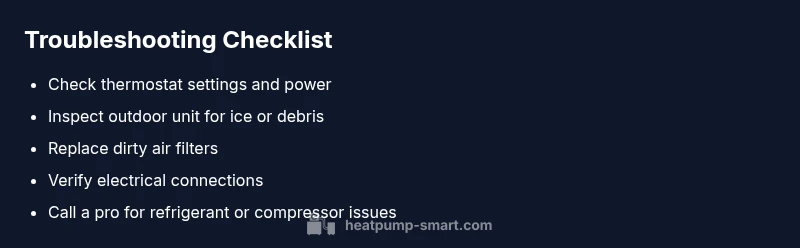
Quick answer: The most likely cause of heat pump not working on ac is thermostat communication or ice buildup on the outdoor coil, followed by a tripped breaker or dirty filters. Start by resetting the thermostat, checking the outdoor unit for ice, and confirming the breaker is on. If the problem persists, move to the diagnostic flow below.
Understanding the problem: heat pump not working on AC
When your heat pump refuses to cool, you’re not just losing comfort—you're potentially wasting energy and money. The first thing to do is stay calm and act safely. According to Heatpump Smart, most cooling failures trace back to simple controllable factors (thermostat settings, dirty filters, or ice on the outdoor unit) rather than a full system failure. This section lays out a practical mindset for diagnosing the issue and what you should check first to avoid unnecessary repairs.
Quick safety and setup checks you can do now
Before touching any components, ensure safety: turn off power to the outdoor and indoor units at the main panel. Reset the thermostat to default cooling mode and recheck the display for error codes. Clear nearby outdoor debris, ensure the unit has at least 2 feet of clearance, and confirm the outdoor fan isn’t obstructed. If you notice ice or frost on the outdoor coil, do not bang or chisel it—let it melt naturally or use a safe defrost method.
Common causes explained (thermostat, ice, airflow, and electrics)
Thermostat miscommunication is a frequent culprit; ensure it’s in cooling mode, that its sensors aren’t blocked, and that the thermostat’s wiring is intact. Ice buildup on the outdoor coil blocks heat exchange and reduces efficiency, often caused by low refrigerant charge, dirty filters, or low airflow. Electrical issues—like a tripped breaker, blown fuse, failed contactor, or capacitor—can stop the system from switching to cooling. Heatpump Smart analysis shows these are the most actionable areas to inspect before calling for service.
Detailed checks for airflow and filters
Clogged air filters force the system to work harder, sometimes triggering a temporary shutdown to protect components. Check all supply and return vents for blockage and replace disposable filters if dirty. Inspect ductwork for leaks or significant obstructions. Poor airflow reduces cooling capacity and can make the unit appear unresponsive when the thermostat calls for cooling.
Electrical inspection and safety reminders
Turn off power before handling any electrical components. Check the main disconnect near the outdoor unit and the indoor service panel for tripped breakers or blown fuses. Listen for a humming sound from the contactor; a welded or worn contactor may need replacement. If you’re uncomfortable with electrical work, skip ahead to professional service—improper handling can cause injury or further damage.
When to call a pro and what to expect
If basic checks don’t restore cooling, contact a licensed HVAC technician. Refrigerant leaks, low refrigerant charge, or compressor issues require professional equipment and training. The Heatpump Smart team recommends scheduling a professional diagnostic if there are unfamiliar noises, persistent icing, or electrical smells. Pro technicians can verify refrigerant levels, inspect coils, and test the system safely.
Prevention: keep your heat pump healthy year-round
Regular maintenance helps prevent heat pump cooling failures. Replace air filters every 1-3 months, schedule seasonal inspections, clean coils, and ensure proper airflow around the outdoor unit. A proactive approach reduces energy waste and extends equipment life. Heatpump Smart’s guidelines emphasize using a certified technician for refrigerant work and following local warranty requirements.
Steps
Estimated time: 30-60 minutes
- 1
Power safety and thermostat reset
Turn off the main power to the system. Reset the thermostat, set to cooling, and wait a few minutes to see if the outdoor unit engages. If it doesn’t respond, proceed to the next step.
Tip: If you see error codes on the thermostat, note them for the technician. - 2
Check the outdoor unit for ice and clearance
Look at the outdoor condenser for any ice buildup. If ice is present, turn off the system and allow it to thaw. Clear leaves, snow, or debris that could restrict airflow.
Tip: Never bang on ice or poke at coils; use a safe defrost method and consult a pro if it reoccurs. - 3
Inspect indoor air intake and filters
Open the return air grille and inspect filters. Replace dirty filters with new ones rated for your system. Check supply vents to ensure unobstructed airflow.
Tip: Record filter change dates to maintain a regular maintenance schedule. - 4
Evaluate electrical connections
Check the outdoor disconnect and indoor panel for tripped breakers. Listen for a humming contactor or buzzing sounds that may indicate a failing component.
Tip: If you’re unsure about wiring, do not attempt repairs—call a professional. - 5
Test system response and cycle
Restore power and set cooling. Observe whether the outdoor unit cycles on and off properly and if the indoor fan runs smoothly.
Tip: If the system runs but doesn’t cool, the refrigerant charge may be low. - 6
Decide on next steps
If the problem persists after basic checks, contact a licensed HVAC tech. Document symptoms, recent changes, and any error codes to speed diagnosis.
Tip: Professional diagnosis is essential for potential leaks or refrigerant work.
Diagnosis: Heat pump not cooling in AC mode
Possible Causes
- highThermostat communication issue or incorrect settings
- mediumIce buildup on outdoor condenser coil
- mediumTripped breaker or blown fuse
- lowClogged air filter or restricted airflow
- lowElectrical component failure (contactor, capacitor)
Fixes
- easyReset thermostat to cooling mode and re-sync with outdoor unit
- easyInspect outdoor unit for ice; allow melting and improve airflow
- easyCheck main panel for tripped breakers and reset if needed
- easyReplace dirty filters and clear blocked vents
- mediumTest electrical components (contactor, capacitor) with proper tools; replace if faulty
Your Questions Answered
Why won't my heat pump cool when set to AC?
Common causes include thermostat miscommunication, ice on the outdoor coil, clogged filters, or electrical faults. Start with simple checks and gradually move to professional evaluation if the issue persists.
Common causes are thermostat issues, ice on the outdoor unit, dirty filters, or electrical faults. Start with simple checks and call a pro if it continues.
What is the first thing I should check when my heat pump isn't cooling?
Verify thermostat settings are correct and that the unit is powered. Look for obvious ice on the outdoor coil and ensure nothing blocks airflow near the outdoor unit.
Check thermostat settings, power, and look for ice or airflow blockages first.
Can dirty air filters cause an AC failure in a heat pump?
Yes. Dirty filters restrict airflow, making the system work harder and possibly trigger a shutdown. Replace filters and ensure vents are clear.
Dirty filters can cause poor cooling and even shutdown. Replace them and clear vents.
Is ice on the outdoor unit a serious issue?
Ice buildup is a common indicator of airflow problems or refrigerant issues. Let it melt, improve airflow, and seek professional help if it returns.
Ice on the outdoor unit signals airflow or refrigerant problems; let it melt and get it checked if it happens again.
When should I call a professional?
If basic checks don’t restore cooling, or you suspect refrigerant leaks, electrical faults, or noisy or stuck components, contact a licensed HVAC technician.
Call a licensed HVAC technician if basic checks don’t fix it or you suspect leaks or electrical faults.
Can a tripped breaker cause the heat pump to stop working in cooling mode?
Yes. A tripped breaker can disable the outdoor unit. Reset the breaker, then recheck indoor thermostat settings and system response.
A tripped breaker can stop cooling. Reset it and test the system again.
Watch Video
Top Takeaways
- Identify thermostat or ice buildup first
- Check power and basic airflow before calling a pro
- Electrical issues require professional handling
- Regular maintenance prevents most cooling faults
- Call Heatpump Smart-certified tech for refrigerant work