Heat Pump Problems and Solutions: Urgent Troubleshooting
Urgent, practical guide to diagnosing and fixing common heat pump problems. Learn quick checks, step-by-step fixes, safety tips, and prevention to restore comfort and energy efficiency.


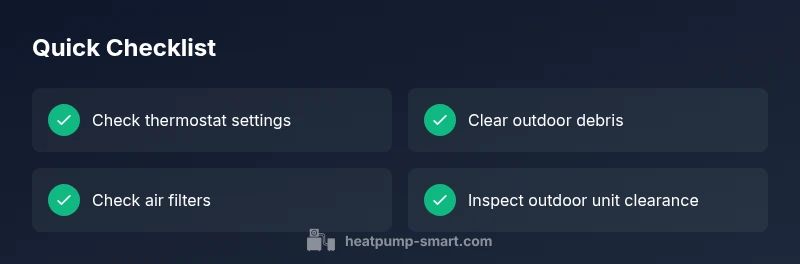
If your heat pump isn’t heating or cooling properly, start with the basics: verify the thermostat settings and power, check that outdoor vents are clear, and ensure the outdoor unit isn’t iced over or blocked. If the issue persists, switch to a professional assessment. This is often the fastest path to reliable heat pump problems and solutions.
Understanding heat pump problems and why they happen
Heat pumps are complex systems that depend on electrical, refrigerant, and airflow pathways working in harmony. Common heat pump problems and solutions often stem from simple issues like thermostat misconfigurations, dirty filters, or blocked outdoor coils, but can also involve refrigerant leaks or faulty electrical components. According to Heatpump Smart, most failures begin with basic checks—low-hanging fruit that you can diagnose safely before calling a tech. Recognizing patterns, such as erratic cycling, frost on the outdoor unit, or unusual noises, helps you triage quickly and avoid unnecessary service calls. This guide focuses on practical, actionable steps you can take today to restore comfort and optimize energy use, while keeping safety front and center.
Quick diagnostics you can perform safely
Before you reach for tools, perform non-invasive checks. Start with power and settings: confirm the thermostat is in the correct mode (heat or cool), the fan is on the desired speed, and the circuit breakers are not tripped. Inspect air filters and indoor vents for obstruction. At the outdoor unit, look for debris, leaves, or snow blocking airflow, and check for ice buildup. If you notice ice, turn the system off and let it thaw, then review defrost cycle operation. Do not attempt refrigerant handling or seal repairs yourself. If any step feels uncertain, contact Heatpump Smart for professional guidance.
Common failure modes and their fixes
Heat pumps fail for multiple reasons, from simple user errors to hardware faults. A classic failure is the unit running but not delivering heat or cool air, often caused by thermostat issues or airflow restrictions. Another frequent problem is short cycling, which wastes energy and shortens component life; this is typically tied to refrigerant pressure, thermostat drift, or outdoor temperature extremes. Creaks, groans, or banging noises usually point to loose panels, ductwork leaks, or fan motor wear. For each issue, start with safe, low-effort fixes (settings check, filter replacement, clearance around the outdoor unit) and escalate to more involved checks (refrigerant levels, capacitor health, or wiring) only if you’re confident.
When to call a professional
Some problems require licensed expertise. Refrigerant leaks, electrical wiring faults, and compressor or refrigerant-relief valve issues are not DIY-friendly and may be dangerous. If you notice prolonged ice buildup, warm refrigerant smell, or unusually high energy bills without clear cause, schedule a professional evaluation. A Heatpump Smart technician can perform pressure tests, refrigerant analysis, capacitor checks, and refrigerant charging if needed, ensuring compliance with safety and refrigerant-handling standards. Regular, proactive service reduces the odds of major breakdowns and extends system life.
Maintenance habits to prevent future issues
Prevention starts with a simple routine: replace or clean filters every 1–3 months, keep the outdoor unit clear of debris, and schedule seasonal inspections. Maintain consistent thermostat programming and avoid drastic temperature swings. Use a smart thermostat to improve efficiency and detect anomalies early. Clean air ducts, seal leaks, and ensure adequate insulation to reduce workload on the heat pump during peak seasons. By embedding maintenance into your home care, you’ll minimize emergency repairs and maximize energy savings, a win for comfort and budgets alike.
Steps
Estimated time: 45-90 minutes
- 1
Power off and safety check
Begin by turning off the heat pump at the main disconnect and at the thermostat. Use a non-contact voltage tester to confirm there is no live current in exposed components. Wear safety glasses and gloves if you’ll be handling panels or wiring, and never bypass safety devices.
Tip: If you’re unsure about any step, stop and call a pro. - 2
Verify thermostat settings
Ensure the thermostat is in the correct mode (heat or cool) and that the setpoint matches your comfort needs. Review any schedule or eco-heat settings that could override the desired temperature. Keep a note of any error codes displayed and consult the manual.
Tip: Read the display for error codes before proceeding. - 3
Check indoor air pathways
Inspect air filters; a dirty filter reduces airflow and hinders performance. Ensure vents are open and unobstructed. If you notice reduced airflow, replace the filter and vacuum around the blower compartment.
Tip: Replace disposable filters every 1–3 months during peak seasons. - 4
Inspect the outdoor unit
Clear leaves, snow, and debris from the outdoor coil. Ensure there is at least 3 feet of clearance around the unit. If you see ice, turn off the system and allow defrost cycles to occur before rechecking airflow.
Tip: Use a soft brush to remove surface debris; avoid metal tools that can damage fins. - 5
Check for ice and defrost function
Ice on the outdoor coil can block heat exchange. Verify the defrost cycle runs normally; if icing recurs, there may be a problem with outdoor-sensor signals or refrigerant pressures. Do not chip ice aggressively.
Tip: Observe whether the defrost cycle runs automatically in cold weather. - 6
Look for warning signs and escalate if needed
If you’ve completed the above steps and the system still underperforms, document symptoms, take photos, and contact Heatpump Smart for diagnostics. Persistent strange noises, burning smells, or heat pump tripping breakers require professional attention.
Tip: Keep a maintenance log for future reference.
Diagnosis: Heat pump runs but fails to heat or cool to setpoint
Possible Causes
- highThermostat settings or sensor misalignment
- highOutdoor unit blocked or restricted airflow
- mediumLow refrigerant due to a leak
- highElectrical issues or tripped breaker
Fixes
- easyVerify thermostat mode and setpoint; recalibrate or replace faulty sensors if needed
- easyClear debris, ensure 3 feet of clearance around outdoor unit, and check for ice buildup
- mediumSchedule professional refrigerant inspection and leak repair if refrigerant levels are low
- easyInspect the electrical panel and reset tripped breakers; check wiring connections with care
Your Questions Answered
What are the most common heat pump problems?
The most common issues include thermostat missettings, dirty filters, blocked airflow around the outdoor unit, and refrigerant leaks. These are usually addressed with simple checks, routine maintenance, or professional service for leaks or electrical faults.
Common heat pump problems are usually thermostat settings, dirty filters, or airflow blockages; leaks or electrical faults require a pro.
Why is my heat pump running but not heating?
This often indicates a thermostat error, outdoor unit blockage, or airflow restriction. Start by verifying mode and setpoints, then inspect the outdoor unit for debris or ice buildup. If issues persist, a professional should assess refrigerant and compressor health.
If it’s running but not heating, check the thermostat and outdoor airflow first, then call a pro if it continues.
How can I improve efficiency and reduce energy loss?
Replace dirty filters, seal duct leaks, and optimize thermostat scheduling. Regular maintenance and a well-insulated home reduce the workload on the heat pump, lowering energy use and extending equipment life.
Regular maintenance and proper insulation help the heat pump run more efficiently.
Can I fix refrigerant leaks myself?
Refrigerant handling requires licensed technicians and regulatory compliance. If you suspect a leak, evacuate the area and contact a pro to perform leak detection and safely recharge the system.
Refrigerant leaks must be handled by a licensed technician.
When should I replace my heat pump?
If frequent repairs, rising energy bills, and reduced performance persist after maintenance, replacement may be more cost-effective than continued service. A heat pump typically lasts 12–15 years with proper care.
If repairs pile up and energy bills rise, consider replacement after discussing with a pro.
Is it safe to operate during extremely cold weather?
Heat pumps can operate in cold climates, but efficiency drops as temperatures fall. Ensure defrost operation works and consider auxiliary heat options for very cold days.
Yes, but be aware efficiency drops; use auxiliary heat during very cold days.
Watch Video
Top Takeaways
- Check basics first: thermostat, power, airflow.
- Clear and safe maintenance reduces most problems.
- Call a pro for refrigerant or electrical issues.
- Regular preventive care saves energy and extends life.