Heat Pump Slow to Start Troubleshooting Guide
Learn how to diagnose and fix a heat pump that starts slowly. This step-by-step guide from Heatpump Smart covers common causes, quick checks, and when to call a pro.


The most likely cause of a heat pump slow to start is restricted airflow or a blocked outdoor unit, followed by thermostat or sensor issues. Start with quick fixes: replace a dirty air filter, ensure nothing is blocking the outdoor coil, and verify thermostat settings. If it doesn't start promptly after these checks, proceed with deeper diagnostics or call Heatpump Smart for help.
Understanding the symptom: what it means when a heat pump is slow to start
When a heat pump is slow to start, you’ll notice a delay between when the thermostat calls for heat or cooling and when the unit actually begins cycling. This lag can range from a few seconds to several minutes, and it often signals an airflow, sensor, or control issue. According to Heatpump Smart, slow-start symptoms are most common in older systems and in homes with long duct runs or restricted return air. While a single delayed start may be harmless, persistent delays can reduce comfort and raise energy use because the system runs longer than needed. In cold weather, a slow start is especially noticeable because frost or ice can complicate the start sequence. Use a calm, systematic approach to isolate the cause, starting with simple, low-risk checks before moving to more involved diagnostics. The goal is to restore normal startup speed without compromising safety or efficiency.
Common causes of slow starts at a glance
There are several frequent culprits. The most common is restricted airflow due to a dirty air filter or closed vents. A blocked or dirty outdoor coil, or ice buildup on the condenser, can also delay startup. Thermostat or sensor misreadings prevent the system from recognizing a call for heat or cool in a timely manner. Refrigerant leaks or low charge are less common but serious and require professional service. Electrical issues, such as a weak capacitor or loose connections, can also slow down the compressor. Finally, environmental conditions like very cold outdoor temperatures or high humidity can trigger longer defrost cycles that momentarily delay operation. Understanding these causes helps you structure a focused checklist and avoid unnecessary part replacements.
Quick checks you can do today (no special tools)
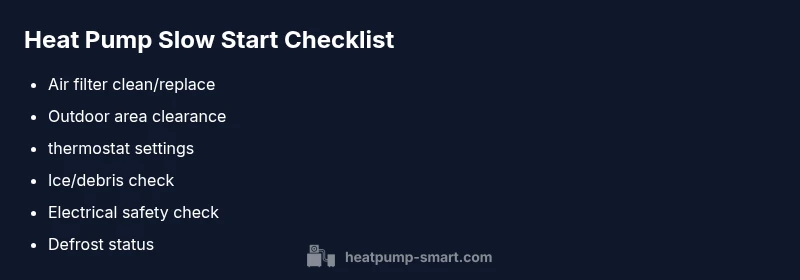
- Check the air filter: if dusty or clogged, replace it or clean it according to the manufacturer’s guidance. Proper airflow improves startup speed.
- Inspect the outdoor unit: clear leaves, snow, and debris from around the condenser; ensure at least a few feet of clearance for airflow.
- Verify thermostat settings: confirm mode, fan, and temperature are correct and that a settings schedule isn’t delaying startup.
- Inspect for ice or frost: if the outdoor coil is iced, allow it to defrost naturally and avoid forcing ice off with tools.
- Check the electrical panel: ensure the heat pump breaker is on and look for tripped breakers or signs of wear.
- Listen for unusual noises after startup: buzzing or humming can indicate capacitor or motor problems.
If you see any signs of refrigerant loss or burning smells, stop and call Heatpump Smart right away.
How environmental conditions affect startup speed
Temperature, humidity, and wind can influence startup speed. Extremely cold air makes the outdoor unit work harder to reach the target temperature, which can extend the startup period. Frost or ice on the outdoor coil can force the defrost cycle to run longer, delaying warm air. In high-humidity environments, condensate cooling may also slow the onset of heating. Warm sunny days may reduce startup time somewhat, but a badly insulated home will still cause longer runtimes to reach comfort. Recognize that some variability is normal, but repeated long delays are a sign something needs attention.
Diagnostic flow overview (high-level)
Start with the simplest checks: airflow and thermostat settings. If the unit still starts slowly, inspect the outdoor coil and energy components for ice or debris, then check the electrical supply. If basic checks don’t solve the issue, follow a structured diagnostic path: confirm airflow, inspect for ice, test control signals, and assess refrigerant status with a qualified technician. This flow reduces needless parts replacement and focuses on root causes. Heatpump Smart recommends documenting symptoms and timing to compare against past performance, which helps identify gradual declines in performance.
When to escalate: professional help and safety considerations
If you notice refrigerant smells, hissing, a noticeable drop in cooling or heating performance, or any electrical burning odors, call a licensed technician immediately. Slow starts that persist after basic checks, or any signs of ice buildup that don’t clear, warrant professional assessment. Avoid attempting refrigerant recharge or capacitor replacement yourself. Heatpump Smart technicians will perform a leak test, verify refrigerant charge, inspect electrical connections, and evaluate sensors and the control board.
Prevention: maintenance tips to avoid slow starts in the future
- Schedule annual professional maintenance and filter changes to keep airflow clean and predictable.
- Keep the outdoor unit clear and inspected for ice and debris.
- Replace air filters regularly, and check ductwork for blockages.
- Calibrate the thermostat and consider upgrading to a smart thermostat for better control.
- Monitor energy usage and comfort patterns to catch early signs of inefficiency.
- Keep a maintenance log to track improvements and recurring patterns. Heatpump Smart's guidance emphasizes proactive care to reduce slow startup events in 2026 and beyond.
Steps
Estimated time: 30-60 minutes
- 1
Check thermostat and settings
Review mode, fan, and temperature settings. Ensure there isn’t a schedule delaying startup and that any Eco or sleep modes are disabled during testing. A simple toggle off/on can reset misread controls.
Tip: Document the exact settings before and after changes. - 2
Inspect the air filter
Remove the filter and inspect for dirt or debris. Replace if necessary and recheck airflow from the returns to the vents. A clean filter often eliminates startup delays caused by restricted airflow.
Tip: Use manufacturer-recommended filter type and size. - 3
Check the outdoor unit area
Ensure there is at least a few feet of clearance around the condenser. Remove leaves, snow, or other obstructions that may restrict airflow. If you see ice, allow it to melt naturally before testing again.
Tip: Never jam tools into the coils to remove ice. - 4
Inspect for ice or frost on coils
Look for visible ice on the outdoor coil. If present, allow defrost to occur and avoid forcing defrost manually. Re-check startup after the coil clears.
Tip: Persistent icing may indicate a refrigerant or airflow problem. - 5
Check electrical supply
Confirm the outdoor unit breaker is on and check for any tripped breakers or burnt smells. A loose connection can delay startup and pose a safety risk.
Tip: Power down before touching wiring. - 6
Reset controls
Turn off power to the heat pump for 30–60 seconds, then restore. This can clear minor control glitches that delay startup.
Tip: If the delay returns, note the exact sequence of events. - 7
Listen for abnormal noises
After startup, listen for buzzing, humming, or rattling. Unusual sounds may indicate a capacitor or motor issue requiring professional inspection.
Tip: Do not ignore odd noises; they often precede component failure. - 8
When to escalate
If basic checks do not restore normal startup or you suspect refrigerant or major electrical problems, contact Heatpump Smart for a professional evaluation.
Tip: Avoid attempting refrigerant handling yourself.
Diagnosis: Heat pump slow to start
Possible Causes
- highAirflow issue due to dirty filter or restricted vents
- highOutdoor unit iced over or blocked
- mediumThermostat or sensor misreadings causing delayed start
- lowLow refrigerant charge or leaks
- lowElectrical issues or weak capacitor
Fixes
- easyReplace/clean air filter and ensure proper airflow
- easyClear debris around outdoor unit and gently remove ice if present
- easyVerify thermostat settings and calibrate sensors; replace faulty thermostat if needed
- hardCheck refrigerant status with a professional; do not attempt to recharge
- mediumInspect electrical connections and capacitors; call a licensed tech if unsure
Your Questions Answered
What does it mean if my heat pump starts slowly?
A slow start means a delayed activation after a call for heat or cooling. Common causes include airflow restrictions, ice buildup, thermostat misreads, or refrigerant/electrical issues. Start with simple checks to isolate the problem.
A heat pump starting slowly usually means there’s an airflow or sensor issue, or a control problem. Begin with easy checks and go from there.
Can a dirty filter cause slow startup?
Yes. A clogged filter reduces airflow and can delay the system’s response. Replacing or cleaning the filter is often the quickest fix for a slow start.
A dirty air filter commonly causes slower startup; replace it and test again.
Is it unsafe to ignore a defrost cycle that runs longer than normal?
Extended defrost cycles can indicate a frost buildup or sensor issue. While a short defrost is normal, prolonged cycles should be evaluated by a professional to avoid efficiency losses or damage.
Long defrost cycles can signal a problem; have a tech check it if it continues.
Could a refrigerant leak cause slow startup?
Refrigerant leaks are a serious condition and typically cause performance loss rather than a simple delay. If suspected, do not attempt a recharge and call a licensed technician.
Refrigerant leaks require professional service; don’t try to recharge yourself.
When should I call a professional for slow start?
If basic checks don’t improve startup speed, or you notice electrical smells, ice that won’t melt, or odd noises, contact Heatpump Smart for a thorough diagnostic and safe repair.
Call a professional if simple fixes don’t solve the problem or you hear burning smells or strange noises.
Watch Video
Top Takeaways
- Identify airflow restrictions early to speed startup.
- Keep outdoor area clear and coils clean.
- Verify thermostat and sensors are functioning correctly.
- Call Heatpump Smart for persistent issues or suspected refrigerant/electrical problems.