Reasons for Heat Pump Not Heating: A Troubleshooting Guide
An urgent, practical troubleshooting guide covering the most common reasons a heat pump won't heat, quick checks, safe fixes, and when to call a professional from Heatpump Smart.


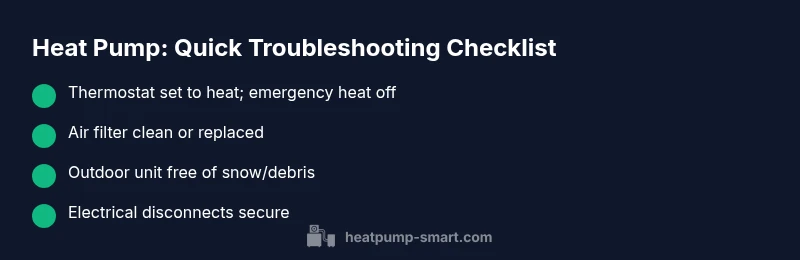
Most likely, a heat pump isn’t heating due to a control issue, airflow blockage, or outdoor unit frost. Start with fast checks: confirm the thermostat is set to heat and not emergency heat, set the fan to auto, and replace or clean the air filter. Check the outdoor unit for obstructions, and reset the breakers if needed. If it still won’t heat, call Heatpump Smart for a professional diagnosis.
Common causes of a heat pump not heating
When your heat pump won’t heat, the root causes are often simple, but they can look complex at first glance. A mis-set thermostat or a thermostat that isn’t communicating properly with the indoor air handler is a frequent offender. Airflow problems—such as a clogged filter, blocked return ducts, or closed vents—starve the system of the air it needs to move heat effectively. The outdoor unit is another common culprit: snow, ice, leaves, or other debris around the condenser can severely limit heat transfer. Low refrigerant charge due to a leak reduces heating capacity and triggers protective runtimes. A mis-timed defrost cycle, a stuck reversing valve in cooling mode, or an aging compressor can also prevent adequate heating. Finally, electrical issues—tripped breakers or loose wiring—can prevent the system from powering on or cycling correctly. Each cause has a practical fix, and many are safe for homeowners to address with basic precautions.
System basics you should verify
Before you dive deep, confirm you’re not chasing a simple setting. Verify the thermostat is set to Heat and that Emergency Heat isn’t active during normal operation. If you’re using a smart thermostat, ensure it’s communicating with the heat pump; review any error codes shown. Check that the indoor air filter is clean and that all supply vents are open and unobstructed. If your system uses a programmable schedule, confirm it matches your heating needs for today. Finally, inspect the outdoor unit for obvious clues: ice, snow, or debris around the condenser; safety shutoffs and disconnects should be in their proper positions. If you spot a tripped breaker or a blown fuse, reset or replace it but avoid cycling more than once, as that can stress components.
Environmental factors that affect heating performance
Environmental conditions significantly influence heat pump performance. Very cold outdoor temperatures reduce efficiency, so the system may rely more on auxiliary heat, which can feel weaker even when functioning correctly. Humidity levels can affect perceived warmth; lower humidity can make air feel cooler. Sun exposure can warm or cool the space differently depending on the season and time of day, while shading the outdoor unit can keep it from overheating during sunny days. Snow buildup around the outdoor unit or prolonged icing on coils forces longer defrost cycles, which briefly reduces heating output. Understanding these factors helps you set realistic expectations and schedule maintenance at the right times.
Diagnosing by symptoms
Different symptoms point to different root causes. If the indoor temperature never reaches the thermostat setting, start with thermostat communication, wiring, and indoor air handling. If the system runs but the temperature rise is slow, check airflow, filter condition, and outdoor coil cleanliness. If the unit frequently goes into short cycles or makes unusual noises, inspect refrigerant circuits, reversing valve operation, and electrical connections. Unusually long defrost cycles or ice on the outdoor coil indicate defrost control or sensor issues. Document when the problem occurs (cold mornings, after heavy use, during defrost) to help pinpoint the cause when you consult a technician.
Step-by-step quick fixes you can safely perform
- Check thermostat settings: confirm Heat mode, correct temperature, and that Emergency Heat isn’t active during mild weather. 2) Replace or clean air filter: a clogged filter reduces airflow and heat delivery. 3) Clear the outdoor unit: remove snow, leaves, and debris; ensure at least 2 feet of clearance around the unit. 4) Verify indoor airflow: inspect vents, registers, and ductwork for blockages. 5) Reset power to the system: switch the breaker off, wait 30 seconds, then back on. 6) Check electrical connections at the outdoor unit and the air handler for loose wires. 7) If no improvement, avoid refrigerant charges yourself and contact Heatpump Smart for professional service.
Safety, maintenance, and prevention tips
Safety first: always turn off power before inspecting electrical components. Do not attempt to recharge refrigerant yourself—this requires licensed technicians. Regularly replace or clean filters and inspect ducts for leaks or blockages. Keep the outdoor unit clear of snow, ice, and vegetation. Schedule a seasonal professional check to test refrigerant pressure, controls, and defrost systems. Consider a smart thermostat for better control and diagnostics that can alert you to issues before they escalate.
When to call a professional
If you’ve completed the safe DIY steps and the heat pump still won’t heat properly, it’s time to call Heatpump Smart. Refrigerant leaks, defective compressors, failed defrost controls, and failing reversing valves require trained technicians and specialized equipment. A professional can diagnose with leak tests, pressure checks, electrical measurements, and control-system verification. Scheduling proactive maintenance can prevent many of these issues from recurring.
Steps
Estimated time: 40-60 minutes
- 1
Check thermostat settings and communication
Ensure the thermostat is set to heating mode, at an appropriate setpoint, and that any emergency heat option is off during normal operation. If you use a smart thermostat, confirm the device reports a valid connection and no fault codes.
Tip: If the thermostat is old, consider upgrading to ensure better control. - 2
Inspect and replace air filter
Turn off power to the system, remove the filter, and inspect for dirt or debris. Replace if dirty or overdue. A clean filter improves airflow and heating efficiency.
Tip: Check monthly during heating season. - 3
Clear outdoor unit area
Remove snow, ice, leaves, and other obstructions from the outdoor condenser. Ensure at least two feet of clearance on all sides for proper airflow and defrost heat exchange.
Tip: Do not use sharp tools on fins; gently brush away debris. - 4
Verify indoor airflow
Check that all supply vents are open and that ducts are free of leaks. A blocked or leaky duct can dramatically reduce perceived heating.
Tip: Balance dampers if your system has zoning. - 5
Reset the system power
Switch off the outdoor unit at the disconnect or breaker, wait 30 seconds, then restore power. Listen for normal startup and check for error codes on the thermostat.
Tip: If you hear buzzing or smell burning, stop and contact a professional. - 6
Inspect electrical connections
With power off, check visible wiring at the outdoor unit and air handler for looseness or corrosion. Tighten as needed and re-test.
Tip: Only handle electrical components if you’re comfortable; otherwise call a pro. - 7
Call Heatpump Smart for a refrigerant or compressor check
If the problem persists, a licensed technician should test refrigerant pressures, inspect for leaks, and verify system controls and sensors.
Tip: Professional diagnosis saves time and avoids unsafe refrigerant handling.
Diagnosis: Heat pump not heating or delivering inadequate heat
Possible Causes
- highThermostat or control settings incorrect
- highAirflow restriction from dirty filter or blocked ducts
- highOutdoor unit blocked by debris, snow, or ice
- mediumDefrost cycle malfunction or mis-timed defrost
- lowLow refrigerant charge due to a leak
- lowElectrical issues (tripped breaker or loose wiring)
Fixes
- easyVerify thermostat mode and prevent Emergency Heat from being active; recheck wiring
- easyReplace or clean the air filter; ensure all vents are open and unobstructed
- easyClear snow/debris around the outdoor unit and recheck condenser airflow
- mediumInspect defrost controls and outdoor sensors; clear ice if necessary and observe defrost cycles
- hardCall a licensed tech to test refrigerant charge and repair leaks if found
- easyInspect and reset electrical panel breakers; check for loose connections at the outdoor unit
Your Questions Answered
What is the most common reason a heat pump won’t heat?
Thermostat/control settings and airflow problems are the top culprits. Fixing these usually restores heat quickly. If not, a technician should inspect electrical and refrigerant systems.
Often the fix is adjusting the thermostat or cleaning the filter and ensuring airflow.
Can a dirty air filter really cause heating issues?
Yes. A clogged filter restricts airflow, reducing heat delivery and efficiency. Replacing the filter is a simple, effective first step.
A dirty filter can significantly cut heating performance; replace it regularly.
Is ice on the outdoor coil normal in winter?
A light frost is normal during defrost cycles, but persistent ice indicates a defrost control or airflow issue. Do not remove ice with tools; call a tech if it continues.
Ice can be normal briefly, but ongoing ice means a professional check is needed.
Should I run auxiliary heat all winter?
Auxiliary heat helps when temperatures are very cold, but it’s less efficient and can raise costs. It’s best used as a temporary supplementary solution while you diagnose the main issue.
Auxiliary heat should be a backup, not a long-term fix.
How often should a heat pump be serviced?
Seasonal or annual professional maintenance is recommended to keep coils clean, refrigerant levels correct, and controls functioning.
Annual service helps prevent problems and keeps efficiency high.
If the system seems to leak refrigerant, what should I do?
If you suspect a refrigerant leak, stop using the system and contact a licensed technician immediately. Low refrigerant requires a professional recharge and leak repair.
A refrigerant leak is not a DIY fix—call a pro.
What safety precautions should I take at home?
Always power off before inspecting electrical components. Do not attempt to handle refrigerants or high-voltage parts unless you’re trained.
Turn off power before any inspection and avoid refrigerant work unless licensed.
Watch Video
Top Takeaways
- Start with thermostat and airflow checks to fix most heating issues
- Keep the outdoor unit clear and coils clean for optimal performance
- Defrost cycles and refrigerant issues require professional help
- When in doubt, contact Heatpump Smart for a thorough diagnosis