Heat Pump Won't Cool: The Complete Troubleshooting Guide
When your heat pump will not cool, urgent, practical steps help you restore comfort fast. This guide covers safe quick checks, common causes, diagnostic flow, and when to call a pro from Heatpump Smart.


Most likely the issue is restricted airflow or a basic thermostat setting problem. Start by turning the system off, replacing or cleaning the air filter, and ensuring the thermostat is in cool mode with the correct temperature. If these basics don’t fix it, follow the diagnostic flow below to identify the root cause and safe next steps.
Heat pump will not cool: Understanding the problem
According to Heatpump Smart, when a heat pump will not cool, the root causes are often simple and fixable, such as a clogged air filter, blocked outdoor coils, or an incorrect thermostat setting. The urgent feeling is real because comfort, humidity control, and equipment longevity all hinge on proper cooling. This block lays the groundwork for a practical, safety‑mocused approach that homeowners, builders, and property managers can start today. We’ll cover what you can safely check first, what to avoid touching, and how to distinguish quick fixes from problems that require a professional. Expect to walk away with a clear, action‑oriented plan rather than more questions.
Quick checks you can perform safely
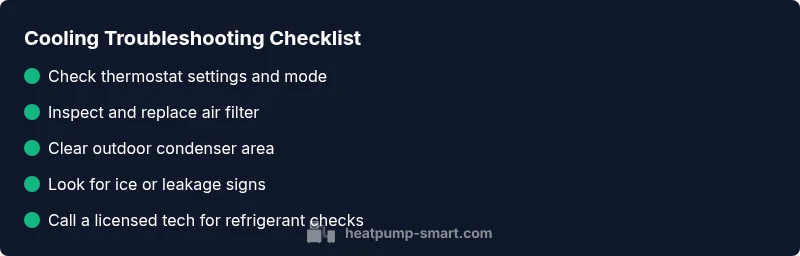
Before you call for help, run through a few safety‑first checks that don’t require tools or risky work:
- Verify thermostat settings: confirm mode is set to cool, temperature is reasonable, and the fan is on auto. A wrong mode or too-high setpoint is a common cause of apparent cooling failure.
- Inspect the indoor air filter: a dirty filter reduces airflow, causing the system to struggle to meet setpoints. If the filter is clogged, replace it and note replacement frequency in your maintenance log.
- Check the outdoor unit area: clear debris, leaves, or snow from the condenser coils and ensure at least 24 inches of clearance around the unit for proper heat exchange.
- Listen for the blower: if you hear the fan but feel warm air, the issue may be restricted airflow rather than a refrigerant problem.
If these checks reveal nothing obvious, proceed to the diagnostic flow below and consider professional help if you notice unusual noises, ice on coils, or refrigerant smells.
Common cooling failures at a glance
Many cooling issues fall into a few repeatable categories. Understanding these makes it easier to diagnose quickly and communicate with a technician:
- Airflow restrictions: dirty filters, blocked returns, or closed dampers reduce delivery to living spaces.
- Thermostat or control faults: miscalibrated sensors, programming errors, or a failing control board can prevent cooling even when the system is technically on.
- Outdoor unit problems: blocked coils, dirt buildup, or extreme heat reduce condenser efficiency, causing insufficient cooling.
- Refrigerant issues: leaks or low charge prevent the evaporator from absorbing heat; this is a serious fault that requires a licensed technician.
- Electrical or component wear: failing contactors, capacitors, or compressors degrade performance and reliability over time.
Each of these factors presents differently in sound, airflow, and temperature, so notice any accompanying symptoms like ice buildup or odd noises to steer your next steps.
Airflow, filtration, and duct health
Airflow quality is the lifeblood of a heat pump’s cooling performance. If return ducts are blocked or undersized, or if there are leaks in the ductwork, conditioned air never reaches living spaces effectively. A simple test is to feel air from several vents in different rooms; weak or uneven airflow suggests duct or filter issues. Duct cleaning and sealing can dramatically improve efficiency, but only after confirming there isn’t a refrigerant or compressor fault. Keep records of filter changes and duct inspections to catch problems early.
Refrigerant, electrical, and control issues (what you can and cannot do safely)
Refrigerant problems cannot be fixed at home. Low refrigerant or leaks demand a licensed technician and proper equipment to avoid environmental harm and personal injury. Electrical issues, including tripped breakers, loose wiring, or faulty contactors, pose a serious safety risk and should be handled by a trained professional. If you notice ice on the evaporator, hissing noises, or the outdoor unit failing to cycle on, stop work and call for service. Avoid opening electrical panels or attempting refrigerant work yourself.
Systematic diagnostic flow you can follow
A structured approach helps you identify whether the problem is simple or complex. Begin with the easiest checks and progress to more involved tests. If you reach a point where refrigerant or electrical system work is required, pause and contact a licensed technician. This flow keeps you safe and reduces the time to resolution. Remember, tackling components beyond your training can cause further damage and may violate safety codes.
When to call a pro and what to expect
If basic checks don’t restore cooling, or you detect ice on coils, refrigerant lines, unusual smells, or electrical signs (buzzing, flickering lights), professional help is needed. A certified technician will perform a pressure test for refrigerant, inspect the compressor and reversing valve, and verify electrical integrity. You should expect a diagnosis, a written quote for repairs, and a clear explanation of your options. At Heatpump Smart, we emphasize proactive maintenance to prevent future outages.
Steps
Estimated time: 60-90 minutes
- 1
Check thermostat settings
Confirm the thermostat is in cooling mode, the setpoint is comfortable, and the fan is set to auto. If the display shows an error code, consult the manual or Heatpump Smart guidance to interpret it. This step often reveals misconfigurations that mimic a cooling failure.
Tip: If you find a code, note it for the technician; codes often point to specific components. - 2
Inspect indoor air filtration
Remove and inspect the air filter. A clogged filter reduces airflow and makes the system work harder. Replace with the correct filter type and recheck airflow from several vents after a few minutes of operation.
Tip: Mark your calendar to replace filters every 1–3 months depending on usage and home cleanliness. - 3
Assess outdoor condenser area
Inspect the outdoor unit for debris, dirt, and vegetation near the coils. Gently clear away debris and ensure at least 24 inches of clearance for proper heat exchange. A clean coil improves efficiency and cooling capacity.
Tip: Do not use high-pressure water that could bend fins; use a soft brush and low-pressure rinse. - 4
Verify electrical and breakers
Check the main breaker and any branch circuits for trips. If a breaker has tripped, reset it and observe whether the unit starts normally. If trips recur, there may be an electrical fault requiring a professional assessment.
Tip: Never bypass a breaker; persistent trips indicate a potential short or overload. - 5
Monitor for ice and unusual sounds
Look for ice on the evaporator coil or refrigerant lines, a sign of liquid-ice problems or refrigerant issues. Listen for hissing or buzzing noises that could indicate leaks or electrical problems. Do not attempt repairs if you notice ice forming.
Tip: If ice forms, turn off the system and let it thaw before rechecking filters and airflow. - 6
Decide on next steps
If basic checks restore cooling, maintain regular service. If cooling remains poor or you detect leaks or refrigerant signs, schedule a licensed technician promptly. Documentation of symptoms helps the technician diagnose faster.
Tip: Keep a cooling trouble log: dates, symptoms, and actions taken.
Diagnosis: Heat pump won't cool
Possible Causes
- highLow refrigerant charge or refrigerant leak
- highDirty air filter or restricted airflow
- mediumThermostat set incorrectly or display error
- mediumBlockage or dirt on outdoor condenser coils
- lowElectrical issues or failed components
Fixes
- easyReplace dirty air filter and verify airflow from multiple vents
- easyClear outdoor area around condenser and remove obstructions
- easyVerify thermostat mode, recalibrate if needed, and reset system
- mediumIf fridges show ice or refrigerant signs, contact a licensed tech for leak check and recharge
- easyCheck electrical breakers and contactors; reset or replace as required
Your Questions Answered
Why does my heat pump still run but not cool the house?
This usually points to airflow restrictions, thermostat issues, or refrigerant problems. Start with air filter replacement and thermostat verification, then check outdoor coils for debris. If cooling still fails, a professional should inspect refrigerant and electrical components.
If your heat pump runs but won’t cool, start with airflow and thermostat checks, then call a pro if it doesn’t improve.
Can a dirty filter cause a heat pump to underperform?
Yes. A clogged filter reduces airflow, decreases efficiency, and can make the system feel as if it isn’t cooling adequately. Replace filters and monitor the effect on cooling performance.
A dirty filter can slow or stop proper cooling; replace it and check airflow again.
Is ice on the outdoor unit a normal sign of cooling problems?
Ice on the evaporator or refrigerant lines indicates a refrigerant or airflow problem. Turn off the unit, let it thaw, and call a technician if ice recurs after basic checks.
Ice on the coils usually means a refrigerant or airflow issue; seek professional help if it returns.
Should I try to recharge refrigerant myself?
No. Refrigerant handling requires a licensed technician due to safety and environmental regulations. If you suspect a leak, schedule a service promptly.
Recharging refrigerant yourself is not safe or legal; contact a pro for leaks and proper recharge.
When is it necessary to replace a heat pump component?
If diagnostics point to a faulty compressor, reversing valve, or control board, a professional replacement is often required. They will provide a cost-benefit assessment and alternatives.
If a component is faulty, a professional will advise replacement versus repair.
Watch Video
Top Takeaways
- Start with safe, simple checks before calling a tech.
- Airflow problems are the most common, reversible causes.
- Don’t attempt refrigerant or electrical repairs yourself.
- Document symptoms and maintenance to prevent future outages.