Heat Pump Won't Run: Troubleshooting Guide
Diagnose and fix a heat pump that won't run with our urgent, step-by-step troubleshooting guide. Learn safety checks, common faults, and when to call a professional from Heatpump Smart.


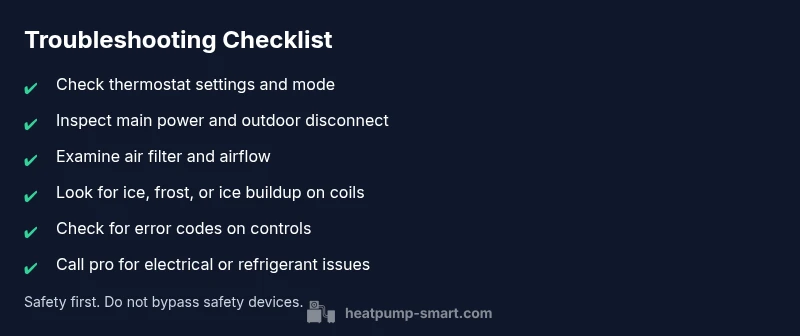
Most often, a heat pump won't run due to a simple power issue or a safety shutdown. Start with the basics: verify the thermostat is set correctly and not in emergency heat, check the outdoor unit disconnect and the main breaker, and confirm the air filter is clean. If the breaker has tripped, reset it and test. If it still won't run, move to the diagnostic flow below for deeper checks.
Why heat pump won't run
According to Heatpump Smart, a heat pump that won't run is usually a symptom of a simple problem that interrupts the system's power or control signals. Before you panic, start with the fundamentals and verify that the unit is receiving power, the thermostat is guiding the system correctly, and there are no obvious safety overrides engaged. Most homeowners encounter this issue during seasonal transitions, when a system sits idle and a safety switch trips or a breaker pops. The goal is to rule out human error and obvious electrical faults before calling a technician. In many cases, the fix is quick and inexpensive: a reset, a corrected thermostat setting, or replacing a blown fuse. If these checks don’t restore operation, you’re likely facing a more nuanced fault such as a failed relay, sensor, or pressure switch—problems better diagnosed with professional equipment. This section lays out the logical path you should follow to identify the root cause and avoid unnecessary replacements.
Safety and immediate checks
Safety always comes first when troubleshooting a heat pump won’t run. Power down the system at the main disconnect and the breaker panel before touching any wiring. Wear gloves and eye protection if you’re inspecting electrical components. Look for obvious hazards: exposed copper, burnt smells, or moisture around electrical panels. Clean any debris around the outdoor unit, and verify that condensate lines are clear. If you detect signs of water ingress or burning, stop and call a licensed technician. Once the area is safe, perform quick checks: confirm that the outdoor unit disconnect is ON, check that the thermostat isn’t in a blocked hold or vacation mode, and verify there are no tripped breakers in the service panel. These basic steps prevent accidental shocks and set the stage for deeper troubleshooting.
Thermostat and controls
Thermostats guide the heat pump; a wrong setting is a common reason for it not running. Verify the thermostat is set to the desired mode (cooling or heating) and to a reasonable temperature. Make sure the system is not stuck in emergency heat or Off. Check that the thermostat batteries are fresh if it uses non‑rechargeable cells. If you have a smart thermostat, ensure it has a reliable Wi‑Fi connection and that routines or schedules aren’t forcing a pause. Inspect the wiring behind the thermostat for loose terminals or damaged cables. A loose wire to the Y or changeover valve can prevent operation. After adjustments, recheck the display for error codes and clear any user‑visible faults. If the thermostat continues to misbehave, you’ve ruled out the control side and can move to power and electrical checks.
Power supply, breakers, and fuses
Power supply problems are among the easiest fixes. Start at the main electrical panel: locate the heat pump branch circuit and check if the breaker has tripped or a fuse is blown. If tripped, switch off the breaker, wait a few seconds, then reset firmly. Listen for a click and confirm the breaker stays reset. Inspect the outdoor disconnect switch—some units have a separate switch in a cabinet; ensure it is ON. If you have a legacy fuse box, replace blown fuses only with the exact amperage. Do not bypass safety devices. If power is reaching the unit, but it still won’t run, the issue may be a failed contactor or a capacitor in the outdoor unit.
Outdoor unit and airflow considerations
Blocked airflow or a dirty outdoor coil can prevent a heat pump from starting. Inspect the outdoor condenser for leaves, debris, or snow that blocks vents. Clean with a brush or low‑pressure air; never use a high‑pressure hose that could damage fins. Make sure the area around the unit is clear for several feet of unobstructed air intake and discharge. Check that the fan spins freely when you manually rotate it if safe to do so. Frost or ice on the coil in cold weather is common; if you notice frost, allow it to defrost and avoid forcing it to run. In some cases, severe blockage or damage to the coil will prevent the unit from starting altogether.
Common faults: sensors, pressure switches, and capacitor
Faults in safety sensors, pressure switches, or the capacitor can cause a heat pump to lock out. Check error codes on the indoor controller or the outdoor unit display if present. A faulty pressure switch or sensor may prevent the system from starting to avoid damage; replacements require a technician and the correct parts. The capacitor in the outdoor unit can degrade, causing a weak or intermittent start. Diagnosing these parts typically requires specialized test equipment and refrigerant‑safe procedures. If you suspect any electrical component failure, pause and call a pro rather than attempting hazardous repairs.
Diagnostic flow: symptom-to-diagnosis-to-fixes
Use a structured diagnostic flow to move from symptom to solution. Start with the most likely causes (power, thermostat) and proceed to less obvious faults (sensors, switches). For each symptom, confirm the fault with a simple test (e.g., is power present, is thermostat communicating). If a test points to a single cause, apply the corresponding fix and re‑test. If multiple causes seem possible, address the easiest fix first to see if operation returns. This method reduces unnecessary parts replacements and helps you decide when professional inspection is warranted. Heatpump Smart’s approach emphasizes safety and staged checks to prevent damage and keep your system running efficiently.
Safety tips and when to call a pro
Even when following these steps, some repairs are outside DIY scope. Always call a licensed HVAC technician for electrical faults beyond simple resets, refrigerant handling, or compressor work. Document symptoms, times, and any error codes to speed up diagnosis. Keep records of maintenance tasks and filter replacements. Do not operate the unit if you notice burning smells, smoke, or overheating components. For urgent issues in extreme weather, contact a professional service promptly. The goal is to minimize downtime and protect your property while ensuring safe, code‑compliant repairs.
Preventive maintenance to reduce future outages
Preventive maintenance helps minimize the odds that the heat pump won’t run when you need it. Schedule an annual professional inspection, clean or replace air filters monthly during heating or cooling seasons, and keep the outdoor condenser clear of debris. Inspect electrical panels and outdoor disconnects for corrosion and tight connections. Consider upgrading to a smart thermostat with pending software updates and reliable remote monitoring. Heatpump Smart recommends establishing a simple maintenance calendar and sticking to it, which can improve reliability and efficiency over time.
Steps
Estimated time: 45-60 minutes
- 1
Verify thermostat settings
Check that the thermostat is set to heat or cool as needed and that emergency heat isn’t engaged. Confirm there are no schedule overrides or app conflicts. If you have a smart thermostat, verify its online status.
Tip: If in doubt, reset the thermostat to factory defaults before reconfiguring settings. - 2
Check power at the unit
Go to the main panel and confirm the heat pump branch circuit is ON. If the breaker is tripped, switch it OFF and then ON after a 5–10 second pause. Listen for a decisive click when resetting the breaker.
Tip: Never bypass safety devices; a trip often hides a larger issue. - 3
Inspect the outdoor disconnect
Locate the outdoor disconnect switch, ensure it is in the ON position, and reseat any loose wiring. If unfamiliar, contact a professional rather than forcing wires back into place.
Tip: Some disconnects are inside a locked cabinet—do not pry open if you aren’t sure how to operate it safely. - 4
Check air filters and airflow
A clogged indoor filter can limit airflow and cause the system to shut down. Replace or clean filters and ensure the indoor blower is running. Verify that the outdoor unit has clear airflow with no leaves or debris.
Tip: Do not operate if the outdoor coil is visibly damaged or blocked. - 5
Inspect for ice and refrigerant signs
Look for frost on the outdoor coil or refrigerant lines. Ice buildup can prevent operation; allow defrost cycles to complete. Leaks or hissing sounds indicate a refrigerant issue that requires a pro.
Tip: Never attempt to repair refrigerant leaks yourself. - 6
Check safety switches and sensors
If available, read error codes from the indoor or outdoor control panels. Loose wiring on safety switches or faulty sensors can halt operation.
Tip: Document error codes for the technician to speed up diagnosis. - 7
Attempt controlled restart and test
After completing checks, power the unit back on and set to heat/cool. Listen for compressor and fan operation. If it starts, monitor for stability over the next few minutes.
Tip: If it doesn’t start, proceed to professional evaluation. - 8
Call a pro if needed
If the unit still won’t run after these steps, or you detect burning smells, unusual noises, or refrigerant issues, disconnect power and schedule professional service.
Tip: Provide the technician with a log of symptoms and any observed error codes.
Diagnosis: Heat pump won't start or run
Possible Causes
- highPower issue
- highThermostat misconfiguration
- highTripped breaker or blown fuse
- mediumFaulty contactor or capacitor
- mediumDefective high-pressure/safety switch
- lowRefrigerant leak
- lowFrozen coil or ice buildup
Fixes
- easyCheck main power supply and reset tripped breakers or blown fuses
- easyVerify thermostat settings (mode, temperature, emergency heat) and reset if needed
- easyInspect outdoor disconnect and ensure it is ON; reseat connections
- mediumTest and, if necessary, replace outdoor contactor or capacitor
- mediumReplace defective safety/pressure switch with proper parts
- hardIf refrigerant leak is suspected, contact a licensed technician for repair and recharge
- easyClear ice buildup, ensure proper defrost cycle, and restore airflow
Your Questions Answered
What is the most common reason a heat pump won't start?
The most common causes are thermostat misconfiguration and power issues, including a tripped breaker or blown fuse. Verifying settings and power usually resolves the issue.
Most often, a thermostat or power issue is the culprit; check settings and breakers, then retry.
My breaker trips when I try to start the heat pump. What should I do?
Turn off power, inspect the outdoor disconnect and panel wiring, and reset the breaker if safe. If the breaker trips again, the fault is likely in the electrical circuit or a component, requiring a professional.
If the breaker trips again, call a licensed HVAC technician for a safe, in-depth check.
Can I fix heat pump problems myself?
Some basic checks are safe, like thermostat settings and power checks. More complex issues—electrical faults, refrigerant handling, or sensor failures—should be done by a professional.
You can do basic checks, but leave electrical and refrigerant work to pros.
Why is my heat pump running but not heating?
This can indicate a thaw/defrost cycle, refrigerant issues, or a faulty reversing valve. If the problem persists, consult a technician to verify refrigerant levels and valve operation.
If it’s running but not heating, you may have a defrost issue or a valve problem; get a technician to check.
How often should I service my heat pump?
Annual professional service is recommended, along with regular filter cleaning or replacement every 1-3 months depending on usage and air quality.
It’s best to have a yearly professional check and keep filters clean month to month.
What should I do if the outdoor unit is frozen?
Turn off the system and allow defrost cycles to complete. Clear any ice externally and check for airflow obstructions once thawed. If icing recurs, call a pro.
If the unit is frozen, turn it off and let it thaw; recurring icing needs a professional check.
Watch Video
Top Takeaways
- Check power and thermostat first—these are the most common culprits
- Follow a safe, staged diagnostic flow to avoid unnecessary parts replacement
- Document symptoms and codes to speed up professional service
- Perform regular maintenance to reduce future outages
- Know when to call a licensed pro for electrical or refrigerant issues