Heat Pump Won't Stay On: Troubleshooting Guide
Urgent, practical steps to diagnose and fix a heat pump that won’t stay on. Learn quick checks, diagnostic flow, and professional thresholds from Heatpump Smart.


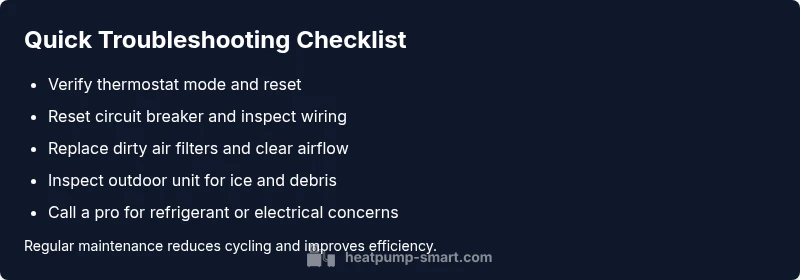
Your heat pump won't stay on because of electrical, control, or airflow faults. The most common culprits are a tripped breaker or blown fuse, a thermostat reading incorrectly, dirty air filters, or blocked outdoor airflow. Start with quick checks: reset the thermostat and breaker, replace batteries if needed, and clear debris from the outdoor unit.
Why heat pump won't stay on: a red flag for comfort and energy bills
If your heat pump won't stay on, you’re dealing with intermittent operation that disrupts comfort and wastes energy. According to Heatpump Smart, the most common root causes are electrical protection issues, thermostat misreads, and airflow restrictions. In this guide, we provide a practical, safety-first approach to diagnose and fix the problem quickly, empowering homeowners, builders, and managers to act with confidence. Expect a clear path from symptom to solution, with safe checks you can perform before escalating to a professional. The goal is to restore reliable heating and cooling while protecting equipment and reducing running costs. Throughout, remember that energy savings and dependable comfort hinge on correct control signals and clean airflow.
Quick thermostat and control checks you can perform safely
Begin by inspecting the thermostat and control settings. Ensure the thermostat is set to the correct mode (heat or cool) and that the fan is not stuck on a single setting. Replace batteries if it uses them, and perform a simple reset or power cycle on the thermostat. If you have a smart or wireless thermostat, check app-based routines that might override local settings. A misread temperature or an errant automation rule can cause cycling that makes the heat pump seem like it won’t stay on. Also verify that the outdoor unit switch or disconnect is not tripped and that the indoor temperature sensor isn’t obstructed or covered. These steps address high-probability causes and are safe to perform without special tools.
Power and electrical protection: the next gatekeepers
Electrical faults are a frequent cause of cycling, hard starts, or premature shutdowns. Check the circuit breaker or fuse box for tripped breakers or blown fuses associated with the heat pump circuit. If you’re comfortable, reset the breaker fully and observe whether the unit stabilizes. Inspect accessible wiring for loose connections or signs of overheating (discoloration, smell, melted insulation). If you notice any burnt smells or signs of arcing, shut off power at the main disconnect and call a licensed HVAC professional immediately. Electrical issues are hazardous and require certified handling. Heatpump Smart emphasizes following local electrical codes and using a properly rated breaker for the heat pump.
Airflow and filtration: the airflow bottleneck
Restricted airflow is a quiet but impactful culprit. Check indoor and outdoor air filters for dirt or blockage, and replace them if dirty. Ensure supply and return vents aren’t obstructed by furniture or curtains. Clear around the outdoor unit to maintain adequate airflow; 2–3 feet of clearance on all sides is typically recommended. Dirty coils on the outdoor unit can also hamper performance and cause the system to shut down to protect itself. If airflow improves after these steps but cycling persists, the issue may lie deeper in the control or refrigerant system.
Defrost cycles, sensors, and cycling behavior
During cold weather, heat pumps frequently enter defrost mode. If the defrost cycle is stuck or takes too long, the unit may cycle on and off repeatedly or fail to stay on. Check for frost or ice buildup on the outdoor coil; unusual ice patterns can indicate airflow problems or low refrigerant. Some units have frost sensors that misread conditions, causing unintended shutoffs. If you observe frequent defrost-related cycling, it’s time to inspect beyond simple airflow and call a pro. In 2026, many models rely on smart sensors to optimize defrost; outdated sensors can misbehave and require service from an HVAC tech.
Refrigerant and sealed-system concerns (call a pro when suspected)
Low refrigerant, leaks, or improper charging can cause short cycling or the system shutting down to protect itself. Signs include oily residue around connections, hissing sounds, or unexpectedly warm air. Because refrigerant issues require specialized equipment and licensing, do not attempt to add refrigerant yourself. If you suspect a refrigerant problem, turn off the unit and contact a licensed technician promptly. Heatpump Smart notes that sealed-system integrity is critical for performance and safety, and refrigerant handling must comply with local regulations.
Safety, installation quality, and when to bring in a professional
If you notice exposed wiring, buzzing noises, burning smells, or your unit refuses to power on even after basic checks, stop and seek professional help. Heating and cooling equipment involves high voltage, refrigerant lines, and heavy machinery. An incorrectly wired thermostat, misconfigured controls, or a faulty contactor can be dangerous to troubleshoot yourself. A licensed HVAC contractor can test electrical integrity, measure refrigerant pressures, and verify the proper operation of the reversing valve and compressor. For homeowners, property managers, and builders, a scheduled maintenance visit can prevent these issues from recurring.
Prevention: routine maintenance to minimize cycling
Regular maintenance is your best defense. Schedule seasonal inspections, replace air filters every 1–3 months depending on use and filter type, and keep landscaping away from the outdoor unit. Clean the outdoor coils annually and verify condensation drains are clear. For systems with smart thermostats, review automation rules and update firmware when available. Proactive checks reduce the odds of unexpected cycling and help your heat pump stay on when needed. Heatpump Smart recommends documenting maintenance events to track recurring issues and plan timely interventions.
Steps
Estimated time: 45-60 minutes
- 1
Check thermostat settings and power
Inspect the thermostat to confirm it’s in the correct mode (heat or cool) and not defaulting to emergency heat. Replace batteries if needed and perform a reset. Confirm that the thermostat’s wiring is secure and that any connected app routines aren’t forcing off cycles.
Tip: If using a smart thermostat, temporarily set to manual mode to test stability. - 2
Inspect the electrical feed
Locate the dedicated circuit breaker for the heat pump and reset it. Look for signs of arcing or scorch marks on wiring and disconnects. If the breaker trips again, do not reset repeatedly; this indicates a fault requiring professional evaluation.
Tip: Turn off the main power before touching any wiring. - 3
Assess airflow and filtration
Check indoor and outdoor filters; replace if dirty. Ensure there are no obstructions near the outdoor unit and that supply/return vents are open. Clean coils if you can access them safely. Improved airflow often resolves cycling caused by overheating or compressor strain.
Tip: Use a compatible filter type and don’t skip replacement when the air gets visibly dirty. - 4
Evaluate defrost and sensors
During cold weather, verify the outdoor unit isn’t ice-locked. If you see ice, allow defrost cycles to operate and check for proper fan and valve operation. If cycling persists after defrost completes, sensors may be misreading; additional diagnostics by a pro are advised.
Tip: Never forcibly break ice from the coil; allow the system to defrost naturally. - 5
Check refrigerant system indicators
Look for signs of leaks or hissing around refrigerant lines. If you suspect a refrigerant issue, do not attempt to seal or add refrigerant yourself. A licensed technician should verify pressures and seal integrity.
Tip: Document any unusual sounds or smells to share with the technician. - 6
Call a professional when in doubt
If basic checks don’t restore stability or you observe electrical hazards or refrigerant concerns, contact a licensed HVAC professional. They will perform electrical testing, refrigerant checks, and control-system diagnostics with proper safety protocols.
Tip: Create a notes sheet with observed symptoms, times, and responses to each test for the tech.
Diagnosis: Heat pump won't stay on or cycles off shortly after starting
Possible Causes
- highThermostat misinterpretation or incorrect settings
- highElectrical power issue (outlet, circuit breaker, wiring)
- mediumAirflow restriction (blocked filters, dirty coils)
- mediumDefrost cycle or sensor issue causing cycling
- lowOverheating or safety shutdown due to high-pressure or refrigerant issues
Fixes
- easyVerify thermostat settings, reset, and replace batteries if needed
- easyReset the heat pump breaker, inspect wiring and disconnects, and ensure 24V control circuit is healthy
- easyClean or replace air filters, clear obstructions around outdoor unit to improve airflow
- mediumCheck outdoor unit for ice buildup and ensure defrost cycle can operate; if cycling rapidly, call pro
- hardIf refrigerant leak or pressure issues suspected, shut down and call licensed HVAC tech immediately
Your Questions Answered
Why does my heat pump cycle off shortly after turning on?
Cycling can be caused by thermostat misreads, restricted airflow, or electrical protection triggering. Start with thermostat checks, filter replacement, and breaker reset before calling a pro.
If your heat pump cycles off after starting, check the thermostat and filters first, then the breaker; if it continues, a professional may be needed.
Can a faulty thermostat cause the heat pump to shut off?
Yes. A miscalibrated or failing thermostat can send incorrect signals, making the unit shut down or cycle unexpectedly. Replace batteries, recalibrate, or replace the thermostat if needed.
A bad thermostat can misread temperatures and shut the unit off prematurely.
Is it safe to reset the circuit breaker myself?
Resetting a breaker is generally safe if you follow basic safety steps, but repeated trips indicate an electrical fault. If you’re unsure, contact a licensed electrician or HVAC technician.
You can reset once if you’ve checked for obvious faults, but don’t keep resetting after trips.
What if the outdoor unit is frozen or iced up?
Ice buildup can indicate airflow or refrigerant issues. Allow defrost cycles to complete naturally and ensure proper airflow. If ice returns, call a pro to diagnose deeper defects.
Ice on the outdoor coil often means airflow problems or a refrigerant concern.
When should I call a professional for a heat pump that won’t stay on?
Call a professional if simple resets and maintenance don’t fix the issue, if you hear buzzing, smell burning, or notice refrigerant signs. A licensed tech can safely diagnose electrical, refrigerant, and control-system faults.
If basic checks don’t solve it or you hear odd smells or buzzes, get a pro.
Can dirty filters cause frequent cycling?
Yes. Clogged filters reduce airflow, trigger the system to shut down to protect components, and can lead to short cycling. Replace filters and ensure airflow is unobstructed.
Dirty filters can cause the system to cycle and shut down to protect itself.
Do heat pumps need refrigerant top-ups during normal operation?
Normally not; refrigerant is a sealed system. Leaks or improper charging require a licensed technician. If you suspect a leak, shut down and call a pro immediately.
Refrigerant isn't consumed in normal operation; leaks require a professional.
What maintenance keeps a heat pump reliable year-round?
Schedule seasonal inspections, replace filters regularly, keep outdoor space clear, and review thermostat settings. Regular checks reduce unexpected cycling and extend equipment life.
Regular checks and clean filters help keep your heat pump reliable.
Watch Video
Top Takeaways
- Diagnose from thermostat and power first
- Improve airflow to reduce cycling risk
- Defrost cycles can trigger short outages in cold weather
- Do not ignore refrigerant or electrical faults; call a pro