Heat Pump Won’t Turn Off: Troubleshooting Guide for Homes
Urgent, practical troubleshooting for a heat pump that won’t turn off. Follow step-by-step checks, safety notes, and professional guidance to restore control and energy efficiency.


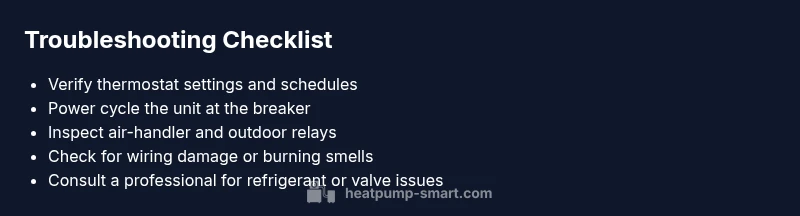
Most likely the heat pump won’t turn off due to a thermostat fault or a stuck relay that keeps signaling a call for cooling or heating. Begin by verifying the thermostat is set correctly and not stuck on a demand, power cycle the system by turning it off at the breaker for 30 seconds, and check for a stubborn relay in the indoor air handler. If the problem continues, contact a licensed HVAC technician.
Common Causes of a Heat Pump That Won't Turn Off
A heat pump that refuses to turn off is usually triggered by control or wiring issues rather than a failing compressor. The typical culprits include a malfunctioning thermostat that always reads a call for heat or cool, a stuck relay in the air handler or outdoor unit, and wiring faults that keep the control circuit energized. In some cases, a miscalibrated sensor or a faulty reversing valve can cause the system to remain active. Understanding these causes helps homeowners focus on the simplest fixes first and reduces the risk of unnecessary repairs. Heatpump Smart’s analysis shows that control-system faults account for the majority of “won’t turn off” events, followed closely by relay jams and wiring issues. By treating the thermostat as the first suspect, you can often resolve the problem without professional service.
Key takeaway: Start with the control system before moving to hardware components.
Immediate Safety Checks You Can Do Right Now
Safety always comes first. Before touching any electrical components, switch off the power to the heat pump at the main breaker and confirm the unit is de-energized. Do not bypass safety switches or remove panels while power is present. If you smell burning or notice melted insulation, stop and call a licensed technician immediately. Next, verify the thermostat is not calling for heat or cool due to a simple setting error or a schedule glitch. Check for a
Steps
Estimated time: 60-90 minutes
- 1
Power down safely
Switch off the heat pump at the main electrical panel and confirm the unit is completely de-energized before proceeding with any inspection. This minimizes the risk of electric shock or component damage.
Tip: Use a non-contact voltage tester to confirm all circuits are dead before touching wires. - 2
Check thermostat settings
Review the thermostat for any active cooling/heating calls, unusual schedules, or battery issues. Temporarily set to off, then back to auto to see if the unit responds normally.
Tip: If you use a smart thermostat, ensure that voice-assist or app automations aren’t triggering a constant call. - 3
Perform a safe power cycle
With power off, wait 30 seconds and restore power. Observe whether the heat pump initiates automatically or remains idle after restart.
Tip: If the unit restarts and still won’t turn off, proceed to wiring and relay checks. - 4
Inspect relays and wiring
Look for signs of sticking relays, burnt smell, discolored wires, or loose connections both at the air handler and the outdoor unit. Reseat any suspect connectors.
Tip: Only touch exposed terminals and avoid forcing components apart. - 5
Test the reversing valve and control boards
A malfunctioning reversing valve or damaged control board can keep the system energized. Listen for abnormal clicks and inspect valve wiring for corrosion or debris.
Tip: If the reversing valve is suspected, do not attempt a DIY repair—this can impact system safety. - 6
Call a professional if unresolved
If the issue persists after basic checks, a licensed HVAC technician should diagnose control circuits, refrigerant status, and safety devices.
Tip: Mention your recent power cycles and thermostat changes to speed up diagnosis.
Diagnosis: Heat pump won’t turn off
Possible Causes
- highThermostat fault or misconfiguration
- highStuck relay in air handler or outdoor unit
- highWiring fault energizing control circuit
- mediumFaulty reversing valve causing continuous call
- lowRefrigerant-related issue causing abnormal cycling
Fixes
- easyVerify thermostat settings, disable any temporary schedules, and test with a known-good thermometer.
- easyPower cycle the system by cutting power at the breaker for 30 seconds, then restore.
- easyInspect air-handler and outdoor-relay contacts for sticking or pitting and reseat connections.
Your Questions Answered
What is the most common cause of a heat pump that won’t turn off?
Thermostat faults or stuck relays are the most frequent culprits. Start by checking settings and performing a safe power cycle, then inspect relays if needed.
Most often it’s the thermostat or a stuck relay. Start with the basics and power cycle, then check relays if the problem continues.
Is it dangerous if my heat pump keeps running?
Running continuously can overheat components, waste energy, and shorten the system’s life. If you smell burning or see heat at the unit, shut off power and call a professional.
Running non-stop can be risky. If you notice overheating or weird smells, turn it off and contact a pro.
Can a miscalibrated thermostat cause this problem?
Yes. An inaccurate reading can keep equipment on. Calibrate or replace the thermostat if needed and re-test.
A miscalibrated thermostat can keep the system on. Check calibration or replace it and test again.
Should I unplug the heat pump if it won’t turn off?
Unplugging is a temporary safety measure, but it does not fix the underlying control issue. Use circuit breakers if you must disable power, then assess with a pro.
Unplugging can stop it temporarily, but you still need to address the control problem with a pro.
When should I replace a heat pump that won’t turn off?
If a control-system fault recurs after professional repair or the unit is old and inefficient, replacement may be more cost-effective than repeated fixes.
If faults keep coming back or efficiency is poor, consider replacement.
Watch Video
Top Takeaways
- Check thermostat first and disable any active calls
- Power cycle to reset control circuits
- Inspect relays and wiring for sticking contacts
- Call a pro if the issue persists after basic checks