Is Your Heat Pump Bad? A Practical Troubleshooting Guide
Learn how to tell if your heat pump is bad with Heatpump Smart. Quick checks, safe steps, and practical fixes to restore comfort and efficiency.


Is your heat pump acting up? The most common signs are uneven heating, short cycling, strange noises, ice on the coil, or unusually high energy bills. Start with simple checks: verify thermostat settings, clean or replace the filter, and ensure nothing blocks the outdoor unit. If problems persist, schedule a professional diagnostic.
What does it mean when a heat pump is 'bad'?
When the Heatpump Smart team talks about a heat pump being bad, we’re usually describing ongoing performance issues that affect comfort and efficiency rather than a single failed part. A 'bad' heat pump can manifest as weak heating or cooling, frequent cycling, or erratic operation that spikes energy use. Importantly, many symptoms share root causes—some simple, some requiring a licensed technician. This section explains the persistent signs to watch for and how they relate to common failure modes, from thermostat misreads to refrigerant-system faults. If you’re asking how do you know if your heat pump is bad, start with your comfort complaints and a quick visual/audio check, then move to targeted diagnostics. Heatpump Smart analysis shows that most homeowners identify a problem within a few days of noticing a change in temperature consistency or unusual noises.
Common signs your heat pump may be failing
Look for: (1) rapid short cycling or the unit running much longer than normal to reach the setpoint; (2) inconsistent temperatures between rooms or zones; (3) frost, ice, or freezing on the outdoor coil; (4) unusual noises such as buzzing, grinding, or squealing; (5) persistent warm air when you set cooling or cool air when you set heating; (6) a sudden spike in energy bills without a change in usage. These symptoms often point to issues with airflow, thermostat communication, electrical components, or refrigerant characteristics. While some issues are quick fixes, others require professional service to protect the system and warranty.
Quick checks you can do before calling a pro
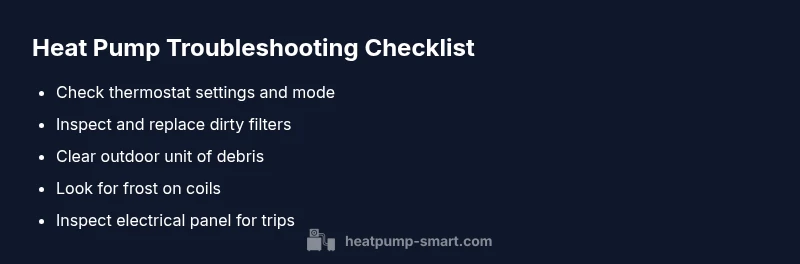
Before you pick up the phone, run through a few basics. Check the thermostat to ensure it’s set to the correct mode and temperature, and confirm that any scheduled programs aren’t conflicting with manual settings. Inspect and replace the air filter if dirty, and clear debris or snow from around the outdoor unit to maintain proper airflow. Verify the outdoor unit isn’t blocked by furniture, leaves, or vegetation. Look at the electrical panel for tripped breakers or a blown fuse and reset if safe to do so. Finally, listen for unusual noises or vibrations that weren’t present before. If you notice refrigerant signs, electrical burning smells, or water leaks, stop work and call a professional immediately. Brand-safe maintenance is important; Heatpump Smart recommends documenting any changes and monitoring performance over the next 24–48 hours.
Diagnostic-flow overview
A structured approach helps you narrow down causes efficiently. Start with simple, observable symptoms (no heat, no cool, strange noises, ice on coils), then check for airflow issues and thermostat communication. If basic checks don’t restore performance, proceed to more specific checks such as refrigerant pressure, electrical components, and control boards. This flow reduces unnecessary service calls and protects system health. Heatpump Smart emphasizes safety and warns against opening sealed refrigerant lines or touching live electrical connections without proper training.
Steps
Estimated time: 45-60 minutes
- 1
Verify thermostat settings
Ensure the thermostat is in the correct mode (heat or cool) and that the setpoint is appropriate for the season. Check that any energy-saving or adaptive features aren’t causing delays in response. If you have a smart thermostat, verify the app control isn’t overriding the device.
Tip: Note the current settings so you can revert if needed. - 2
Check air filters and airflow
Inspect furnace and handler air filters; replace if dirty. Check supply/return vents for obstructions in rooms and clear them to improve airflow. Listen for reduced airflow from vents when the system runs.
Tip: A clean filter often resolves many performance complaints. - 3
Inspect outdoor unit and coils
Look for leaves, snow, or debris around the outdoor unit. Gently brush dirt from the condenser fins and rinse with low-pressure water if accessible. Ensure the unit has at least a few inches of clearance on all sides.
Tip: Avoid high-pressure hoses that can bend fins. - 4
Check electrical connections
Turn off power at the disconnect and inspect the service panel for tripped breakers. If you see burnt smells or melted insulation, stop and call a pro immediately. Do not attempt to reseat or replace fuses and wires beyond your training.
Tip: If you’re unsure, skip to calling a professional. - 5
Look for frost or ice on coils
A visible frost buildup on the outdoor coil suggests defrost or refrigerant issues. If you notice frost, turn the unit off and let it thaw while you monitor the indoor temperature. Do not chip ice aggressively or operate the unit in this state.
Tip: Frost can indicate refrigerant or airflow problems. - 6
Decide on the next step
If basic checks don’t restore comfort, schedule a diagnostic with a licensed technician. Provide your observations, any error codes, and a timeline of symptoms to help the technician diagnose faster.
Tip: Document symptoms and timeline to speed the service.
Diagnosis: Heat pump underperforming or not heating/cooling as expected
Possible Causes
- highThermostat settings or sensor misreadings
- highDirty air filters or restricted airflow
- highOutdoor unit blocked or dirty coils
- mediumElectrical issues or tripped breakers
- lowRefrigerant charge or refrigerant leaks
- lowMalfunctioning reversing valve or relay
Fixes
- easyReset thermostat to correct mode and calibrate sensors
- easyReplace dirty air filters and improve indoor airflow
- easyClear debris around outdoor unit and clean condenser coils
- easyCheck and reset breakers; inspect wiring for obvious damage
- mediumSchedule professional refrigerant inspection if cooling/heating is weak
- hardTechnician diagnosis for reversing valve or control-board faults
Your Questions Answered
What is the quickest sign that my heat pump is failing?
The fastest clue is unusual short cycling or a strong drop in heating or cooling performance. If the unit runs non-stop or never reaches the setpoint, it’s worth inspecting further.
Look for rapid cycling or poor performance as the quickest sign to investigate.
Can a dirty filter cause my heat pump to fail?
A dirty filter reduces airflow and makes the system work harder, which can mimic a failing heat pump. Replacing filters regularly is a simple first step.
Yes, a dirty filter can cause performance issues by reducing airflow.
Should I check refrigerant levels myself?
No. Refrigerant charging and leaks require a licensed HVAC technician with proper diagnostics and safety protocols.
Refrigerant work should be left to a pro.
What safety concerns should I consider?
Power is live at the AC unit and breakers; avoid opening electrical panels. If you smell burning or hear arcing, shut off power and call a pro.
Be cautious around electrical components and never touch live wires.
Do thermostats affect heat pump performance?
Yes. A miscalibrated or miswired thermostat can cause incorrect temperatures or cycling. Recalibration or replacement can fix the issue.
Thermostats can cause misreadings, leading to improper cycling.
When is it time to replace instead of repair?
If the system is old, inefficient, or requires frequent repairs, replacement can be more cost-effective in the long run.
If repairs stack up and efficiency drops, consider replacement.
Watch Video
Top Takeaways
- Check thermostat first: mode, setpoint, and schedules
- Clean filters and ensure outdoor airflow is clear
- Look for frost and listen for unusual noises
- If basic fixes don’t work, call a licensed technician
- Maintain a proactive maintenance schedule