How to Remove Ice From Heat Pump Fan Blades: Safe Steps
A complete, DIY-friendly guide for homeowners on safely removing ice from heat pump fan blades, with step-by-step actions, safety tips, and prevention strategies to protect your system this winter.


To remove ice from heat pump fan blades, first power down the outdoor unit and isolate the circuit. Thaw ice gradually using lukewarm water or a hair dryer on low heat, taking care not to scratch blades. After thawing, inspect for damage and clean debris before restarting.
Why ice forms on heat pump fan blades
Ice accumulation on heat pump fan blades is a common winter occurrence in regions with freezing temperatures and high humidity. When moisture-laden air comes into contact with the outdoor unit, frost can develop on the blades and surrounding components. Turbulence from wind can push moisture onto the rotor, while short defrost cycles in some units may allow frost to build up during extended cold snaps. The immediate risks include reduced airflow, decreased efficiency, and increased wear on the fan motor as the system struggles to move air through a frosty coil. Left unchecked, ice can also crack or bend blades or shift mounting hardware, potentially triggering costly repairs. Understanding these dynamics helps homeowners plan safe thawing and proactive prevention.
Key takeaway: ice on blades is usually a symptom of cold, damp conditions and improper airflow; addressing it promptly preserves performance and avoids damage.
Safety first: power shutoff and safeguarding
Safety comes first when dealing with freezing moisture around electrical equipment. Before touching any part of the outdoor unit, switch off power at the thermostat and disconnect the outdoor breaker or switch if accessible. Use a non-contact voltage tester to confirm there is no live current before you approach the unit. Wear insulated gloves and closed-toe shoes to guard against slippage on ice. Keep bystanders away and avoid stepping onto ice or snow near the unit, which can result in a fall. If you are uncertain about the electrical disconnect, call a licensed electrician or HVAC technician.
Pro tip: lock out/tag out the circuit if multiple people service the unit to prevent accidental re-energizing during thawing.
Assess the ice condition and plan thawing
Visually assess whether ice is coating the blades, the fan housing, or the condenser coils. If the ice is loose and patchy, a careful thaw may be sufficient; if it’s thick and adherent to the blades, you’ll need a gentler thawing approach. Do not try to twist or pry the ice off with force, which can bend blades or damage the drive shaft. Note any visible cracks in the blades or loosened mounting bolts; if you see damage, stop and call a professional. Adequate lighting helps you inspect the blade tips and the wheel hub area for any unusual wobble or noise when the unit is attempted to be operated.
Plan ahead: choose a thaw method that minimizes thermal shock and avoids metal tools that could scratch or crack blade surfaces.
Thawing methods: water, heat, and time
Gentle thawing preserves blade integrity. A common method is applying lukewarm water along the ice edge using a spray bottle or sponge, allowing the ice to melt gradually. A handheld hair dryer on a low heat setting can also soften ice, but keep the dryer moving and avoid focusing heat on a single spot for extended periods. Avoid hot water, boiling water, or metal implements that can scratch or bend the blades. Do not use heating devices that draw power directly from the outdoor unit inside the enclosure, as this can overload circuitry. If ice persists after 30–60 minutes of thawing, pause and re-evaluate the ice thickness and blade condition before continuing.
Why this works: gentle thermal energy and mild moisture help loosen adhesion without stressing the rotor or blade mount.
How to physically remove ice without damage
When the ice has softened, use a non-metallic tool (e.g., plastic scraper or wooden spatula) to gently lift ice from the blade edges, working from the center outward. Avoid forcing ice under the blade tips or against the motor housing. If you encounter stubborn ice, pause thawing and reapply warmth for a few minutes before attempting removal again. Do not strike the blades, as a sudden impact can crack or warp the rotor. After removal, wipe away any residual moisture with a dry cloth to prevent rapid re-freezing.
Pro tip: keep a slow, steady pace and never use metal screwdrivers or knives near the fan assembly.
Post-thaw blade inspection and cleaning
With ice removed, inspect each blade for cracks, chips, or bending. Run a quick visual check of the hub and bearing area for smooth rotation and listen for unusual noises during a brief manual spin (if safe to do so). Remove any remaining debris from the blade surface and inner housing to restore airflow. If blades show signs of damage, stop operation and contact a professional; continuing to run a damaged blade can lead to more severe failures.
Note: corrosion or heat damage from repeated thaw cycles can shorten blade life; consider a professional inspection if ice recurs frequently."
Restart and monitor system safely
Reconnect power and restart the heat pump, starting with a short test cycle at a low fan speed to observe for abnormal vibrations or noises. Watch for proper blade clearance and ensure no new ice forms on the coils during the initial cycle. If you notice odd sounds or persistent icing, switch the unit off and schedule an HVAC check. Use a thermometer or external thermostat to monitor outdoor temperature and dew points, which influence future icing potential.
Pro tip: after thawing, run the unit for 10 minutes in a normal mode to confirm stable operation and adequate airflow.
Prevention strategies to minimize ice build-up
Preventing ice is easier than thawing. Maintain clear space around the outdoor unit—at least 2 feet (0.6 meters) of clearance on all sides—and keep the fins clean from dust and debris that disrupt airflow. Consider installing a windbreak or shielding that does not impede airflow to shield the unit from wind-driven moisture. Ensure proper drainage so rainwater doesn’t pool near the cabinet, and schedule regular professional maintenance to verify the defrost cycle is functioning correctly. In regions with persistent icing, ask a technician about air-side economizers or weather-appropriate defrost strategies.
Actionable tips: keep the top of the unit free of snow, inspect the fan and coil visually during severe cold snaps, and replace air filters to reduce resistance and improve airflow.
AUTHORITY SOURCES
For further reading and authoritative guidance, consult industry resources from government and educational sources:
- https://www.energy.gov/energysaver/heat-pumps
- https://www.energy.gov/eere/buildings/articles/heat-pump-systems
- https://www.nrel.gov/
Tools & Materials
- Outdoor power disconnect or access to main breaker(Ensure you can cut electrical supply to the outdoor unit before starting.)
- Insulated gloves(Protect hands from cold surfaces and ice shards.)
- Soft brush or cloth(Gently remove loose debris and wipe surfaces.)
- Plastic scraper or wooden spatula(Non-metal tool to lift ice without blade damage.)
- Lukewarm water or damp cloth(Use only lukewarm water; avoid hot water to prevent thermal shock.)
- Non-conductive plastic bottle or spray(Apply controlled moisture to ice edges.)
- Dry towel(Dry surfaces after thawing to prevent rapid re-freeze.)
Steps
Estimated time: 30-60 minutes
- 1
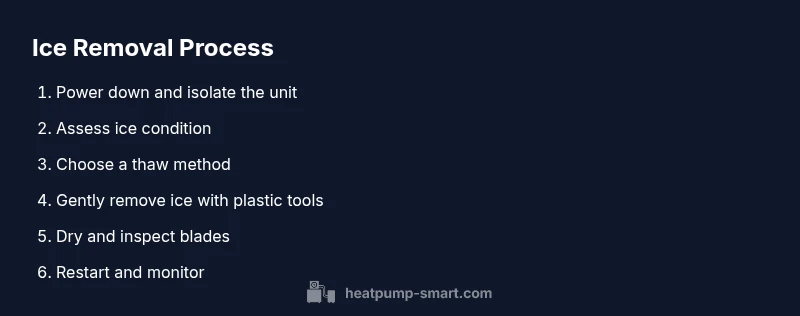
Power down and isolate
Turn off the heat pump at the thermostat and switch off the outdoor breaker or disconnect. Verify there is no voltage at the unit with a tester if available, to prevent shock during thawing.
Tip: Use lockout/tagout if others may re-energize the circuit while you work. - 2
Assess ice condition
Visually check where the ice sits—blades, housing, or coils. If ice covers blades or is thick and attached, plan a controlled thaw and avoid prying force that could bend blades.
Tip: Note blade visibility and any signs of cracking before you begin thawing. - 3
Choose thaw method
Prefer lukewarm water or a damp cloth to soften ice, or a low-heat hair dryer held several inches away while keeping the unit steady and never directing heat at one spot for too long.
Tip: Do not use hot water or metal tools that can damage blades. - 4
Begin ice removal
Gently lift softened ice with a plastic scraper starting at the blade tips and moving toward the center. Avoid pulling on the fan or hub. If ice resists, pause and rewarm for a few minutes.
Tip: Work slowly to avoid bending blades or dislodging mounting hardware. - 5
Clean and dry afterward
Wipe residual moisture from the blade surface and surrounding housing. Ensure the area around the unit is dry before reassembly.
Tip: Damp surfaces can refreeze quickly; dry thoroughly. - 6
Inspect for damage
Look for cracks, chips, or signs of bearing wear after thawing. Any damage means stop operation and schedule a professional inspection.
Tip: If you see cracks, do not restart the unit—call a technician. - 7
Restart and test
Reconnect power and run a short test cycle. Listen for unusual noises and verify blades spin freely without wobble.
Tip: Monitor airflow and note any new frosting signs. - 8
Document and prevent
Record the incident (date, conditions, and observations) and plan preventive steps like airflow clearance and regular maintenance.
Tip: Seasonal checks reduce recurrence. - 9
When in doubt, call a pro
If ice keeps returning or you're unsure about blade integrity or electrical safety, contact an HVAC professional for a thorough inspection.
Tip: Professional service may prevent expensive downstream damage.
Your Questions Answered
Is it safe to remove ice from heat pump blades myself?
Yes, with proper precautions. Always power down the unit, thaw gently, and inspect for damage. If ice is severe or you notice cracks, contact a professional.
Yes, you can safely remove ice yourself as long as you power down and thaw gently; seek professional help if you see damage.
What is the fastest way to melt ice on outdoor coils or blades?
Gentle thawing with lukewarm water or a damp cloth is effective and minimizes risk to the blades. Avoid hot water and aggressive tools which can harm components.
Gently thaw with lukewarm water or a damp cloth for best results without damaging parts.
Can using hot water damage the heat pump?
Yes, hot water can cause thermal shock to metal parts and coatings, potentially warping blades or damaging seals. Always use lukewarm water or mild heat.
Hot water can cause damage—stick to lukewarm water or mild heat for thawing.
Should I run the heat pump while ice is present?
Avoid operating the unit until the ice is thawed and blades are clear. Running with ice can worsen damage and reduce efficiency.
No, wait until the ice is thawed and blades are clear before restarting.
When should I call a professional?
Call a professional if ice recurs frequently, blades show cracks, or you are unsure about safe power isolation. Frequent icing can indicate airflow or defrost issues.
Call a technician if icing keeps returning or you see blade damage.
Watch Video
Top Takeaways
- Power down before touching the unit
- Thaw ice gradually to avoid blade damage
- Inspect blades for cracks after thaw
- Restart carefully and monitor performance
- Prevent icing with proper airflow and seasonal maintenance