No Heat Pump Troubleshooting: Fast Fixes and Safety Tips
Urgent, step-by-step troubleshooting guide for no heat pump scenarios. Learn common causes, safe fixes, and when to call a pro to restore comfort and energy efficiency.


Most likely causes are power supply issues, thermostat misconfigurations, blower failure, frozen outdoor coils, or refrigerant problems. Start by checking the thermostat settings, ensure the unit is powered, and inspect the outdoor unit for ice. If you see ice, turn off to thaw; if power is off or tripped, reset breaker. If these steps don't restore heat, call a pro.
What 'no heat pump' means for your home
When a heat pump stops delivering warmth, the impact is immediate. A no heat pump situation leaves rooms cold, fans running, and bills climbing. Understanding what 'no heat pump' really means helps you act quickly and safely. According to Heatpump Smart, many no heat pump issues stem from simple power or control problems rather than refrigerant faults. This section explains how heat pumps respond to thermostat calls and why early diagnosis matters for comfort and efficiency. You'll learn to distinguish between a true system failure and a temporary hiccup caused by the thermostat, wiring, or outdoor conditions. By diagnosing the cause, you can avoid unnecessary service calls and keep your system running efficiently through seasonal changes. Remember: quick, safe checks take only a few minutes but can save you from a cold night and an expensive repair bill.
Common Causes of No Heat Output
Several issues commonly lead to no heat from a heat pump. Power supply problems are frequent: a tripped breaker or a blown fuse stops the system from running entirely. Thermostat misconfigurations or loose wiring can command the wrong mode or fail to read indoor temperature properly. The outdoor unit being iced over or blocked by debris can prevent heat transfer. Indoor issues like a dirty air filter, a clogged evaporator, or a failing blower motor can reduce airflow to the point where heat is not felt, even if the compressor runs. Less common, but serious, causes include refrigerant leaks or a failing compressor. Each cause has a different fix, so testing method and safety considerations vary. The goal is to identify the simplest fix first and escalate only if necessary.
Quick Checks You Can Do Right Now
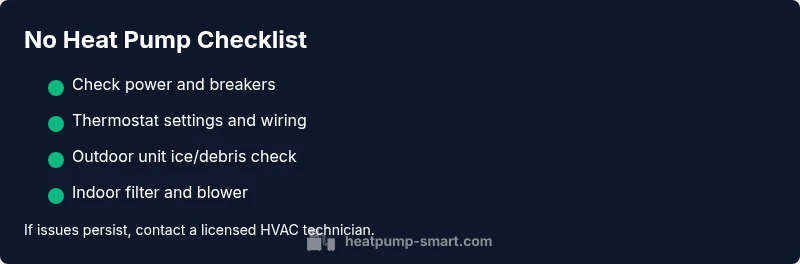
Before you pick up a tool or call a technician, run these checks. Make sure the thermostat is set to heat and the setpoint is higher than the room temperature. Inspect the outdoor unit for ice buildup, leaves, or snow; clear any debris and ensure clearance around the coil. Confirm the indoor air filter is clean or replace it if it's dark or coated with dust. Check the power to the unit—look for a switched outlet or a tripped circuit breaker and reset if needed. Listen for the fan motor running; no sound usually means a safety switch or power issue rather than a failed compressor. If you see ice, thaw it safely and leave the system off until the ice melts and the unit is clear.
Diagnostic Flow Overview
A structured diagnostic flow helps you move from symptom to solution without guessing. Start with the simplest checks (power, thermostat, and airflow) and progress to more involved tests (outdoor coil, refrigerant status, and internal electronics). For each symptom, map possible causes and test feasibility quickly. If the fix is simple (like resetting a breaker or changing a filter) do it first. If you cannot confirm safety or identify the issue, it’s best to stop and call a licensed technician to avoid equipment damage or personal injury.
Safety, Warnings, and When to Call a Pro
Safety is non-negotiable when dealing with heat pumps. Never access electrical cabinets or refrigerant lines unless you’re trained; there is a risk of shock and injury. If you notice exposed wiring, burning smells, or a loud bang when the system starts, shut off power at the main panel and call a pro immediately. Refrigerant handling requires licensing and specialized tools; do not attempt to seal leaks or top up refrigerant yourself. When in doubt, book a professional inspection; many issues become hazards if ignored, including energy waste and system damage. Regular professional maintenance can prevent many no-heat scenarios.
Prevention and Maintenance to Avoid Future No Heat Scenarios
Proactive maintenance reduces the chance of a no heat pump situation. Schedule seasonal inspections, replace air filters every 1-3 months depending on usage, and keep the outdoor unit clear of leaves, snow, and debris. Install a smart thermostat to monitor performance and catch faults early. Ensure ducts are sealed to prevent heat loss and improve efficiency. Keep an eye on unusual noises, airflow changes, or frost on the outdoor coil and address them early. By pairing routine checks with annual professional service, you’ll improve reliability and energy savings year-round.
Quick Reference: When to Seek Emergency Help
If the system shuts down suddenly, you smell refrigerant, hear hissing, or see frost on insulation, stop and call a pro. A frozen outdoor coil combined with low refrigerant or electrical faults can lead to compressor damage. In extreme weather, do not risk attempting risky fixes; contact your local HVAC technician for a safe diagnosis.
Steps
Estimated time: 60-90 minutes
- 1
Check power supply and breakers
Locate the heat pump's disconnect and main service panel. Confirm the outdoor and indoor units have power by ensuring the breaker is in the ON position; if a breaker trips, switch it OFF, then ON again. If it trips repeatedly, stop and seek professional help to avoid electrical hazards.
Tip: Use a non-contact voltage tester to verify live circuits before touching wires. - 2
Verify thermostat settings and wiring
Set the thermostat to heat mode and ensure the target temperature is above the room temperature. Inspect the thermostat wires for loose connections or corrosion; take photos of the current wiring before disconnecting anything to aid reassembly.
Tip: Label wires and keep a reference photo to simplify the reassembly. - 3
Inspect outdoor unit for ice and debris
Look for ice build-up on the coils or obstructions around the unit. If ice is present, power down the unit and thaw safely; clear leaves or snow from around the coils to restore airflow. Do not strike the coils; improper handling can cause damage.
Tip: Allow time for ice to melt; restart only after the unit is clear. - 4
Check indoor air filter and blower
Remove and inspect the air filter; replace if dirty or saturated. Check the blower housing for obstructions and listen for normal fan operation. Poor airflow can mimic a heat call failure even when the outdoor unit runs.
Tip: Use the correct filter size and rating for optimal airflow. - 5
Power cycle the system and test run
Power down the system at the thermostat and the main panel; wait 60 seconds, then restore power. Set to heat and observe operation for 5–10 minutes. Note any error codes or unusual noises observed during startup.
Tip: Keep a log of observed codes and symptoms for the technician. - 6
Call a licensed professional if unresolved
If heat remains unavailable after these steps, contact a licensed HVAC technician to diagnose refrigerant status, sensor faults, or compressor health. Provide your diagnostic notes, test results, and a clear description of symptoms to speed up the visit.
Tip: Document all steps taken and any codes or readings to share with the tech.
Diagnosis: No heat output from heat pump after thermostat calls for heat
Possible Causes
- highPower issue or tripped breaker
- highThermostat wiring or settings incorrect
- mediumOutdoor unit iced over or blocked
- mediumIndoor airflow restriction (dirty filter/blower fault)
- lowRefrigerant leak or compressor fault
Fixes
- easyCheck and reset circuit breakers; verify power to the outdoor/indoor units
- easyVerify thermostat is set to heat and check wiring; replace batteries if needed
- easyClear ice/debris from outdoor unit; ensure at least 2-3 feet of clearance
- easyReplace indoor air filter; ensure proper airflow
- hardIf issues persist, schedule professional service for refrigerant/compressor diagnosis
Your Questions Answered
What is the most common cause of a no heat pump?
Power or thermostat issues are often the root cause. Start with breakers and thermostat settings, then verify airflow and outdoor coil condition before calling a pro.
Power or thermostat issues are usually the culprit; begin with those checks, then move to airflow and outdoor coil as needed.
Should I run my heat pump if it's not producing heat?
Avoid running the system if you suspect ice, an electrical fault, or a refrigerant issue. Power cycle may help after basic checks, but stop if symptoms persist.
Don’t run it if you suspect ice or a fault. Try the safe checks first, then call a pro if it doesn’t work.
Can outdoor ice cause no heat?
Yes. Ice on the outdoor coil blocks heat transfer. Thaw safely and ensure proper clearance before attempting to restart the system.
Ice on the outdoor coil blocks heat; thaw it and clear the area before retrying.
Is a dirty air filter a reason for no heat?
A dirty filter can restrict airflow and make heat feel ineffective. Replace the filter and re-check system performance.
A clogged filter can stop heat from being felt; replace it and test again.
When should I call a professional?
If basic checks don’t restore heat or you suspect refrigerant or electrical faults, contact a licensed HVAC technician for a thorough diagnosis.
If simple checks don’t solve it, call a licensed HVAC tech for a full diagnosis.
Can I repair a refrigerant leak myself?
No. Handling refrigerant requires certification and equipment. Leave refrigerant repairs to licensed professionals to avoid hazards and code violations.
No, refrigerant work should be done by a licensed professional.
Watch Video
Top Takeaways
- Start with power and thermostat checks to rule out simple causes.
- Clean outdoor unit and ensure airflow for effective heat transfer.
- If basic checks fail, don’t delay professional help for refrigerant or compressor issues.
- Regular maintenance reduces no-heat incidents and improves efficiency.