Outdoor Heat Pump Not Running? Troubleshooting Guide for Homeowners
Learn to diagnose and fix an outdoor heat pump not running with a safety-first, step-by-step approach from Heatpump Smart. Identify common causes, perform safe checks, and know when to call a pro.


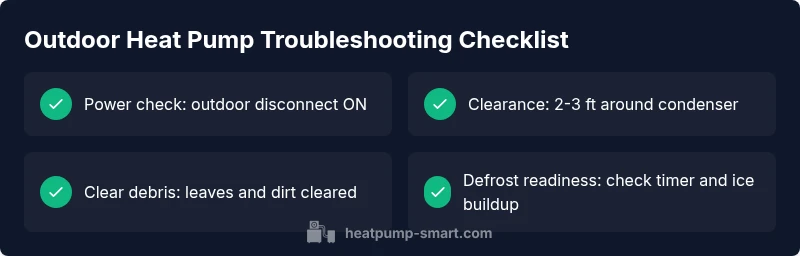
A common cause for an outdoor heat pump not running is power or control faults. Start by ensuring the outdoor disconnect is ON and the main breaker is not tripped. Re-seat thermostat sensors, check for loose wiring, and inspect the outdoor unit for debris or ice blocking airflow. If it still won’t start, continue with the steps below.
Safety first: protect yourself and the equipment
Before you touch the outdoor unit, power down at the main breaker and the outdoor disconnect. Wear gloves and avoid standing on wet surfaces. According to Heatpump Smart, outdoor heat pumps operate with high-voltage components and sensitive electronics; never bypass safety switches. The Heatpump Smart team found that most outdoor failures start with simple, safety-conscious steps: isolate power, verify your thermostat isn’t actively calling for operation, and check for obvious hazards around the unit. If you smell burning, see damaged wiring, or notice a tripped breaker, stop and call a licensed HVAC tech. With safety covered, you can proceed to the basic checks below.
Check the basics: power, breakers, and thermostat connections
Start with the simplest causes. Confirm the outdoor unit is receiving power from the disconnect and that the indoor thermostat is set correctly. Look for a tripped circuit breaker or a blown fuse in both the main panel and any dedicated outdoor circuits. If the breaker has tripped, reset it, but never force a reset if you detect a short or burning smell. Ensure thermostat batteries are fresh and that the thermostat communicates with the system; a misread temperature setting or a faulty sensor can prevent the outdoor unit from starting.
Clear airflow and outdoor unit condition
A blocked or dirty outdoor coil can prevent the system from starting. Check that there is at least 2-3 feet of clearance around the condenser and that nothing tall or heavy blocks intake and exhaust. Remove leaves, dirt, and snow (in winter) manually, and gently brush dust from the fins with a soft brush. Debris or ice can trigger safety shutoffs; if you see ice, turn off the unit and let it thaw, then contact a pro if it persists. Heatpump Smart notes that regular cleaning reduces failures and improves efficiency.
Electrical signals and control components
If power seems fine but the unit still won’t start, the issue may lie in the control circuit or contactors. Inspect visible wiring for loose connections or corrosion at the outdoor contactor, transformer, and capacitors—never touch energized parts. A buzzing or chattering contactor is a red flag. Low-voltage wiring can fail or come loose; ensure all control wires are securely connected to the outdoor unit and the indoor air handler. If you hear a hum but no fan, or if the outdoor unit attempts to start and immediately stops, this calls for professional diagnosis.
Weather, defrost, and frost-related concerns
Outdoor heat pumps rely on ambient conditions. Extremely cold temperatures or heavy humidity can disrupt start-up or trigger defrost cycles that delay operation. Check for visible frost on the outdoor coil; if frost accumulates, allow a safe thaw and verify the defrost timer is functioning. If the unit cycles on/off rapidly or remains in standby after thaw, you likely need a refrigerant check or sensor recalibration by a technician. Heatpump Smart emphasizes not to bypass defrost controls; improper defrost can damage the system.
When to call a professional and prevention tips
If basic checks don’t restore operation, it’s time to call a licensed HVAC technician. Common professional issues include refrigerant leaks, failed compressors, or faulty control boards that require specialized tools. To prevent future outages, schedule seasonal maintenance, replace air filters, keep the outdoor area clean, and monitor for ice, unusual noises, or weak cooling performance. Heatpump Smart recommends documenting dates of service and any alerts from your thermostat to help technicians diagnose faster.
Steps
Estimated time: 60-90 minutes
- 1
Power and safety check
Power down the outdoor unit at the main breaker and the disconnect. Verify there is no visible damage, and confirm you are wearing appropriate PPE before touching wires or components.
Tip: If you see burnt components or melted insulation, do not proceed—call a pro immediately. - 2
Test thermostat and control signals
Ensure the thermostat is set to the correct mode and temperature. Re-seat sensors and, if possible, replace batteries. Confirm the thermostat is communicating with the outdoor unit.
Tip: Use the thermostat’s manual or app to re-sync with the system if available. - 3
Inspect outdoor unit for debris
Check for leaves, dirt, or snow around the condenser. Remove debris and verify a clear 2-3 ft radius. Gently brush the fins to remove grime without bending them.
Tip: Never power the unit on while the fins or wiring are wet. - 4
Check electrical connections
Look for loose or corroded wires at the outdoor contactor, transformer, and capacitors. Tighten loose connections and ensure control wires are firmly connected to both units.
Tip: If you hear buzzing or see arcing, stop and call a licensed technician. - 5
Assess frost and defrost
Check for ice on the outdoor coil. If present, allow thawing with the unit off and verify defrost timer operation. Persistent icing indicates a refrigerant or sensor issue.
Tip: Do not chip ice aggressively; improper handling can damage coils. - 6
Call a professional if unresolved
If the unit still won’t run after these steps, a licensed HVAC tech should diagnose refrigerant, compressor, or control board issues with specialized tools.
Tip: Document recent events and any thermostat alerts to speed up the service call.
Diagnosis: Outdoor heat pump not running
Possible Causes
- highPower issue (tripped breaker, blown fuse, or loose disconnect)
- highThermostat miscommunication or incorrect settings
- mediumOutdoor unit blocked or restricted airflow
- lowIce, frost, or defrost cycle interfering with start
Fixes
- easyReset the circuit breaker; check the outdoor disconnect; restore power to the unit
- easyVerify thermostat settings and sensors, replace batteries if needed, and re-sync with the system
- easyClear debris around the condenser, provide 2-3 ft clearance, and gently clean fins with a soft brush
- mediumIf ice is present, allow thawing and check defrost function; if problem persists, call a pro for refrigerant or control issues
Your Questions Answered
What should I check first when my outdoor heat pump won't run?
Start with power, breaker status, and thermostat. Ensure the outdoor disconnect is ON and that the thermostat is calling for operation.
First check power, breaker status, and thermostat, and make sure the outdoor disconnect is ON.
Can a tripped breaker cause the unit not to run?
Yes. Reset the breaker and inspect for overload. If it trips again, stop and call a professional.
Yes—reset the breaker and check for overload. If it trips again, contact a pro.
Is low refrigerant a common reason for failure?
Low refrigerant usually requires a professional diagnosis. Signs include poor cooling performance and unusual noises from the outdoor unit.
Low refrigerant needs a pro; signs include poor cooling and odd noises.
What safety precautions should I take before inspecting?
Power down all sources, wear gloves, and avoid touching energized parts. Do not bypass safety devices.
Power down and wear gloves. Don’t bypass safety devices.
When should I call a professional?
If basic checks fail to restore operation or you hear unusual noises, contact a licensed HVAC technician.
If basic checks fail or you hear unusual noises, call a professional.
Why might it run intermittently after a power outage?
Controls may reset and sensors can misread. Try resetting the thermostat; if issues persist, professional evaluation is advised.
After a power outage, reset the thermostat and see if it stabilizes; if not, call a pro.
Watch Video
Top Takeaways
- Power and thermostat checks first
- Clear outdoor unit debris for proper airflow
- Avoid refrigerant work unless licensed
- Maintain a regular maintenance schedule