Problems Heat Pumps: Troubleshooting Guide for Homeowners
Urgent troubleshooting guide for problems heat pumps. Learn quick fixes, a clear diagnostic flow, and step-by-step fixes to restore comfort safely and improve efficiency.


Most heat pump problems come from airflow, thermostat miscommunication, or outdoor unit icing. Start by replacing or cleaning filters, clearing the outdoor space, and confirming thermostat settings and power at the circuit. If these quick fixes don’t resolve the issue, follow the diagnostic flow for deeper checks and safe fixes.
Understanding Why Heat Pumps Fail
Heat pumps fail for a handful of everyday reasons that homeowners can address without specialized tools. The most common culprits are airflow restrictions, thermostat miscommunication, and icing on the outdoor coil. When air can’t circulate freely, the system can’t extract or distribute heat efficiently, causing short cycling and higher energy use. A misconfigured thermostat, wrong mode, or a loose connection can make the unit run continuously without delivering comfort. Finally, when the outdoor coil freezes, the defrost cycle may fail or the compressor workload increases unnecessarily. Throughout this guide, we’ll connect these symptoms to practical checks and safe fixes. According to Heatpump Smart, starting with simple, observable causes improves your odds of solving the problem quickly and avoiding unnecessary service calls. By learning to identify the most common failure modes, homeowners, builders, and property managers can keep heat pumps reliable and energy-efficient.
Common Symptoms to Watch For
Identifying symptoms early helps prevent bigger damage and cost. If you notice warm air that doesn’t feel warm, a sudden rise in electric bills, or uneven room temperatures, these can signal airflow problems or refrigerant-related issues. Ice or frost on the outdoor coil, frequent cycling, and loud noises from the outdoor unit are red flags that deserve attention. Foggy or misted windows near vents can indicate duct leaks or pressure imbalances. Pay attention to any error codes on the thermostat or heat pump display. Heat pump problems often present as a mismatch between indoor comfort and outdoor conditions, so documenting when and where symptoms occur is essential for effective troubleshooting. Heatpump Smart observations emphasize correlating symptoms with recent changes, such as airflow modifications or weather shifts.
Quick Fixes You Can Try Today
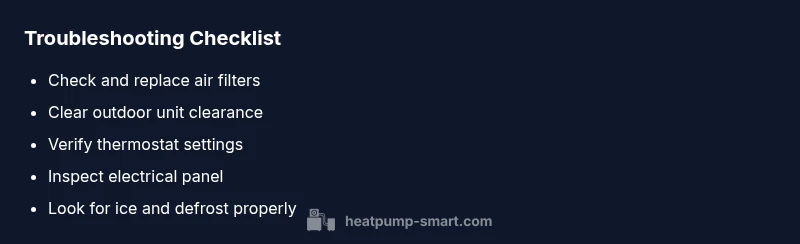
Several remedies are safe and easy to perform before calling a technician. First, replace or clean air filters; clogged filters reduce airflow and efficiency. Second, clear debris and vegetation around the outdoor unit to maintain adequate clearance. Third, verify thermostat settings: ensure mode is heat, target temperature is appropriate, and the system is not in a temporary test mode. Fourth, check the electrical panel for tripped breakers or blown fuses and reset if safe to do so. If you see frost, ice, or a defrost indicator, turn the system off for 15–30 minutes to allow melting and test again. Finally, keep a log of symptoms, times, and actions to share with a pro if needed. Safety note: never open refrigerant lines or perform electrical work beyond basic checks.
Safety First: When to Call a Pro
Heat pump repair can involve high voltage, refrigerant handling, and complex controls. If you encounter refrigerant smells, visible leaks, burning electrical arcing, or a unit that repeatedly trips the circuit, stop using it and contact a licensed technician immediately. Do not attempt to recharge refrigerant yourself or bypass safety systems. Persistent ice buildup after defrost cycles, unusual noises such as grinding or banging, and repeated short cycling also warrant professional attention. A pro can verify refrigerant charge, check electrical connections, diagnose control boards, and confirm that safety devices function correctly. Remember: timely professional intervention protects your home and reduces the risk of damage.
Diagnostic Flow: Symptom to Diagnosis
Use a simple, repeatable flow to identify root causes. Start with the symptom: reduced heating, icing, or unusual noise. Then consider high-l fidelity causes such as airflow restrictions or thermostat miscommunication, and rate their likelihood as high, medium, or low. Map each cause to a fix and test outcomes. If no fix solves the symptom, escalate to more advanced checks like refrigerant integrity, control board status, and electrical supply. This structured approach keeps troubleshooting orderly and safe, and helps you decide when to call Heatpump Smart's professional team for a more thorough assessment. Heatpump Smart analysis suggests documenting the sequence and outcomes for future reference.
Prevention Tips to Avoid Future Breakdowns
Regular maintenance is the best defense against surprising heat pump failures. Create a simple maintenance schedule that includes monthly filter checks, seasonal coil cleaning, and annual professional inspections. Keep the outdoor unit free from plants, leaves, and snow to maintain airflow and protect wiring. Using a smart thermostat to monitor performance can reveal early signs of inefficiency before a breakdown. Keep a log of issues and fixes to help future troubleshooting and ensure you don’t miss recurring patterns. By following these preventive steps, you’ll extend the life of your system and sustain energy savings.
What to Do If Problems Persist
If symptoms persist after performing the recommended checks, don’t delay escalation. Contact Heatpump Smart for a professional assessment to avoid further damage and safety risks. A certified technician can properly test refrigerant charge, diagnose electrical faults, and verify control board health with specialized tools. In many cases, ongoing problems indicate a hidden refrigerant leak or a failing compressor that requires factory-approved service. Document your attempts, symptoms, and dates for a smoother handoff to technicians.
Steps
Estimated time: 30-60 minutes
- 1
Inspect and clean the air filter
Power down the system if safe, remove the filter, and clean or replace it. A clean filter restores airflow and reduces stress on the blower, improving heating efficiency. Check for any obstructions around return vents.
Tip: Do this every 1–3 months, more often in dusty or pet-heavy homes. - 2
Clear outdoor unit and clean coils
Remove leaves, snow, or debris from the outdoor condenser area. Gently wash the coils with a hose to remove dirt that impedes heat transfer. Ensure at least 3 feet of clearance around the unit.
Tip: Never use high-pressure washers on coils; a gentle rinse is enough. - 3
Verify thermostat settings
Confirm the thermostat is in heat mode, the setpoint is appropriate, and there isn’t an override or temporary mode. If you have multiple thermostats, ensure consistency across zones.
Tip: If in doubt, set a conservative baseline temp and observe system response. - 4
Check electrical supply
Inspect the main panel for tripped breakers or blown fuses. If a breaker trips, reset it and monitor for repeats. Look for any loose or burnt wiring near the unit.
Tip: If breakers trip again, stop and call a professional to avoid fire risk. - 5
Assess ice and defrost functionality
If ice appears on the outdoor coil, turn the system off and allow defrost to work. If ice recurs after defrost, this can signal refrigerant or sensor issues requiring professional attention.
Tip: Avoid hammering ice; forced melting can damage coils. - 6
Test operation and document results
Run a full heating cycle and listen for unusual noises. Record temperatures, run times, and energy use. Use this log for follow-up conversations with a technician.
Tip: A concise log speeds up diagnostics and fixes.
Diagnosis: Heat pump runs but room not warming properly
Possible Causes
- highAirflow restriction due to dirty filter or blocked vents
- highThermostat miscalibration or incorrect mode
- highOutdoor unit blocked by debris or snow
- lowLow refrigerant due to a leak
- mediumElectrical issues or faulty components
Fixes
- easyReplace or clean the air filter and ensure vents are open
- easyClear debris around the outdoor unit and confirm adequate clearance
- easyVerify thermostat is set to the correct mode and temperature
- easyCheck electrical panel for tripped breakers and reset if safe
- mediumIf icing persists, ensure defrost function works or call a pro for refrigerant/electrical checks
- hardSuspected refrigerant leak or control board fault—call a licensed technician
Your Questions Answered
Why is my heat pump icing up in cold weather?
Ice can form when airflow is restricted or the outdoor coil is dirty, causing improper heat transfer. Ensure the filter and coils are clean, verify defrost function, and check for airflow obstructions. If icing persists, contact a pro.
Ice buildup usually means airflow or defrost issues. Clean filters and coils first, then verify the defrost cycle. If it continues, call a professional.
Why is my heat pump making loud noises?
Loud sounds can come from loose ductwork, a faulty fan motor, or a compressor issue. Inspect for loose parts, ensure proper mounting, and avoid running the unit if noises are abnormal. If unsure, call a technician.
Loud noises often mean loose parts or a failing component. Stop using it and have a technician inspect the unit.
Can a dirty filter cause heating problems?
Yes. A dirty filter restricts airflow, lowers efficiency, and can contribute to ice formation and inadequate heating. Replace or clean filters regularly and monitor performance.
Dirty filters reduce airflow and efficiency; replace them to improve heating.
When should I contact a professional?
If you suspect refrigerant leaks, persistent ice, electrical faults, or unusual cycling that doesn’t stop after basic fixes, contact a licensed technician.
If you suspect leaks or electrical issues, don’t DIY—call a pro.
What maintenance can prevent problems heat pumps?
Regular maintenance, clean filters, annual inspections, and keeping the outdoor unit clear can prevent many common issues and extend system life.
Routine maintenance prevents many heat pump problems and saves energy.
Is a heat pump worth repairing or replacing?
If repairs are frequent or costly, consider replacement with a high-efficiency unit. A technician can help calculate payback and efficiency gains.
If repairs add up, replacement with a newer model might be more economical.
Watch Video
Top Takeaways
- Check airflow and thermostat first
- Ice issues require defrost and careful testing
- Only professionals should handle refrigerant/electrical work
- Document symptoms and fixes for future reference