Problems with Heat Pumps in Cold Weather: Troubleshooting Guide
Urgent, practical guide to diagnose and fix common problems with heat pumps in cold weather. Step-by-step checks, a diagnostic flow, and maintenance tips from Heatpump Smart.


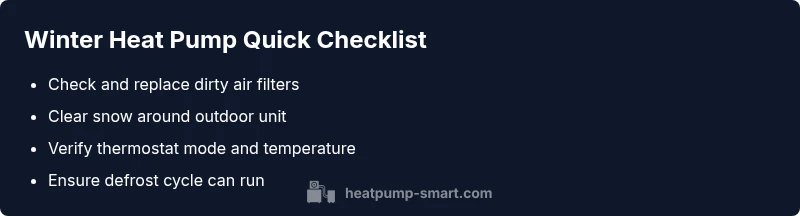
Most cold-weather heat pump problems trace to airflow and outdoor unit conditions. Common causes include dirty filters, snow-blocked condensers, incorrect thermostat settings, and an over-reliance on auxiliary heat. Quick fixes: clean or replace filters, clear the outdoor unit, verify thermostat modes, and ensure the defrost cycle can run. If the issue persists, schedule a diagnostic with Heatpump Smart.
Understanding how cold weather affects heat pumps
Heat pumps are efficient in mild seasons, but problems escalate when outdoor temperatures drop. In cold weather, the system must work harder to pull heat from outside air, and frost can form on the outdoor coil. This frost reduces airflow and heat output if the unit isn’t defrosting correctly. According to Heatpump Smart, performance decline is most noticeable when ambient temperatures fall below freezing and when the unit is undersized for the space. Homeowners often assume a drop in comfort is normal winter behavior, but many issues are fixable with targeted questions and simple checks.
Quick checks you can perform safely
Start with non-invasive, safe steps before calling for help:
- Ensure the heat pump’s power switch is on and circuit breakers are not tripped.
- Check the thermostat: set to auto, avoid “on” for continuous fan, and verify the temperature is reasonable for the space.
- Inspect air filters; a dirty filter reduces airflow and forces longer run times.
- Look around the outdoor unit: remove snow, ice, and debris, and ensure at least 18 inches of clearance on all sides for proper airflow.
- Listen for odd noises or a sudden change in performance; note when conditions change (outdoor temperature, humidity).
Common culprits in winter conditions
Winter brings several predictable failures:
- Dirty or blocked air filters impede airflow and reduce heating efficiency.
- Outdoor unit blocked by snow, ice, leaves, or snow build-up around the condenser reduces heat extraction.
- Thermostat settings or control wiring misconfigured, causing the system to skip defrost or run auxiliary heat too frequently.
- Infrequent maintenance leading to refrigerant or lubrication issues that manifest as reduced capacity.
- Defrost cycle problems can cause frost buildup, which further worsens performance and efficiency.
Defrost cycles and their impact on heating efficiency
Defrost cycles are essential to keep outdoor coils clear. When the outdoor coil frosts up, the heat pump must switch to defrost mode, temporarily reducing heating output. If the defrost control or outdoor temperature sensor is malfunctioning, frost can persist and create a self-reinforcing cycle of inefficiency. Regular inspection of the defrost timer, sensors, and wiring helps prevent unexpected drops in comfort. If cycles run too frequently or never complete, that’s a sign to schedule service.
Diagnostic flow: symptom to solution
A structured approach helps isolate the issue without guesswork:
- Symptom: Heat pump runs but indoor temperature won’t stay warm in cold weather.
- Check airflow and outdoor clearance first; ensure no blockage is present.
- If frost accumulates, inspect the defrost cycle and outdoor temperature sensor.
- Verify thermostat settings and communication with the system control board.
- If simple checks don’t restore performance, suspect refrigerant leaks or a faulty reversing valve and call a professional.
Maintenance and best practices for winter operation
Seasonal maintenance reduces cold-weather problems:
- Schedule fall maintenance to clean coils, check refrigerant pressure, and verify defrost controls.
- Keep the outdoor unit free of snow and ensure adequate airflow year-round.
- Use programmable thermostats to optimize heat pump use and minimize auxiliary heat dependency.
- Insulate and seal leaks in the building envelope to reduce the load on the heat pump.
- Maintain a log of performance issues and weather conditions to help technicians diagnose changes over time.
When to call a professional and what to expect
If basic checks don’t restore comfort or you notice ice buildup, unusual noises, or tripping breakers, contact a licensed technician. A pro can verify refrigerant levels, inspect the defrost system, and test electrical controls. Proper diagnosis may require refrigerant recovery and system recharge, which should only be performed by qualified personnel. Proactive seasonal maintenance can prevent many cold-weather failures.
estimatedTimeTotalWordsEstimate”:null],
diagnosticFlow
stepByStep
tipsList
keyTakeaways
videoEmbed
faqSection
mainTopicQuery
Steps
Estimated time: 60-90 minutes
- 1
Check power and breakers
Ensure the heat pump and outdoor unit have power. Reset any tripped breakers and confirm the disconnect switch is ON. This basic check can resolve many non-technical faults that mimic more serious problems.
Tip: Use a non-contact tester to verify voltage before touching electrical components. - 2
Inspect indoor air filtration and airflow
Locate and replace dirty filters. After replacement, listen for improved airflow and warm air distribution. Dirty filters can starve the system of air, causing cold spots.
Tip: Schedule a filter change every 1-3 months during winter depending on usage. - 3
Clear the outdoor unit area
Remove snow, ice, leaves, and other debris from around the outdoor coil. Ensure at least 18 inches of clearance on all sides to maintain proper heat exchange.
Tip: Avoid using metal tools on delicate fins—use a soft brush or compressed air. - 4
Verify thermostat settings and controls
Confirm the thermostat is set to heat and in auto mode. Check that there isn’t a separate ‘emergency heat’ setting engaged unnecessarily, which can consume more energy.
Tip: If you use a smart thermostat, check schedules and adaptive heat settings. - 5
Test the defrost cycle visually
If possible, observe a defrost cycle; you should see the outdoor unit briefly warming to melt frost. If there’s no defrost or frost persists, the control or sensor may be faulty.
Tip: Do not attempt to manually bypass defrost without professional guidance. - 6
Call a professional for refrigerant or complex issues
If basic checks fail to restore performance, refrigerant leaks or a faulty reversing valve require licensed service. Do not attempt to handle refrigerant yourself.
Tip: Ask for a diagnostic report and a written quote before any service.
Diagnosis: Heat pump runs but fails to maintain warmth during cold weather
Possible Causes
- highPower issue or tripped circuit breaker
- highOutdoor unit blocked by snow, ice, or debris
- highDirty air filters reducing airflow
- mediumThermostat set incorrectly or failing controls
- lowLow refrigerant or refrigerant leak
- lowMalfunctioning defrost control or sensor
Fixes
- easyReset the breaker and ensure the unit is powered on
- easyClear around the outdoor unit and remove snow/debris; ensure 18 inches of clearance
- easyClean or replace the air filter; verify airflow improves
- easyCheck thermostat modes and temperature settings; ensure auto-defrost is enabled
- mediumSchedule a refrigerant check and defrost system inspection by a professional
Your Questions Answered
Why isn't my heat pump heating efficiently in cold weather?
In cold weather, heat pumps can struggle because frost on the outdoor coil, reduced airflow, or misconfigured controls limit heat extraction. Start with simple checks like filters, outdoor clearance, thermostat settings, and the defrost cycle. If issues persist, a technician should evaluate refrigerant and control components.
Cold weather can reduce heat-pump efficiency due to frost buildup and airflow limits. Start with filters, outdoor clearance, thermostat settings, and defrost; if unresolved, call a pro.
How can I tell if the outdoor unit is blocked by snow or debris?
Inspect around the outdoor unit for snow, ice, leaves, or objects covering the grille. Clear debris with care and maintain several inches of clearance on all sides to allow proper heat exchange.
Check around the outdoor unit for snow or debris and clear it away, keeping space around the unit free.
Is it normal for a heat pump to run more in winter?
Yes, heat pumps cycle more as they try to maintain indoor temperatures. If run times are excessive or indoor temperatures waver, it may indicate airflow, defrost, or controls require adjustment.
Heat pumps run more in cold weather to keep the indoors warm; if it runs constantly, have it checked.
What should I do if the defrost cycle isn’t working?
Defrost issues often point to sensor or control problems. Check outdoor sensor settings and timer configuration, and ensure the outdoor unit isn’t blocked. If unresolved, schedule service for a proper defrost system check.
If defrost isn’t working, it may be a sensor or control problem—check settings and call a pro if needed.
When should I call a professional for cold-weather heat pump problems?
If basic checks don’t restore heating, or you hear strange noises or see ice buildup, it’s time to call a licensed technician. They can verify refrigerant levels, inspect defrost controls, and test electrical components.
If basics fail or you notice ice or strange noises, contact a professional.
Can I improve efficiency in winter without upgrading equipment?
Yes. Improve insulation and sealing, program your thermostat, and limit auxiliary heat use. Regular maintenance and proper zoning can significantly boost efficiency without new equipment.
You can boost winter efficiency by sealing leaks, using a smart thermostat, and keeping up with maintenance.
Watch Video
Top Takeaways
- Inspect and clear around indoor/outdoor units.
- Verify thermostat settings and simple airflow factors.
- Defrost cycles are critical—don’t ignore frost buildup.
- If basics fail, seek professional refrigerant/defrost inspection.
- Regular winter maintenance reduces surprises and keeps homes warm