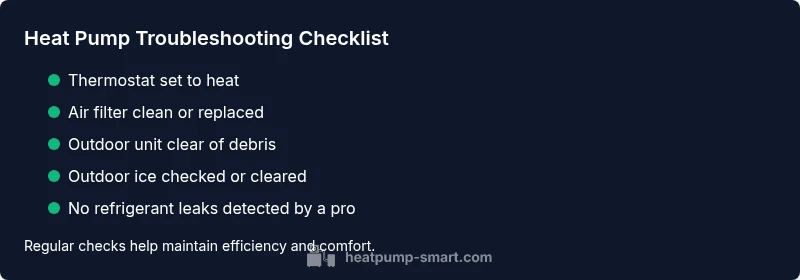
What Causes a Heat Pump Not to Heat: Troubleshooting
Diagnose and fix why your heat pump isn’t heating. Safe checks, common causes, step-by-step fixes, and when to call a pro for lasting warmth.


A heat pump not heating is usually caused by thermostat misadjustment, a dirty filter, a blocked outdoor unit, refrigerant issues, or a faulty defrost control. Start by confirming the thermostat is set to heat and at a comfortable temperature, then clean or replace the air filter and remove debris from the outdoor unit. If temperatures don’t rise, call a licensed technician.
Understanding the symptom: heat pump not heating
If you wake up to a chilly home and your heat pump keeps running without delivering warm air, you’re not alone. Understanding what causes a heat pump not to heat helps you act quickly and avoid wasted energy. According to Heatpump Smart, the root causes often fall into a few reliable categories: thermostat settings, air flow issues, outdoor unit conditions, refrigerant status, and controls for defrost. In many cases, the problem is not a broken system but a simple oversight or a minor maintenance task that you can handle safely. By walking through a focused checklist, you can identify the most likely culprit and decide whether a quick fix is enough or a pro should be called. This article uses plain-language explanations and practical tests to help homeowners, builders, and property managers. Throughout, we’ll reference Heatpump Smart Analysis, 2026 to reflect our latest guidance on efficiency and reliability.
Common causes at a glance
- Thermostat missettings: A too-low temperature, wrong mode (cool), or a faulty programmable schedule can keep the system from heating.
- Air flow restrictions: Clogged air filters, closed or blocked vents, or a malfunctioning blower reduce heat delivery.
- Outdoor unit problems: Debris, snow, ice, or vegetation obstruct the condenser coil and limit heat exchange.
- Refrigerant issues: Leaks or low refrigerant charge impair the system’s ability to extract heat from the air.
- Defrost control faults: If the defrost cycle is stuck or not engaging properly, ice can build on the outdoor coil and block heating.
- Electrical or control faults: Tripped breakers, faulty contactors, or sensor misreads can prevent heat mode from engaging.
- Sizing or ductwork gaps: An undersized or poorly sealed system struggles to reach setpoint and compensate for cold outdoor temps.
Understanding these categories helps you triage quickly and determine whether a simple fix will restore warmth or a professional diagnosis is needed.
Quick checks you can perform safely
Before pulling a tool bag out, perform these safe checks:
- Confirm the thermostat is set to heat and the temperature is above the current room temperature.
- Inspect the air filter; replace or clean if dirty (do not run the system with a clogged filter).
- Check all supply vents are open and unobstructed; ensure indoor blower is running.
- Look at the outdoor unit: clear away snow, leaves, and debris; ensure at least 24–36 inches of clearance around it.
- Listen for unusual sounds or smells that could indicate electrical issues or refrigerant problems.
If these checks don’t restore warmth, you’re likely dealing with a more complex issue that requires further diagnosis or professional service.
Diagnosing the most likely culprits (flow through)
When heating performance declines, start with the most accessible issues first:
- Thermostat and settings: Reconfirm heat mode and raise the setpoint; if a smart thermostat is misreading, re-pair or reset it.
- Airflow path: A dirty filter or closed ducts can masquerade as a heat loss problem; fix airflow first.
- Outdoor unit condition: Inspect for ice buildup or heavy debris; an obstructed coil reduces heat transfer dramatically.
- Refrigerant status: A leak or low charge will cause reduced heating and can be dangerous if ignored; this requires a refrigerant check by a pro.
- Defrost system: If ice persists on the outdoor coil, the defrost control may be faulty and needs inspection.
- Electrical controls: A failed contactor, blown fuse, or faulty sensor can prevent heat activation. If problems persist after basic checks, escalate to a professional evaluation.
Prevention tips to avoid future issues
Regular maintenance is the best defense against heat pump heating problems. Create a simple seasonal checklist:
- Replace or clean air filters every 1–3 months during peak heating seasons.
- Keep outdoor unit clear of debris and snow; inspect after storms.
- Schedule professional inspections annually to check refrigerant levels, electrical connections, and defrost components.
- Ensure doors and windows are well sealed to minimize heat loss; insulate ducts where accessible.
- Use a programmable thermostat to maintain a consistent setpoint and avoid frequent cycling, which stresses components.
When to call a professional: knowing your limits
Many causes for a heat pump not heating require professional tools and refrigerant handling. If you notice ice on the outdoor coil that doesn’t clear with a defrost cycle, or you smell refrigerant, hear buzzing, or see damaged wiring, stop using the system and call a licensed HVAC technician immediately. Professional service should be sought for refrigerant leaks, refrigerant charging, compressor issues, or any diagnostic readings outside normal ranges. Regular maintenance can prevent many common failures, but some issues require specialized testing equipment and certification.
Steps
Estimated time: 60-90 minutes
- 1
Check thermostat settings
Ensure the thermostat is in heat mode and set above the current room temperature. If the thermostat is programmable, review schedules and reset if necessary. After adjusting, wait several minutes to see if the indoor temperature begins to climb.
Tip: If you use a smart thermostat, try a quick reboot to reset any misreads. - 2
Inspect and replace the air filter
Turn off the system, locate the filter, and replace it if dirty. A clogged filter restricts airflow and makes the system work harder to heat, often resulting in insufficient warmth.
Tip: Mark a calendar reminder to check filters every 1–3 months during heating season. - 3
Clear the indoor and outdoor airflow paths
Ensure all supply vents are open and unobstructed. Check the indoor blower and listen for uniform airflow. On the outdoor side, remove snow, leaves, or long grass that may block the condenser.
Tip: Keep at least 24–36 inches of clearance around the outdoor unit for optimal performance. - 4
Inspect the outdoor unit for ice or debris
If you see ice on the outdoor coil, carefully remove loose ice and allow a defrost cycle to run. If ice recurs, it may indicate a defrost control problem or refrigerant issue.
Tip: Never chip away frozen ice aggressively; ice problems may require professional service. - 5
Check for obvious refrigerant issues
Look for hissing sounds, oily residues, or damp spots around refrigerant lines. Do not attempt to seal or recharge refrigerant yourself.
Tip: Refrigerant work requires a licensed technician with the proper equipment. - 6
Inspect electrical connections and breakers
Turn off power before inspecting the service panel. Look for tripped breakers or signs of burnt wiring or a faulty contactor.
Tip: If you see damaged wiring or smells of burnt insulation, call a pro immediately. - 7
Test the system in heat mode again
After completing the above checks, set the thermostat to heat again and observe whether warm air is delivered within a few minutes.
Tip: If the system still won’t heat, schedule a professional diagnostic with a detailed report of observed symptoms.
Diagnosis: Heat pump runs but does not deliver heat
Possible Causes
- highThermostat set to cooling or temperature too low
- highDirty air filter restricting airflow
- highOutdoor unit blocked by debris, snow, or ice
- highRefrigerant leak or low refrigerant charge
- mediumMalfunctioning defrost control causing ice buildup
- mediumElectrical issues or failed contactor or capacitor
- lowImproper system sizing or ductwork issues
Fixes
- easyVerify thermostat is set to heat, increase setpoint, and ensure mode is 'heat' with fan set to Auto
- easyReplace or clean the air filter and ensure supply vents are open
- easyClear debris around outdoor unit and remove ice if present, maintain 24-36 inches clearance
- mediumCheck for visible refrigerant leaks (never seal or recharge yourself) and schedule a pro for pressure check
- mediumIf ice persists on the outdoor coil, initiate defrost cycle or call a pro for defrost control inspection
- mediumInspect electrical panel and breakers; if wiring or components look damaged, call a licensed HVAC technician
- hardAssess ductwork and system sizing if heating performance remains poor after basic fixes
Your Questions Answered
Why isn’t my heat pump heating even though it’s running?
Common reasons include thermostat missetting, blocked airflow, outdoor coil ice, low refrigerant, or a defrost control fault. Start with simple checks and progress to professional diagnostics if issues persist.
If your heat pump is running but not heating, start with thermostat settings and airflow, then check the outdoor coil for ice or debris. If the problem continues, call a licensed HVAC technician.
Can a dirty filter cause heating problems?
Yes. A clogged air filter reduces airflow, making the system heat less efficiently and potentially triggering frost or temperature drop. Replace the filter and monitor performance.
A dirty filter can restrict airflow and reduce heating efficiency. Replace it and observe changes over the next few cycles.
Is low refrigerant common and dangerous?
Low refrigerant can cause insufficient heating and damages the system if operated. It requires a professional for leak detection and a refrigerant recharge.
Low refrigerant is a serious issue that needs a pro to diagnose and recharge safely.
What should I do if the outdoor coil is iced over?
If ice forms, allow a defrost cycle to occur. If ice reappears, there may be a defrost control fault or refrigerant problem requiring professional service.
Ice on the outdoor coil should thaw during defrost. If it keeps icing, call a pro.
When is it necessary to call a professional?
Call a professional when basic checks don’t restore heat, or you notice refrigerant signs, electrical faults, unusual noises, or persistent ice on the outdoor unit.
If basic fixes fail or you detect refrigerant/electrical issues, contact a licensed HVAC technician.
How can I prevent heat pump problems?
Schedule annual maintenance, replace filters regularly, keep outdoor clearance, and use a programmable thermostat to minimize stress on the system.
Regular maintenance and smart controls help prevent many heat pump problems.
Watch Video
Top Takeaways
- Check thermostat first and easy airflow fixes.
- Inspect outdoor unit and clear obstructions.
- Don’t ignore ice, leaks, or electrical signs—call a pro.
- Regular maintenance reduces future risk.
- Use professional service for refrigerant or compressor problems.