Why Heat Pumps Frost Up: A Troubleshooting Guide
Urgent, practical guide to diagnose and fix frost buildup on outdoor heat pump coils, with quick checks and prevention strategies to restore efficiency and comfort.


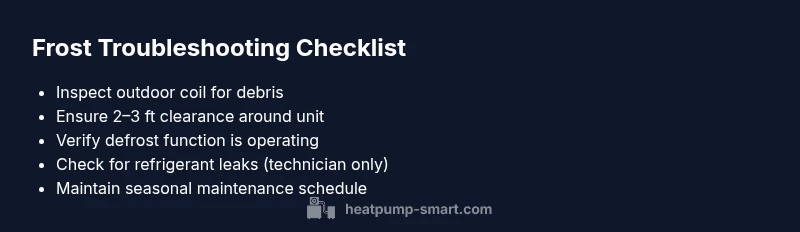
Why heat pumps frost up is usually due to moisture freezing on the outdoor coil when temperatures hover around freezing and humidity is high. Start with simple steps: clear debris, verify airflow, clean coils, and ensure the defrost cycle runs correctly. If the frost persists, power down and call a licensed technician to check refrigerant charge and safety.
Why do heat pumps frost up
Why do heat pumps frost up? The short answer is moisture meeting freezing temperatures on the outdoor coil. When humidity is high and outdoor temperatures hover near or just below freezing, condensate and moisture can freeze on the condenser fins. This creates an icy layer that impedes heat transfer, forcing the system to work harder to maintain indoor comfort. According to Heatpump Smart Analysis, frost events are more likely in humid winter climates where wind and precipitation interact with exposed outdoor coils. Poor airflow across the outdoor coil — from leaves, snow, or nearby obstructions — compounds the problem by reducing the heat transfer rate. If the defrost cycle fails or is slow to engage, ice can accumulate faster than it melts. A well-installed system with clean coils, adequate clearances, and a properly charged refrigerant circuit is less prone to frost buildup. For homeowners, recognizing the early signs—reduced heating efficiency, longer warmup periods, and visible frost on the outdoor unit—can prevent a larger frost issue later.
In_text_note_1_Heatpump_Smart_mentions_Intro_1::true
tip_background_color_1_Heatpump_Smart_intro::true
Steps
Estimated time: 45-90 minutes
- 1
Power off and secure the outdoor unit
Before touching any components, switch off the outdoor unit at the breaker to prevent electrical shock. Wait for any moving parts to stop. This step protects you while you inspect the coil and surrounding area.
Tip: Use a flashlight to inspect the coil from multiple angles without leaning into the unit. - 2
Inspect and clean the outdoor coil
Look for dirt, leaves, or snow on the coil. Gently brush away debris and rinse with a low-pressure stream if needed. Do not use high-pressure water, which can bend fins and reduce efficiency.
Tip: Keep a soft brush handy and avoid aggressive tapping that can damage fins. - 3
Check airflow and clear obstructions
Ensure there is at least 2–3 feet of clearance around the unit and that the fan can rotate freely. Remove any nearby vegetation or objects that hinder airflow, as restricted airflow speeds frost buildup.
Tip: Install a simple windbreak if the unit sits in a particularly exposed location. - 4
Review thermostat and mode settings
Confirm the system is in heating mode and that setpoint temperatures are reasonable for the outdoor conditions. A sudden switch to cooling or fan-only mode can cause icing under certain conditions.
Tip: Temporarily adjust to a more conservative heat setting to test response. - 5
Observe the defrost cycle behavior
If ice forms, the defrost cycle should melt it periodically. Note how long the cycle lasts and whether ice reaccumulates quickly after melting.
Tip: If defrost seems sluggish, the system may need service or a refrigerant check. - 6
Assess refrigerant and electrical health
Low refrigerant or electrical issues can impair defrost effectiveness. Do not attempt refrigerant work yourself; these require licensed technicians.
Tip: Document any odd noises, ice thickness, or frost duration to share with the technician. - 7
Plan maintenance and follow-up
Schedule seasonal maintenance to prevent recurring frost. A professional inspection twice a year helps catch refrigerant, airflow, and electrical issues before they escalate.
Tip: Set a reminder for annual checkups to maintain peak efficiency.
Diagnosis: Outdoor heat pump frost on the condenser during cold, humid weather
Possible Causes
- highLow outdoor temperature with high humidity causing condensation and freezing on the coil
- highDirty outdoor coils reducing heat transfer and creating frost buildup
- highRestricted airflow from debris, snow, or blocked grilles
- mediumDefrost cycle not engaging or delayed
- lowRefrigerant leak or low charge
- mediumOutdoor fan malfunction
Fixes
- easyClean the outdoor coil and remove debris from the grille to restore airflow
- easyClear snow, ice, or vegetation around the unit to maintain unobstructed airflow
- mediumVerify that the defrost cycle is functioning and that controls are not disabled
- hardCheck for refrigerant leaks and proper charge with a licensed technician if frost persists
- mediumInspect the outdoor fan motor and electrical connections for proper operation
- mediumConsider seasonal maintenance and proper placement to reduce future frost risk
Your Questions Answered
What causes frost to form on a heat pump outdoor coil?
Frost forms when moisture and humidity meet freezing outdoor temperatures on the outdoor coil. Debris, poor airflow, and a malfunctioning defrost cycle can accelerate buildup. A refrigerant issue is less common but serious when present.
Frost forms when moisture freezes on the outdoor coil; debris and airflow problems make it worse, and a faulty defrost cycle can allow ice to accumulate.
Can frost damage a heat pump permanently?
Persistent frost can reduce efficiency and strain the system, potentially causing component wear over time. It’s usually manageable with preventive maintenance and timely defrost checks.
Yes, prolonged frost can hurt efficiency and wear parts, but early maintenance helps prevent lasting damage.
Should I turn off the heat pump if I see frost?
If you see frost developing, you can pause operation and inspect safety steps. Do not operate with heavy ice buildup; contact a professional if you cannot resolve it.
If you see heavy ice, stop the unit and call a pro if you can’t clear it safely.
Is the defrost cycle the same for all heat pumps?
Defrost cycles vary by model and refrigerant type. Most units include an automatic defrost timer, but some rely on sensors. Consult your manual for model-specific details.
Most heat pumps have an automatic defrost, but it varies by model—check your manual for specifics.
How can frost buildup be prevented in the future?
Keep the outdoor unit clear of debris, ensure proper airflow, insulate or protect indoor piping, and schedule seasonal maintenance. A well-placed unit with clean coils resists frost.
Regular cleaning and proper airflow around the outdoor unit helps prevent frost.
When should I contact a professional for frost on my heat pump?
If frost recurs after cleaning, if you notice refrigerant leaks, unusual noises, or you’re unsure about electrical safety, call a licensed technician.
If frost keeps coming back or you notice leaks or strange noises, get a professional check.
Watch Video
Top Takeaways
- Identify frost early to avoid efficiency loss
- Clean coils and clear airflow for best results
- Verify defrost cycle works or call a pro
- Maintain seasonal upkeep to prevent recurrence