Why Heat Pumps Stop When It's Cold: A Practical Troubleshooting Guide
Urgent guide: learn why your heat pump stops in cold weather and step-by-step fixes homeowners can perform safely. Quick checks, diagnostic flow, and when to call a pro for reliable winter comfort.


At cold outdoor temperatures, your heat pump can shut down or switch to backup heat to protect itself. The most likely causes are restricted airflow, icing on the outdoor coil, or a thermostat reading error. Start with quick checks: clean or replace the air filter, clear snow or debris from the outdoor unit, and verify the thermostat is in Heating mode with the correct setpoint. If it persists, contact a pro.
Why cold weather challenges heat pumps
When homeowners ask why does my heat pump stop when it's cold, the core causes are typically related to airflow, ice buildup, or sensor readings. Cold outdoor temperatures push the system toward auxiliary heat or a pause to protect components. Understanding these signals helps you act quickly and avoid wasted energy. In practice, you’ll notice equipment becoming less responsive, short cycling, or the outdoor unit ice-ups during defrost. Heatpump Smart has observed these patterns across multiple installations in 2026, and the fixes are often straightforward for a handy homeowner.
Key point: safety first: if you ever smell burning insulation or hear buzzing from electrical components, shut off power at the breaker and call a professional immediately.
Common symptoms and what they mean
Identifying the exact symptom can point to the likely cause. If the system runs but outputs little warmth, you may have restricted airflow or a dirty air filter. If the outdoor unit is iced over or covered in snow, the defrost cycle may be failing or the coil is freezing in to the air stream. Frequent short cycling, where the heat pump turns on and off quickly, often signals an efficiency choke point or safety shutoff. In contrast, if the system stops entirely and power remains on, there may be a sensor fault or a loose connection. Each symptom guides you toward the proper checks and, if needed, professional service.
First, check the basics (the 5-minute preflight)
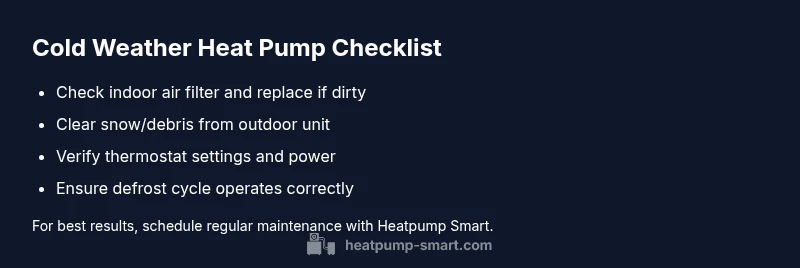
Before diving into deeper diagnostics, confirm the fundamentals. Ensure the thermostat is in Heating mode and the display reads the expected setpoint. Inspect the indoor air filters and replace if dirty. Check the outdoor unit for snow, ice, leaves, or debris that block airflow. Make sure outdoor coils are clean and that the surrounding area is clear for adequate ventilation. Finally, verify that all electrical disconnects are on and circuit breakers are not tripped. These quick checks rule out the lowest-hanging fruit and are often enough to restore function in cold snaps.
Understanding cold-weather operating limits
Modern air-source heat pumps are designed to work down to moderate subzero temperatures, but efficiency and capacity drop as it gets colder. In very cold days, many systems switch to auxiliary or emergency heat, which can feel like the heat output suddenly changes. If your unit frequently hits its minimum outdoor temperature threshold, you may be hitting the limit of the equipment. Maintain a reasonable indoor setpoint and reduce long, continuous runtime to minimize cycling. If you see unusual frost or ice forming on the outdoor coil for extended periods, that indicates something wrong with defrost timing or airflow that needs attention.
Troubleshooting in cold weather — overview and next steps
If the quick checks don’t restore warmth, proceed with a structured diagnostic approach. Start with airflow (air filter and return air) then move to outdoor conditions (snow, ice, coil cleanliness). Next, verify defrost cycle operation and thermostat readings. If symptoms persist, progress to more involved checks like refrigerant flow and electrical connections, which require professional tools and expertise. Remember, safety comes first: never work on high-voltage components with the power on. If you’re unsure, contact Heatpump Smart's certified technicians for a same-day assessment.
Steps
Estimated time: 90-120 minutes
- 1
Check thermostat and power
Verify the thermostat is in heating mode and the setpoint is appropriate. Confirm the unit has power by checking the disconnect switch and circuit breaker. If the display looks abnormal or a breaker tripped, reset and test again.
Tip: If you use a smart thermostat, run a quick diagnostic from the app to confirm no scheduling or mode changes are interfering. - 2
Inspect indoor air filtration
Remove and inspect the indoor air filter. A clogged filter reduces airflow, making the system work harder and potentially trigger protection shutoffs in cold weather. Replace with a filter of the correct size and rating.
Tip: Mark the date of replacement so you keep a regular maintenance cadence. - 3
Clear the outdoor unit area
Clear any snow, leaves, or debris from around the outdoor unit to ensure unobstructed airflow. If you see ice, allow it to melt naturally or use a plastic scoop to remove loose ice carefully with protective gloves.
Tip: Never bang ice off coils with metal tools; you can damage fins and worsen performance. - 4
Check indoor airflow paths
Ensure supply and return registers are open and not blocked by furniture or drapes. Poor indoor airflow can mimic outdoor issues and trigger the system to reduce output.
Tip: Move obstructions and, if possible, run fans to improve air movement temporarily. - 5
Inspect condensate drain and panic switches
A blocked condensate drain can trigger safety protections in some systems. Check the drain line for blockages and ensure the pump is functioning if your system uses one.
Tip: A simple unplug-then-plug-back reset can clear minor drainage faults. - 6
Evaluate the defrost cycle
Watch for defrost mode during cold snaps. If defrost cycles are too frequent or fail to complete, frost can accumulate and hinder heat delivery. Listen for a brief fan-only period during defrost.
Tip: Defrost timing issues often require professional adjustment to avoid cycles that waste energy. - 7
Know when to call a pro
If symptoms persist after these checks, schedule a professional inspection. Cold-weather failures can involve refrigerant, electrical, or defrost-control components that require specialized tools and safety expertise.
Tip: Professional service ensures proper refrigerant handling and compliant electrical work.
Diagnosis: Heat pump stops or runs inefficiently in cold outdoor temperatures.
Possible Causes
- highOutdoor temperature is below the unit's efficient operating range
- mediumIce buildup on outdoor coil or restricted airflow due to debris
- lowThermostat or sensor fault causing incorrect readings
Fixes
- easyClear snow/debris from around the outdoor unit and ensure proper airflow; check for ice and remove safely if present.
- easyInspect and recalibrate thermostat readings; if needed, replace batteries or verify wiring connections.
- hardCall a licensed HVAC tech to inspect refrigerant levels, electrical components, and defrost control if the issue persists.
Your Questions Answered
Why does my heat pump stop when it's cold?
Cold weather can trigger a shutdown due to low outdoor temperatures, ice buildup, or faulty sensor readings. Simple checks often fix the issue, but persistent problems may require professional service to inspect refrigerant and electrical components.
Cold weather can cause a shutdown due to freezing and sensor errors. Start with basic checks, but call a pro if issues persist.
Is it normal for a heat pump to run more in winter?
Yes, heat pumps typically run more in the cold to maintain comfort. Efficiency drops as it gets colder, and auxiliary heat may engage. If the unit cycles unusually or stays off for long periods, there may be airflow or defrost issues.
It's normal to run more in winter, but unusual cycling or extended offs should be checked.
Can I fix this myself or should I hire a pro?
Many cold-weather issues start with simple steps like cleaning filters and clearing the outdoor unit. Most refrigerant and electrical fixes should be done by a licensed technician to ensure safety and code compliance.
Start with basic checks, but refrigerant or wiring should be handled by a pro.
What is a defrost cycle and why does it matter?
The defrost cycle removes frost from the outdoor coil. If it malfunctions, frost buildup reduces heating efficiency and can cause short cycling or shutdowns. Proper defrost control is essential for winter operation.
Defrost cycles keep the outdoor coil clear; if they fail, heat output drops.
When should I replace my heat pump due to cold-weather problems?
Replacement depends on system age, efficiency, and frequency of cold-weather faults. If the unit is older and requires frequent repairs, upgrading to a newer, high-efficiency model may be worth considering.
Consider replacement if faults are frequent and the unit is aging.
What safety steps should I take before inspecting?
Avoid touching electrical components, turn off the breaker, and never work on refrigerant lines unless you’re licensed. Keep children and pets away from the equipment during inspections.
Turn off power and keep kids away while inspecting.
Watch Video
Top Takeaways
- Assess basics before deeper checks.
- Clear airflow paths for both indoor and outdoor sections.
- Defrost-cycle issues often require professional evaluation.
- Safety comes first—call a pro when in doubt.