Why Would a Heat Pump Leak Water? Practical Troubleshooting Guide
Learn the urgent, step-by-step reasons a heat pump leaks water and how to diagnose, fix, and prevent leaks—with expert guidance from Heatpump Smart.


Most heat pump water leaks stem from condensate drainage problems or a frozen evaporator coil. First, inspect the condensate line for blockages and ensure it drains freely. If you spot ice on the coil, shut the unit down and allow it to thaw while you address airflow and filter cleanliness. If the leak persists, contact a professional. Heatpump Smart recommends prompt action.
Common Causes of a Heat Pump Water Leak
Water leaking from a heat pump is rarely a mysterious problem. In most homes, the culprit is either the condensate drainage system or unusual coil behavior caused by airflow issues. According to Heatpump Smart, condensate lines are the number-one fault: a blocked line or a misrouted pan can spill water into the cabinet or onto the floor. A secondary but frequent cause occurs when the evaporator coil freezes due to restricted airflow, a dirty filter, or an undersized return duct. When the ice melts, a sudden surge of water can overwhelm the drain and create a visible drip or puddle. Less common are leaks from the condensate pan or from the unit’s connections, often signaling improper installation or aging seals. Understanding these common causes helps homeowners prioritize checks and avoid unnecessary parts replacement.
The heat pump's design uses a closed refrigerant loop with an external condensate drain. If you notice water where it shouldn’t be, you’re not imagining it—this is a sign the system is trying to shed moisture it can’t remove efficiently. Quick observation and a methodical approach can prevent further damage to floors, walls, or electrical components. Heatpump Smart’s team emphasizes that a leak is not something to ignore, especially if you see mold growth, wet insulation, or pooling near the unit.
Steps
Estimated time: 45-90 minutes
- 1
Power down and secure the area
Turn off the heat pump at the thermostat and disconnect the power at the breaker. This prevents shock and avoids water spraying during inspection. Remove any standing water with towels to keep the area safe.
Tip: Lockout/Tagout the outdoor unit if you’ll be working near electrical connections. - 2
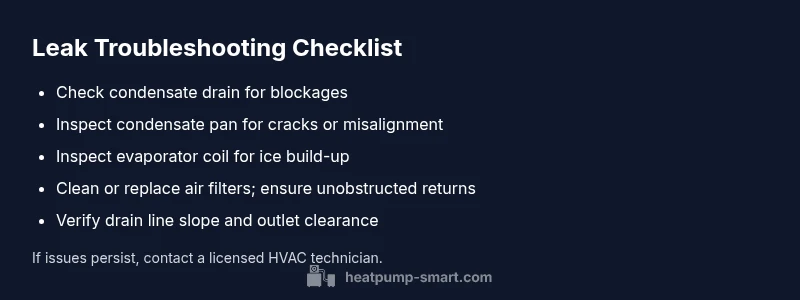
Inspect the condensate drain line
Locate the drain line and pan. Look for visible blockages, kinks, or a disconnected line. Clear debris from the pipe and ensure the line has a clear downward slope.”
Tip: Use a wet/dry vacuum to suck out any clog or pour warm water through the line to test flow. - 3
Clear or repair the drain and pan
If the line is clogged, remove the obstruction and reattach securely. Check the pan under the evaporator coil for cracks or misalignment and fix as needed.
Tip: Replace damaged pans and consider adding a secondary overflow safety switch if not present. - 4
Check coil ice and airflow
Inspect the evaporator coil for ice buildup. If iced, allow it to thaw with the system off, then inspect airflow: clean or replace the air filter and ensure returns aren’t blocked.
Tip: Ensure supply and return ducts are unobstructed to maintain proper airflow. - 5
Test operation and monitor
Restore power, set to a comfortable temperature, and observe for leaks. Monitor for 24–48 hours to confirm the fix, especially during peak cooling or heating cycles.
Tip: Keep a log of observations and any changes you make for future reference.
Diagnosis: Water leaking from the heat pump cabinet or surrounding area
Possible Causes
- highBlocked or kinked condensate drain line
- highFrozen evaporator coil due to restricted airflow or dirty filter
- mediumImproper condensate pan slope or overflow
- lowLeaking refrigerant or faulty fittings (less common with water leaks, but possible in some setups)
- lowRecent installation or relocation causing drainage misalignment
Fixes
- easyUnclog or straighten the condensate drain line and ensure it drains by gravity to the proper outlet
- easyThaw the evaporator coil if iced, then improve airflow by cleaning or replacing dirty filters and clearing obstructions
- easyInspect condensate pan and verify proper slope; seal or replace any damaged pans
- hardIf a refrigerant leak or suspected fittings issue is found, contact a licensed HVAC technician immediately
Your Questions Answered
What is the most common cause of a heat pump leaking water?
The most common cause is a blocked condensate drain line or a misrouted condensate pan. Clearing the line and ensuring proper drainage often stops the leak.
The most common cause is a blocked condensate drain line or misrouted pan; clearing the line and fixing drainage usually stops the leak.
Can a frozen evaporator coil cause water leaks?
Yes. A coil that freezes due to restricted airflow or a dirty filter can melt and leak water onto the cabinet or floor. Address airflow first.
Yes, a frozen coil can melt and leak water; fix airflow and clean or replace filters.
Is a small amount of water normal around a heat pump?
A small amount of condensation is normal in some conditions, but a persistent puddle or excessive dampness is not and warrants inspection.
A little condensation is sometimes normal, but persistent leaks aren’t and should be checked.
When should I call a professional?
If you cannot locate the drain blockage, if ice reappears after thawing, or if you suspect refrigerant leaks or electrical faults, contact a licensed HVAC technician.
Call a pro if you can't fix the drain, if ice keeps returning, or you suspect refrigerant or electrical problems.
Can wrong installation cause leaks?
Yes. Improper slope, misaligned pans, or drainage connections from installation can lead to leaks. A professional should evaluate these issues.
Yes, installation problems can cause leaks; professional evaluation is recommended.
Watch Video
Top Takeaways
- Check condensate drainage first
- Clear blockages before replacing parts
- Improve airflow to prevent ice and leaks
- Call a pro if you detect refrigerant issues or extensive damage